
It is 2026, and the mobile landscape in Pakistan is more regulated than ever. Buying a flagship phone like the iPhone 16 Pro Max or Samsung Galaxy S25 Ultra feels less like a purchase and more like a tax audit. With import duties still sky-high and the Federal Board of Revenue (FBR) tightening its grip, navigating the Pakistan Telecommunication Authority (PTA) approval process is critical.
One wrong move, like trusting a shady “JV” deal or ignoring that 60-day deadline, can turn your expensive device into a glorified Wi-Fi tablet.
This guide cuts through the noise. Here is everything you need to know to keep your signal bars active and your bank account safe.
The Basics: Why Do Blocks Happen?
The culprit is DIRBS (Device Identification, Registration, and Blocking System). Think of it as a digital border guard that never sleeps. It continuously scans every single phone connected to Pakistani networks (Jazz, Zong, Telenor, Ufone).
The system operates on a “whitelist” logic. If your phone’s IMEI (International Mobile Equipment Identity) isn’t explicitly registered in the PTA database, DIRBS flags it. Unlike the old days, when only reported stolen phones were blocked, now any phone that hasn’t paid its customs duties is automatically scheduled for disconnection. Once the grace period timer hits zero, your cellular services are cut off completely. No calls, no 5G data, and no SMS OTPs for your bank.
The 4 Statuses You Must Know
When you verify your phone via SMS or the app, you will see one of these four statuses. Knowing the difference can save you thousands of rupees.
| Status | What It Means | Action Required |
| Compliant / PTA Approved | The device is legally imported, and all FBR taxes are paid. It is whitelisted for life. | None. You are safe to use any SIM card from any local operator. |
| Valid (Non-Compliant) | The device has a valid GSMA identity, but FBR taxes are unpaid. This is common for personal imports or tourist phones. | Pay Tax. The device is currently working on a temporary timer. You must register it before the 60-day grace period expires. |
| Non-Compliant | The IMEI is invalid, not allocated by GSMA, or is a duplicate. This indicates a fake, cloned, or tampered device. | Do Not Buy. These devices are often blocked immediately or will never support network activity. |
| Blocked | The 60-day limit has expired, or the phone has been reported lost/stolen. | Pay Tax / Return. Service is already suspended. You cannot make calls until the status changes. |
The “60-Day Rule” Explained
This is where most users get trapped, leading to sudden blackouts of service.
- The Countdown: The moment you insert a Pakistani SIM into a non-approved phone and it connects to a tower, DIRBS logs the “First Latch Date.” This initiates a strict 60-day countdown.
- No Reset: A common myth is that you can “reset” this timer by changing SIM cards, factory resetting the phone, or flying out of the country and coming back. This is false. The timer is tied to the physical hardware (the IMEI slot), not your SIM or your passport. If you used 30 days in January and return in December, your timer does not restart… it resumes or may have already expired.
- The Consequence: On Day 61, the network automatically rejects the IMEI. You can still use the phone for WhatsApp via Wi-Fi, but your SIM slots are dead until you pay the full FBR tax.
2026 Update: The “120-Day” Lifeline for Overseas Pakistanis
There is finally good news for expats and frequent travellers. As of mid-2025, the government introduced the Temporary Mobile Registration System (TMRS) to facilitate the diaspora.
- What it is: A facility allowing Overseas Pakistanis and foreign nationals to use their personal phones tax-free for up to 120 days per visit. This is double the standard 60-day grace period.
- How it works: You must proactively apply online via the DIRBS portal (dirbs.pta.gov.pk/drs). You will need to provide your passport number, entry date, and immigration details. Once approved, your phone is whitelisted for that specific trip.
- The Catch: You have to apply each time you visit Pakistan. If you stay longer than 120 days, the exemption expires, the phone gets blocked, and you must pay the full FBR duties to restore service. This cannot be used for permanent residents.
Grey Market Traps: JV, CPID, and “Patched”
The massive gap between global prices and local post-tax prices has birthed a sophisticated black market. Sellers use confusing technical jargon to offload illegal devices. Do not get scammed by these terms.
1. The “JV” Lie (Joint Venture)
Shopkeepers often market “JV” phones as “Joint Venture” or “Corporate Edition” devices to make them sound legitimate. This is a fabrication.
“JV” phones are Carrier-Locked devices smuggled from the US, Europe, or Japan. They are software-locked to carriers like AT&T, Verizon, or SoftBank.
To make them work in Pakistan, sellers install a “Gevey” or “Turbo SIM” chip, a thin circuit board placed underneath your actual SIM card. This chip tricks the iPhone into thinking it’s using the original carrier’s network.

These are illegal and unstable. If the chip fails, or if you update your iOS, the activation lock can return, killing your signal. Furthermore, you cannot officially PTA approve these phones because their IMEIs are often blacklisted by the original carrier abroad due to contract default or theft.
2. CPID (Server-Side Patch)
This is the most common “fix” for Samsung and OnePlus devices in 2026.
CPID (Client/Consumer Product ID) involves a technician connecting your flagship phone to a remote server. They rewrite your phone’s unique IMEI with the IMEI of a cheap, broken phone (like a Nokia 3310 or an old Galaxy J7) that was already tax-paid.
While banking apps usually work because the phone isn’t rooted, this is a serious crime (data forgery). The biggest danger is duplication. If the technician sells that same “Nokia” IMEI to 50 other customers, DIRBS detects multiple phones using the same identity. When that happens, all devices using that IMEI are permanently blocked with no option for recovery.
3. “Patched” (Rooted)
This is the cheaper, messier version of CPID, often used for older Androids or Pixels. The phone is “rooted” (hacking the operating system) to mask the original IMEI with a fake one.
Because the phone’s security seal is broken, banking apps (JazzCash, Sadapay, HBL, Meezan) will likely refuse to run. You will also fail Google’s SafetyNet checks, meaning Netflix won’t play in HD. Worst of all, you cannot update the Android software… doing so will wipe the patch and block the phone instantly.
How to Avoid the Block: A 3-Step Checklist
Never hand over cash until you perform this check yourself. Trust the screen in your hand, not the box or the seller’s word.
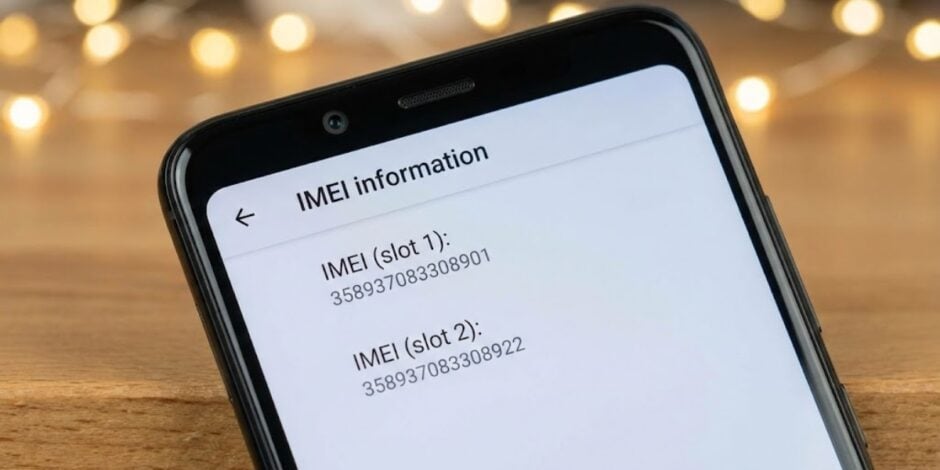
Step 1: Get the Real IMEI
Dial *#06# on the phone dialer. A screen will pop up showing IMEI 1 and IMEI 2. Do not rely on the sticker on the back of the phone or the box packaging, as these are easily counterfeited to show “clean” numbers.
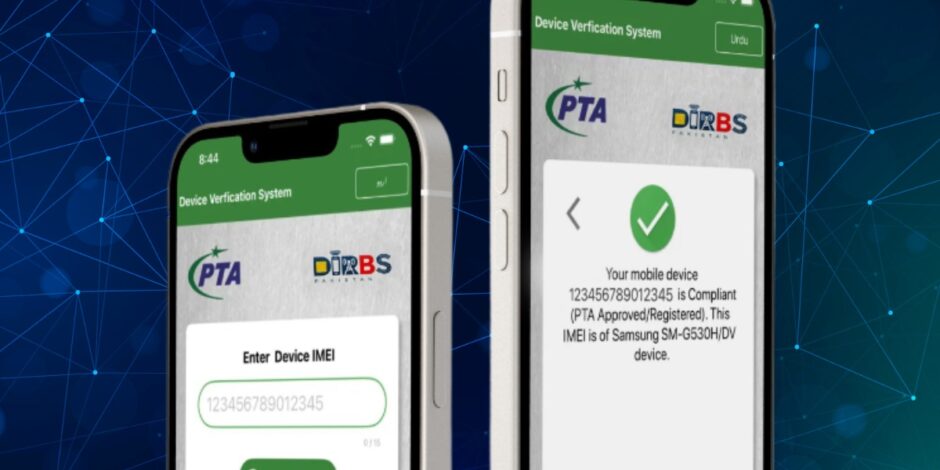
Step 2: Verify via 8484
Type the 15-digit number you see on the screen and SMS it to 8484.
Pro Tip: If the phone has dual SIM slots (physical or e-SIM), you must verify both IMEI 1 and IMEI 2 separately. It is a common scam for sellers to pay tax on only one slot to save money, leaving the second slot blocked.
Step 3: Match the Response
This is the critical step most people miss. When 8484 replies “PTA Approved,” look at the Device Name in the message.
If you are holding a Samsung S24 Ultra, but the SMS says “PTA Approved – Nokia 3310”, you are looking at a CPID/Patched device. The IMEI belongs to a cheap donor phone, not the flagship in your hand. Walk away. A legitimate approval will always match the model name (e.g., “Device Status: Compliant, Galaxy S24 Ultra”).
Recovery: My Phone is Blocked. Now What?
If you missed the deadline and your signal bars have an “x” on them, here are your realistic recovery options:
- The Official Route: You must pay the FBR tax. Dial *8484# or visit the DIRBS website to generate a PSID (Payment Slip ID). This code is valid for 7 days. You can pay this amount via most mobile banking apps (look under “Taxes” or “FBR” payments, not “Bill Payment”) or at an ATM. Once paid, the system automatically sends a signal to the towers to unblock your IMEI, usually within 24 hours.
- The Passport Hack: If you or a family member travelled to Pakistan recently (within the last 60 days), you can register the phone using that Passport number. The tax rates on Passports are sometimes slightly lower than on CNICs, potentially saving you a few thousand rupees.
- The “Pairing” Myth: Many users ask to “pair” their blocked phone to their CNIC to use it. This is not possible for imported phones. Pairing is a special process reserved only for genuine manufacturing errors where two phones accidentally have the same IMEI. PTA rejects pairing requests for smuggled or non-compliant devices.
Final Verdict: Is It Worth It?
In 2026, the digital border is stricter than ever. While “JV” and “CPID” phones might save you Rs. 30,000 to Rs. 50,000 upfront, they carry the constant anxiety of sudden disconnection, zero manufacturer warranty, and virtually no resale value.
TechJuice’s Advice: If you can afford it, buy an officially approved device. For short-term visits, the 120-day TMRS facility is a lifesaver. Peace of mind is worth more than the money you might save on a shady patch job that could stop working tomorrow.