It is February 2026. You just bought the latest flagship smartphone. It features a titanium chassis, an AI-powered neural engine, and a battery designed to last all day. Then, you plug it into a cheap charger you bought from a one-dollar store. In that moment, you have connected a sophisticated supercomputer to a dangerous, unregulated electrical hose.
We often treat chargers as disposable accessories. However, this is a critical mistake. A charger is not just a plug… it is a complex power plant that converts lethal mains voltage into a delicate stream of energy for your device. When you buy a counterfeit or uncertified charger, you aren’t just saving money. You are inviting fire hazards, data theft, and the silent destruction of your phone’s logic board.
This guide exposes the hidden mechanics of fake chargers. We will explain, in simple terms, how “dirty power” ruins your battery and how you can spot a fake before it ruins your tech.
The Silent Killer: “Dirty” Power and Voltage Ripple
Genuine chargers are engineering marvels. They filter electricity to ensure a smooth, steady flow of power. Counterfeit chargers, however, strip away these safety filters to save pennies on manufacturing costs. The result is “ripple voltage”.
What is Ripple Voltage?
Imagine drinking water from a smooth, steady tap. That is clean DC power. Now, imagine trying to drink from a tap that sputters and blasts air bubbles at your face. That is ripple voltage. It is jagged, unstable electricity that fluctuates wildly between voltages.
The PMIC: Your Phone’s First Line of Defence
Your phone has a gatekeeper chip called the Power Management Integrated Circuit (PMIC). In iPhones, a related component is often called the “Hydra” or “Tristar” chip. Its job is to regulate power flow.
When you use a cheap charger, the PMIC is bombarded by voltage spikes and ripple. It works overtime to smooth out this dirty power, generating immense heat. Eventually, the chip burns out.
A time comes when your phone shows it is charging, but the percentage never goes up. You haven’t killed your battery… You have fried the motherboard chip that controls charging. This often requires a microscopic soldering repair that costs more than the phone is worth.
The “Fake GaN” Epidemic of 2026
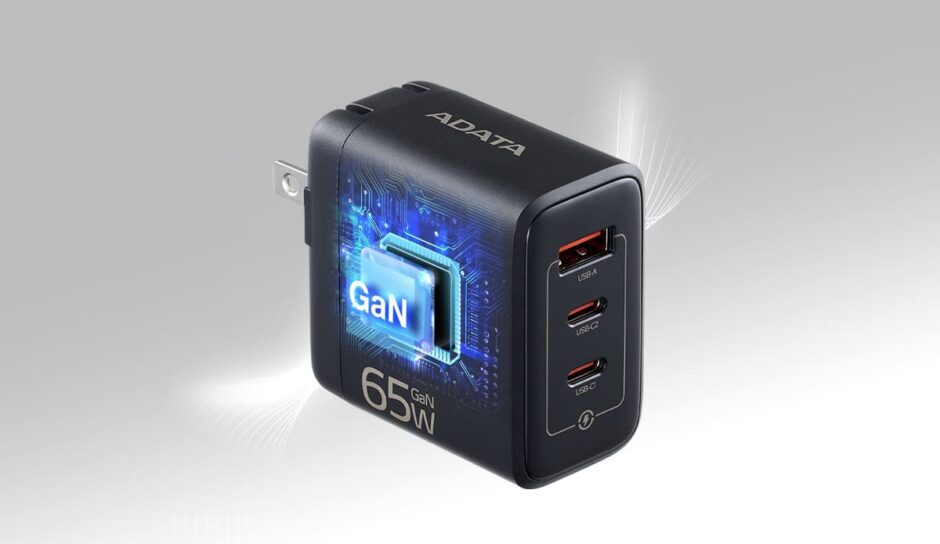
Gallium Nitride (GaN) chargers are the gold standard in 2026. They are small, efficient, and stay cool. Naturally, counterfeiters have flooded the market with fakes.
The Silicon Switch-Up
Genuine GaN chargers use advanced transistors that switch millions of times per second efficiently. Fake “GaN” chargers are often just standard, inefficient silicon chargers stuffed into a tiny case.
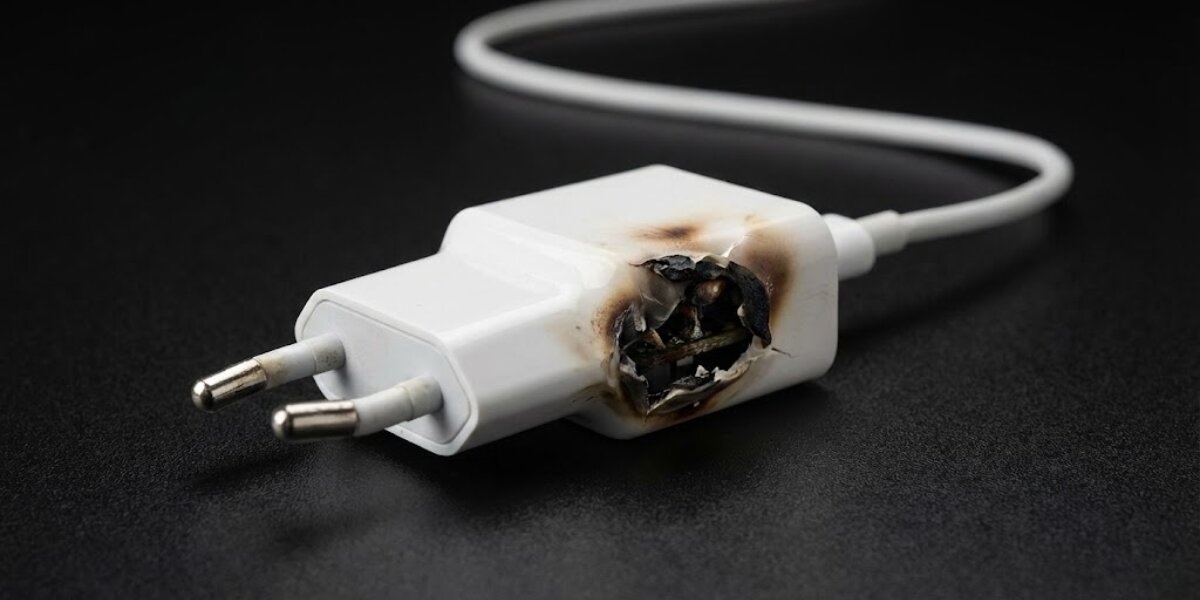
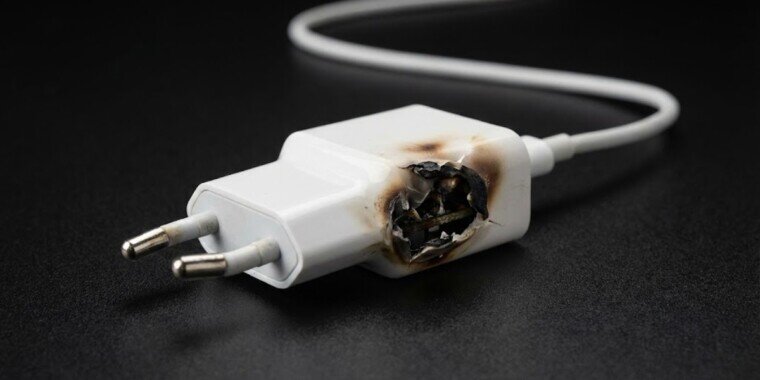
The risk is that Silicon generates more heat than GaN. When crammed into a small enclosure without proper heat sinks, these fakes become thermal grenades. They can melt their own casings or short-circuit internally.
Real GaN chargers feel dense and heavy because they are packed with potting compound (a glue-like heat disperser). Fakes often feel light and hollow.
The Cable Crisis: 240W and the E-Marker
In 2026, USB-C Power Delivery (PD 3.1) supports up to 240 watts. That is enough power to run a gaming laptop or a workstation. Consequently, the cable is no longer just a wire… it is a smart device.
The Missing “Brain”
Safe high-power cables contain a tiny chip called an E-marker. This chip talks to your charger and phone, confirming it can handle 240W safely.
Here is where the scam comes in. Counterfeit cables skip the E-marker or use a hacked one that lies about the cable’s capacity.
The danger is that if a charger pushes 240W through a thin, cheap cable that can only handle 60W, the wire turns into a heating element. This can melt your charging port or start a fire.
Wireless Hazards: Qi2 and Magnetic Meltdowns
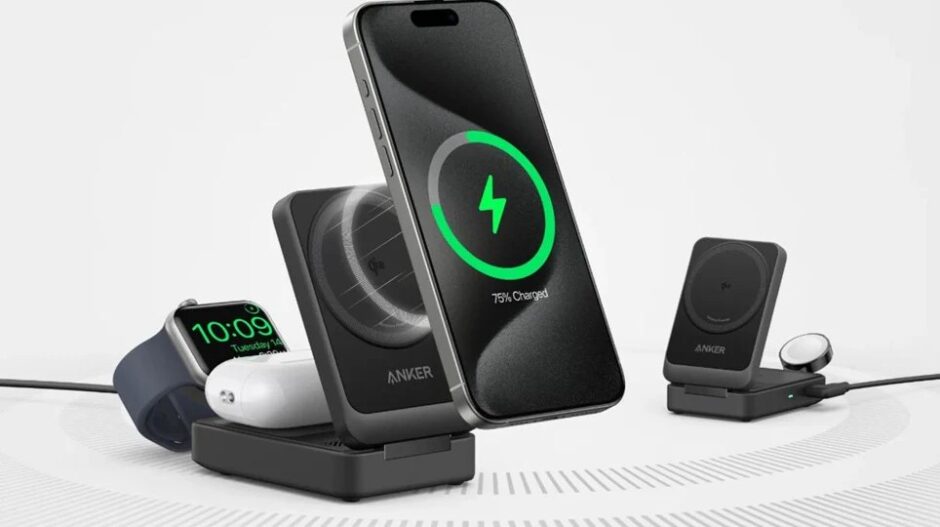
The Qi2 wireless charging standard is everywhere now, from the iPhone 17 to the latest Androids. It uses magnets to snap your phone into the perfect charging spot.
The Alignment Problem
Cheap, uncertified wireless chargers use weak or misaligned magnets.
There’s quite a lot of efficiency loss if the coils aren’t perfectly aligned. Energy is lost as heat rather than charge.
This excess heat creates a “Thermal Stress” that cooks your battery cells and degrades the waterproof seals on your phone.
Foreign Object Detection (FOD) Failure
Genuine Qi2 chargers detect if a key or coin is sitting on the pad and shut off. Fake chargers lack this safety sensor. They will pump energy into the metal object, heating it up like a stove burner until it melts your phone case or burns your hand.
Battery Health: The Chemistry of Degradation
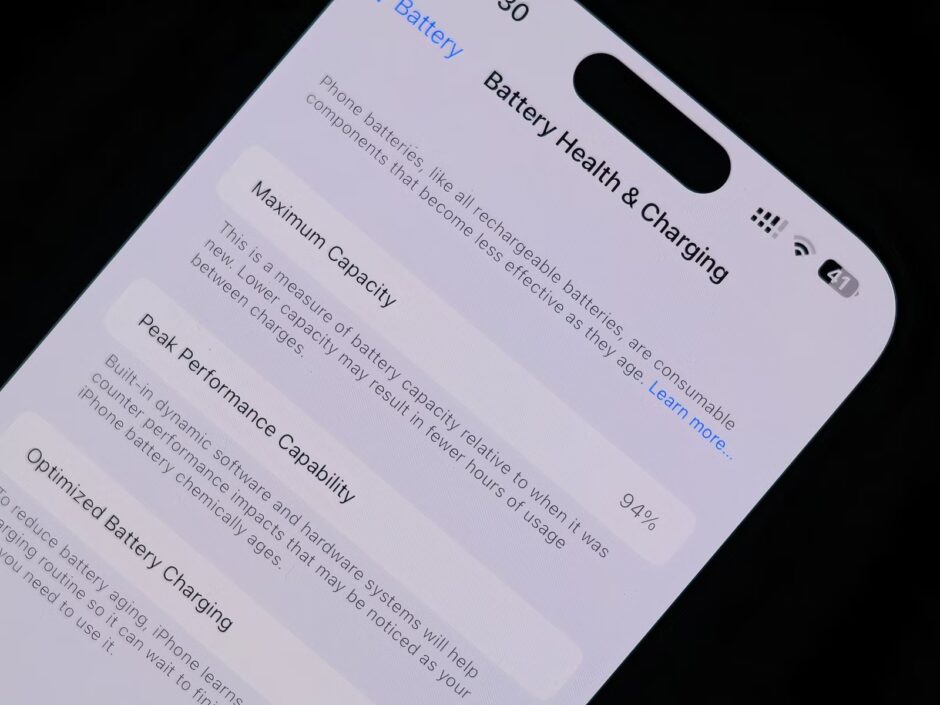
You might blame “fast charging” for your battery health dropping to 85% in a year. In reality, it is likely the quality of the charge, not the speed.
Lithium Plating & Dendrites
Inside your battery, ions move between the cathode and anode. High ripple current from fake chargers disrupts this flow. Instead of storing energy, the lithium ions pile up on the surface of the anode, forming metallic spikes called dendrites.
These dendrites are sharp. Over time, they can puncture the internal separator of the battery.
- Stage 1: The battery self-discharges rapidly (your phone dies overnight).
- Stage 2: The dendrites cause an internal short circuit.
- Stage 3: Thermal runaway. The battery swells, catches fire, or explodes.
Consumer Forensics: How to Spot a Fake
Counterfeiters copy the packaging, the font, and even the holograms. However, they always cut corners on the physical product. Here is your 2026 inspection checklist:
The Weight Test
High-quality components are heavy. Genuine chargers are filled with protective resin and shielding.
Here is what you have to do. Just hold the charger. If it feels surprisingly light or hollow, put it back.
The Drop Test
You don’t have to throw the charger on the floor. Just drop it gently onto a table from 3 inches up.
Listen carefully. A real charger makes a dull, solid “thud”. A fake charger often sounds clunky, plastic-y, or rattles.
The “Ghost Touch” Test
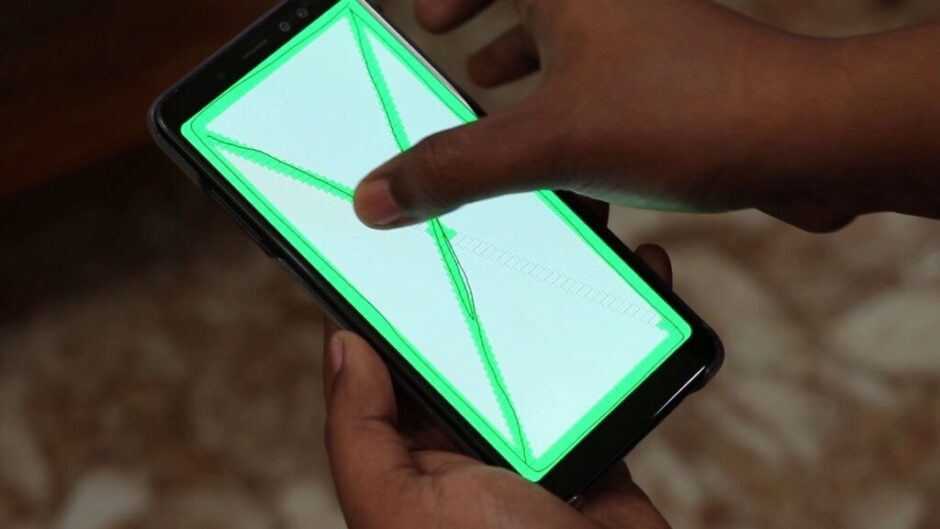
Plug your phone in and try to type a message or scroll and notice closely. Does the screen jump? Do letters type themselves? This is “Ghost Touch.”
It happens because the fake charger is leaking electrical noise into the screen’s digitizer. Unplug it immediately… it is actively damaging your touch sensors.
The Magnet Test (For Cables)
Use a fridge magnet on the USB-C plug. High-quality plugs often use non-magnetic stainless steel or copper alloys. Cheap fakes use high-iron steel that sticks strongly to magnets. If the wire sticks to the magnet… You have your answer.
Safe Sourcing Strategy: Navigating the Pakistani Market (Trust No One)
Buying from Daraz or random Instagram/OLX sellers doesn’t guarantee safety. In Pakistan, the market is flooded with “Master Copies” and “High Copy” fakes that look identical to the real thing but lack internal safety protections. Even on big platforms, non-verified third-party sellers often mix fake inventory with genuine products.
Where to Buy Safely in 2026
Always prioritise products with official warranty stickers (e.g., Mercantile, Airlink, Greentec).
- Anker: Buy from AnkerOfficial.pk (Optus Solutions) or their official DarazMall flagship store.
- Apple: Purchase from authorised resellers like Mercantile. Avoid “non-PTA/kit” accessories from local markets if you want guaranteed safety.
- Samsung: Visit the Samsung Official Store on DarazMall or authorised offline retailers.
However, please bear in mind that individual cases of duplicity of such products is still a possibility even though these stores provide goo-quality products, so be vary of such incidents.
Trusted Tech Stores (verified resellers):
These specialised tech retailers have strict supply chains and are widely trusted in the local community for selling genuine accessories:
- AllMyTech (AMT): Highly reputable for original Anker, Spigen, and UGREEN gear.
- Xcessories Hub: A reliable source for brands like Baseus and Belkin.
- PriceOye: Generally safe for accessories, but always check for the “PriceOye Assured” tag.
- Tejar.pk: Excellent for importing premium electronics that aren’t locally available, though prices are higher.
The Daraz Strategy:
Never buy from a random seller just because the price is lower.
Look for the “DarazMall” Flag: This indicates the product is sold by the brand or a verified distributor.
Check the Seller, for example, buy UGREEN cables only from the UGREEN Official Store on Daraz (ships from China but is genuine). Avoid sellers with names like “BestDeals786”.
Trusted Brands Available in Pakistan:
- Anker: The market leader here. Available via AllMyTech and DarazMall. Look for the verification code on the box.
- Samsung / Apple: Always buy “Box Pull” or “Warranty” stock. Avoid loose cables sold in plastic bags at Hall Road or Saddar… these are almost always fakes.
- Baseus / UGREEN: The best budget-friendly options in Pakistan. Available on DarazMall and Xcessories Hub. They offer 90% of the quality of premium brands for half the price.
- Ronin: A decent local budget option for basic charging, widely available in mobile markets, but ensure you buy from their official outlets to avoid low-quality copies.
Conclusion
Your smartphone is the command center of your life. It holds your banking, your memories, and your work. Powering it with a cheap counterfeit charger is a gamble where the house always wins. The damage might not be immediate, but it is cumulative. Every minute of charging with dirty power etches away at your battery’s life and stresses your logic board.
Don’t let a cheap accessory ruin a premium device. Check your cables. Weigh your chargers. And if your screen starts ghost-typing while plugged in, throw that charger in the recycling bin immediately. It’s not worth the risk.