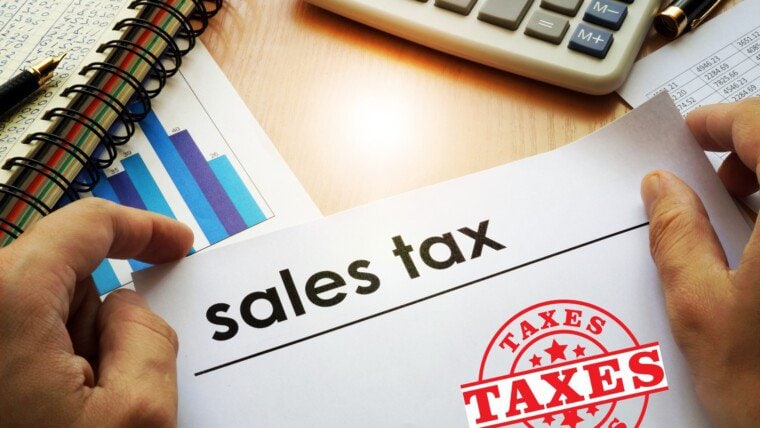
In Pakistan, the ability to compute sales tax effectively is not only required by the government, but it is also a crucial talent for both retail companies and individual customers.
Sales tax calculation is extremely necessary if you are a shop owner who determines the prices of your products. You should also learn how to do it if you think you are a prudent buyer who ensures that you pay the correct amount at the register. Knowing how to compute sales tax can save you money and keep you out of legal trouble.
It is why we bring to the average shopper the concept of calculating accurate sales tax so that you can stay on top of your finances. For ease of understanding, we have broken down each step of calculating sales tax so thar anyone can understand it.
What is Sales Tax?
Before moving ahead with its calculation, we first need to explain what sales tax is.
Sales tax is the collection and remitting a portion of the sales price of goods and service by the seller to the government. Although different provinces in Pakistan have the authority to levy their own sales taxes or give exemptions for specific products, the federal board of revenue (FBR) sets a consistent rate across the country. The typical rate is 17%, however there are several exceptions, such as a rate of 18% or 25% for textiles, mobile phones, and imported items.
Usually, sales tax is not imposed on basics such food, medicine, and agricultural goods. However, FBR states that sales tax is chargeable on all locally produced and imported goods except computer software, poultry feeds, medicines and unprocessed agricultural produce of Pakistan and other goods specified in Sixth Schedule to The Sales Tax Act, 1990.
Here is how you can calculate sales tax on the items you buy:
Step-by-Step Guide to Calculating Sales Tax
Identifying the Sales Tax Rate
First, determine the applicable sales tax rate for the item in question. Even if the default rate in Pakistan is 17%, it is critical to establish whether the item is subject to a different rate. Generally, for many goods and services, the average is 17%. Here is a breakdown of the sales tax on commodities:
- Textiles, leather goods, cell phones, and capital items are among the commodities that may be subject to an 18% tax.
- Some items, such as aerated water, cosmetics, and household appliances, may qualify for discounts of up to 25%.
- In some places, such as Sindh, digitally purchased restaurant services may be subject to an 8% tax reduction.
- Check with the FBR or your regional tax office to ensure you’re paying the most current rates.
Converting the Tax Rate
Converting to Decimal
After finding out the correct percentage of sales tax on the items you are purchasing, you must convert the percentage to a decimal for ease of calculation.
For example, if the rate is 17%, divide 17 by 100:
1710017100 = 0.17
Multiply the Price by the Tax Rate
Next, multiply the item’s pre-tax price by the tax rate’s decimal amount. If an item costs Rs. 1,000 and the rate is 17%, then the tax is calculated as:
Rs. 1,000 × 0.17 = Rs. 170 (the sales tax amount)
Add the Calculated Tax to the Original Price
Finally, add the calculated tax back to the original price of the product to determine the total amount payable. For an item priced at Rs. 1,000 with a tax of Rs. 170, the final price is:
Rs. 1,000 + Rs. 170 = Rs. 1,170 (total price after tax)
Example Calculation
Suppose you want to buy a laptop priced at Rs. 70,000 and the applicable sales tax rate is 17%. Follow these steps:
- Convert the rate: 17% ÷ 100 = 0.17
- Calculate the tax: Rs. 70,000 × 0.17 = Rs. 11,900
- Compute the final cost: Rs. 70,000 + Rs. 11,900 = Rs. 81,900
Thus, the total price you pay for the laptop, including sales tax, will be Rs. 81,900.
Comparing Sales Tax in Pakistan to Global Standards
Understanding how Pakistan’s sales tax compares to worldwide standards can provide important context for both businesses and consumers. The usual sales tax in Pakistan is18%, which is more than in some nations but still manageable when compared to others.
Global Sales Tax Rates
Different countries have different sales tax rates. As an example, in Europe, some nations have a very high standard value-added tax rate of 27%, such as Hungary, and others have a much lower rate of 4.5%, such as Andorra.
In the United States, there is no federal sales tax; instead, individual states set their own rates, which can range from 2.9% to 7.25%
Pakistan’s Sales Tax Structure
Pakistan’s sales tax system combines retail sales tax with value-added tax, which is why we often hear people complaining that Pakistan deploys a hybrid sales tax calculation method.
The provinces have the autonomy to choose tax rates on services, which typically range between 15% and 16%; the federal government sets a standard rate of 18% for goods. Even if it does not seem a hassle to common people, companies who run across several provinces find this distributed approach a little tiresome.
Considerations for Businesses and Consumers
Businesses are the direct effectees of sales tax changes, which is why they need to know about changes to the tax limits for accurate calculations. Comparing it with the global systems can also help them assess their situations and demand for a more relaxed approach from the government.
While Pakistan’s sales tax rate is reasonable on a worldwide scale, its hybrid and decentralized system requires careful attention from both firms and consumers to navigate effectively.
Conclusion
Sales tax calculation in Pakistan need not be a burdensome task reserved for tax professionals. With a clear understanding of the applicable rates, a step-by-step approach to computing tax, and the use of digital tools for verification, both businesses and consumers can master this essential skill. Whether you’re shopping for everyday essentials or managing a complex business invoice, precise sales tax computation ensures compliance and helps to control costs effectively.
By following the easy steps outlined above, you not only avoid unexpected expenses but also improve your financial accuracy. Embrace these strategies today and empower yourself with the confidence that comes from knowing your numbers are always right. Accurate sales tax calculation is a cornerstone of financial literacy—unlock its potential and let it work for you.