Most people in Pakistan flip a packaged product over, glance at the back, and put it straight into the trolley. The numbers are small, the text is dense, and unless you already know what you are looking for, the information feels designed to be ignored. But those numbers are doing something important. They are telling you exactly what you are putting into your body, how much of it, and sometimes, quietly, what the manufacturer would rather you did not notice.
This guide will walk you through every major section of a Pakistani food label so that the next time you are standing in a Imtiaz, a Carrefour, or a local kiryana store, you can read the back of a packet and actually understand what it is saying.
Start With the Serving Size, Not the Total
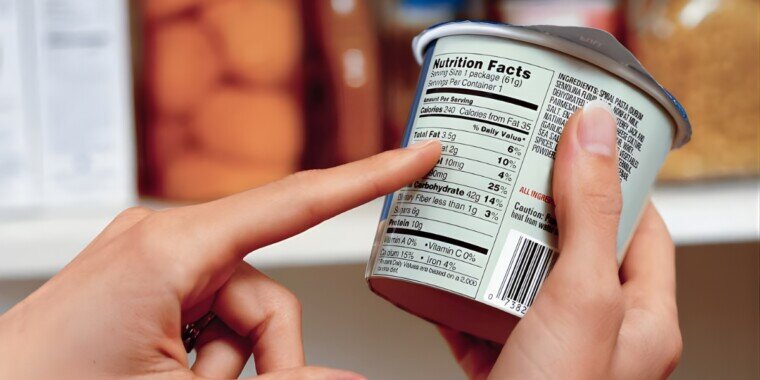
The first and most commonly misread part of any nutrition label is the serving size. Every number on the label refers to one serving, not the entire packet. This distinction matters enormously.
Pick up a packet of biscuits, and you might find the label says 130 calories per serving. That sounds reasonable. Then look at the serving size: three biscuits. The packet contains twelve. If you sit down and finish the packet, which is what most people do, you have consumed 520 calories, not 130. The label was technically accurate. It just relied on you not doing the maths.
In Pakistan, serving sizes are often set to make the product look healthier than it is. A small bag of chips might claim a serving is half the bag. A fizzy drink might list a serving as 250ml when the bottle contains 500ml. Always multiply the per-serving number by however many servings you are realistically going to consume.
Calories: The Number Everyone Looks At First
Calories measure the energy a food provides. The average adult in Pakistan needs roughly 2,000 to 2,500 calories per day depending on age, weight, gender, and activity level. A sedentary office worker in Lahore will be closer to 2,000. A construction worker in Multan will be closer to 3,000.
What matters is not just how many calories something contains but where those calories are coming from. A 200-calorie snack that comes mostly from protein and fibre will keep you full for hours. A 200-calorie snack that comes from refined sugar will spike your blood sugar and leave you hungry within the hour.
The calorie number alone tells you very little. Always read it alongside the macronutrients listed below it.
The Three Macronutrients: What They Actually Do
Carbohydrates
Carbohydrates are the body’s primary fuel source. On Pakistani food labels, you will usually see total carbohydrates listed, followed by sugars as a subcategory, and sometimes dietary fibre.
Total carbohydrates include everything: starches, natural sugars, added sugars, and fibre. The number you want to pay attention to is the sugar figure underneath it. Anything above 10 to 12 grams of sugar per serving deserves scrutiny. Flavoured yogurts, breakfast cereals marketed as healthy, fruit juices, and energy drinks in Pakistan are frequent offenders. A single serving of a popular locally sold fruit drink can contain 25 to 30 grams of sugar, which is more than six teaspoons.
Fibre is listed separately in some labels and is worth seeking out. Most Pakistanis consume far less fibre than recommended. High-fibre foods slow digestion, help regulate blood sugar, and keep you full longer. Look for at least 3 grams of fibre per serving as a baseline.
Protein
Protein is essential for muscle repair, immune function, hair and skin health, and keeping hunger under control. The average adult needs roughly 0.8 grams of protein per kilogram of body weight per day. Someone weighing 70 kilograms needs around 56 grams of protein daily.
Most packaged snacks and processed foods in Pakistan are low in protein. When you see a product claiming to be high in protein, check the actual number. Anything below 5 grams per serving is not meaningfully high. Greek yogurt, eggs, legumes, and meat are far better protein sources than most packaged alternatives.
Fats
Fats on Pakistani food labels are broken into total fat, saturated fat, and sometimes trans fat, which can be dangerous when consumed in large quantities. However, total fat is not the enemy. Your body needs fat to absorb vitamins, produce hormones, and protect organs. The type of fat is what matters.
Saturated fat, found in ghee, butter, red meat, and full-fat dairy, raises LDL cholesterol when consumed in large quantities. Most health guidelines suggest keeping saturated fat below 20 grams per day for the average adult. This is not a reason to avoid ghee entirely, but a reason to be aware of how much is accumulating across a full day of eating.
Trans fat is the one to genuinely avoid. It is created through a process called hydrogenation, which turns liquid oils into solid fats. It appears in Pakistan in ghee, many commercially baked biscuits, and certain fried snacks. Trans fat raises bad cholesterol and lowers good cholesterol simultaneously, making it the most harmful fat on the label. If you see “partially hydrogenated oil” anywhere in the ingredients list, the product contains trans fat even if the label says zero, because manufacturers can list amounts below 0.5 grams per serving as zero.
Sodium: The Silent Number Most Pakistanis Ignore
Pakistan already has some of the highest rates of hypertension in the region, and one of the leading dietary contributors is sodium, which is the scientific name for salt. The recommended daily limit is 2,300 milligrams of sodium, equivalent to about one teaspoon of salt.
The problem is that sodium is hidden in products that do not taste salty. Bread, crackers, sauces, packaged soups, instant noodles, canned goods, and even some breakfast cereals contain significant amounts. A single packet of instant noodles, one of the most commonly consumed items in Pakistani households, can contain 800 to 1,200 milligrams of sodium, more than half the daily recommended limit in one meal.
When reading a label, treat any product with more than 600 milligrams of sodium per serving as a high-sodium food. If you are eating two or three servings, or combining it with other packaged foods in the same day, the numbers stack up quickly.
The Ingredients List: Read It From Left to Right
The ingredients list is printed in descending order by weight. Whatever appears first is present in the largest quantity. Whatever appears last is present in the smallest.
This one rule exposes a great deal. A biscuit that lists refined flour, sugar, and vegetable shortening in its first three ingredients is telling you those three things make up the majority of the product. A juice that lists water first and then apple juice concentrate third is mostly water with a small amount of reconstituted juice.
Watch for sugar hiding under other names. Pakistani food labels frequently list sugar as sucrose, glucose, fructose, corn syrup, dextrose, maltose, or fruit juice concentrate. If you see two or three of these in the same ingredients list, the product is high in sugar regardless of what the front of the packet claims.
Also watch for the phrase “and other permitted food additives” at the end of some Pakistani ingredient lists. This is a legal loophole that allows manufacturers to avoid disclosing every additive used. It is not necessarily dangerous but it is worth noting when a product feels the need to use it.
Understanding Percentage Daily Values
Some labels in Pakistan, particularly on imported products and larger local brands, include a column marked % Daily Value or % DV. This tells you what percentage of your full day’s recommended intake one serving provides.
A quick rule of thumb: 5% or less is low, 20% or more is high. So if a product shows 25% daily value for sodium, that single serving is contributing a quarter of your entire day’s sodium allowance.
Not all Pakistani labels include this column, and there is currently no legal requirement to do so in the same standardised format used in the United States or European Union. Pakistan’s PSQCA and DRAP govern food labelling regulations, but enforcement and standardisation remain inconsistent across categories.
Claims on the Front of the Pack: What They Mean and What They Do Not
The front of the packet is where marketing lives. The back is where facts live. Here is how to decode the most common claims:
- “Natural” has no legal definition in Pakistan. It means nothing enforceable, essentially.
- “Zero cholesterol” on a vegetable oil is technically true but misleading, because vegetable oils never contain cholesterol. Only animal products do.
- “No added sugar” means no sugar was added during processing. The product may still contain significant natural sugars.
- “Fortified with vitamins” is common on local breakfast cereals and does not compensate for high sugar or low fibre content.
- “Low fat” products frequently replace fat with sugar to maintain taste. Always check both the fat and sugar numbers when you see this claim.
- “Baked not fried” reduces fat but does not make a product healthy. A baked biscuit can still contain large amounts of refined flour, sugar, and sodium.
A Simple System for the Trolley
You do not need to memorise every number on every label. A simple habit is enough. When picking up a packaged product, check four things in under thirty seconds: the serving size to calibrate everything else, the sugar content per serving, the sodium content per serving, and the first three ingredients to understand what the product is mostly made of.
If the sugar is above 10 grams, the sodium above 600 milligrams, or the first three ingredients are refined flour, sugar, or hydrogenated oil, you have enough information to make a considered choice.
Reading food labels is not about eliminating all processed food from your life. It is about knowing what you are choosing when you choose it. In a food environment where front-of-pack claims are often more creative than accurate, the numbers on the back are one of the few places where manufacturers are legally obliged to tell you the truth.