
In today’s job market, it feels like every other job application gets rejected. People who do get an interview call get stuck in an endless loop of interviews with eventual dismissal. Some external factors can be to blame, however, a big chunk of your chance to secure a job is via your curriculum vitae, and it is precisely where even the most competent candidates lack.
Your CV does not have to be a traditional list of your achievements; rather, it should have a personality of its own, capable of captivating recruiters. To get to such a state, you will have to make sure every little detail is polished to perfection, and that requires time, patience and apt knowledge.
It is why we present to you a complete guide for fixing your job rejections with the help of an impressive CV. This article will provide you with all the necessary information for making a CV from scratch, pointers to help enhance it if you have one and some examples that will reflect how you should tailor your resume.
What is a CV?
Everyone knows the Latin term but not many people know what it entails. A CV in Latin means ‘course of life,’ and it can be if you have been searching for a job for months with no luck.
A traditional approach to making a CV is to jot down a summary of your education, skills and relevant work experience, which is essentially what it is. However, every other candidate has the same formatted CV, leaving no room for people who stand out. Enabling you to successfully sell your abilities to potential employers is what a great CV should be all about, and it is an acquired talent.
You might have also seen a lot of candidates use CV and resume interchangeably. That is because in USA and Canada, CVs are commonly called resumes. A fun fact about resumes in general is that they do not follow a format, and may be shorter than a CV, but it is no rule. Curriculum vitae are more generally accepted in the academic world, while resumes are for job applications.
How Long Should My CV Be?
As a rule, there is no determined length of a CV, but usually two to three pages are more than enough to explain your accomplishments in detail. Going for lengthy CVs will help your case as it explains your experience to the hiring committee.
Full-time students or recently graduated ones need to keep their curriculum vitae to one page as they usually do not have enough work experience. However, if you are applying for an academic position, you should make your CV thorough and include all details possible.
Remember that if you are someone who has bagged five or ten years of experience, you should not shy away from mentioning your accomplishments in detail. The rule of concise CVs does not apply to you.
What Should I Put in My CV?
- Contact details
- Full Official Name
- Email Address (can also provide phone number)
- Location (just mention the city, don’t include an exact address)
- Social Media Profiles (LinkedIn, Behance, GitHub) (Optional)
- Personal Website (Optional)
Please note that you do not have to add your date of birth or a picture of yourself unless the employer asks for it. Make sure your email sounds professional or simple such as [first name] + [last name] @gmail.com. Make sure you do not enter a previous work email as it is just disrespectful.
Profile/Introduction
This is a brief statement or summary about you that captures the main points and makes you stand out among other applicants. Typically used at the start of a CV, it highlights a handful of relevant successes and highlights where you see yourself in the near future, career-wise.
Work Experience
Start this section with the most recent job or the current position you have. Go backwards in a list form, putting your role and the following information with each job you had:
- Company Name
- Job Title
- Employed for (years and months)
- Responsibilities and Projects you handled
Remember to mention which skills you developed because of the job or project you undertook. You do not have to go into details, but highlighting a summary of your skillset is crucial for the recruiters.
Education
As done previously, enter your educational background in a descending order. Remember to mention the school you went to, the year of graduation and your degree. It is not compulsory to add your GPA but if you have high honors, feel free to show them.
Other Skills/Qualifications
In this section you can either add the following experiences:
- Internships
- Research projects
- Lab work
- Volunteer work
- Field experience
Or you can highlight other achievements you have made, e.g., you can put some reputable courses that you took, the languages you can speak and any other relevant skill you learnt in your free time. However, fair warning, as people often go too deep with their other skills to make an impression. You need to balance it perfectly with the skill the recruiter is going for and what you have to offer.
Interests
Please note that putting all your hobbies and interests into this section would not interest anyone looking to hire you, so it is best to tailor them according to the job you are after.
If you are applying for a position as a copywriter, putting interests as “Maintaining a personal blog/website” is likely going to pique the interest more than putting “Going to the cinema.”
How Should I Make My CV Better?
Check for Grammar Slip-Ups
Even though it may not be as strict as it is for a school assignment, using a grammatical error or slip-up can look very unprofessional in your CV. It shows a lack of detail, and that is not something you would want to define you.
Here is how you can fix and avoid them:
- Read and reread your CV, look for any grammatical mistakes and correct them
- Run your CV with any grammar tool (e.g., Grammarly)
- Ask a friend or mentor to review your CV before submission
- Use an AI tool for CV review
Formatting and Layout
People think that going above and beyond will make their CV look different, and yes, they assume right. That way, a CV looks different, but it does not add any meaning. We need to come up with a format that adds meaning to your experiences.
A lazy layout with a dozen bullet points is also not the answer here. To come up with a unique CV that makes recruiters do a double take is a simple one. It should be concise, easy on the eyes, and readable by both humans and ATS software.
Imagine a recruiter gets to deal with your cluttered resume which forces them to spend more time deciphering details, making it more likely that they just give up on your application and throw it in the trash.
Here’s how you can fix your bad CV:
- Choose clean, professional fonts like Arial or Calibri in size 10 to 12. Do not use Times New Roman or Comic Sans MS as they are overly done and outdated.
- Organize your CV with clear headings and consistent bullet points. Do not use multiple color codes for headings; go for a consistent black and white.
- Break up sections wisely and try to fill the white spaces naturally.
- To maintain format, convert your CV into a PDF file for sending.
- Adjust your personal profile and work experience sections with smaller bullet points to reflect the requirements of each role.
- Keep multiple versions of your CV to easily customize for different positions. You can keep the same format for each.
Here are some of the most easy-to-read resume examples that you can use as inspiration:
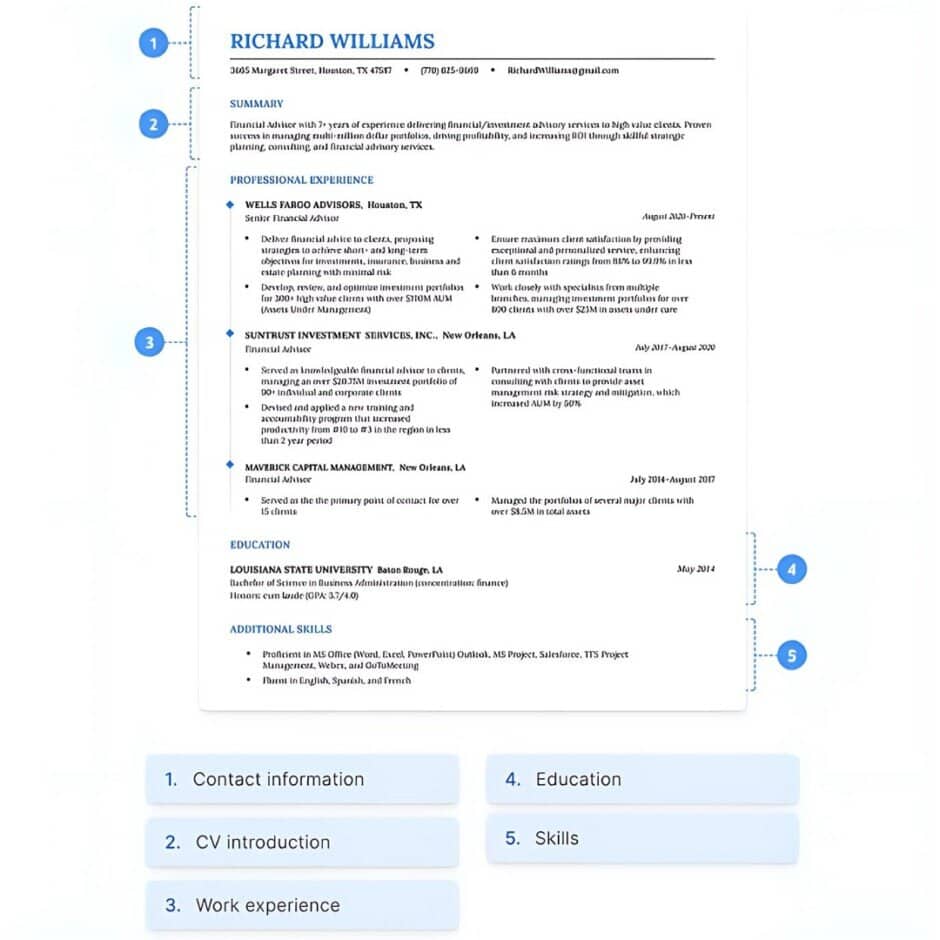
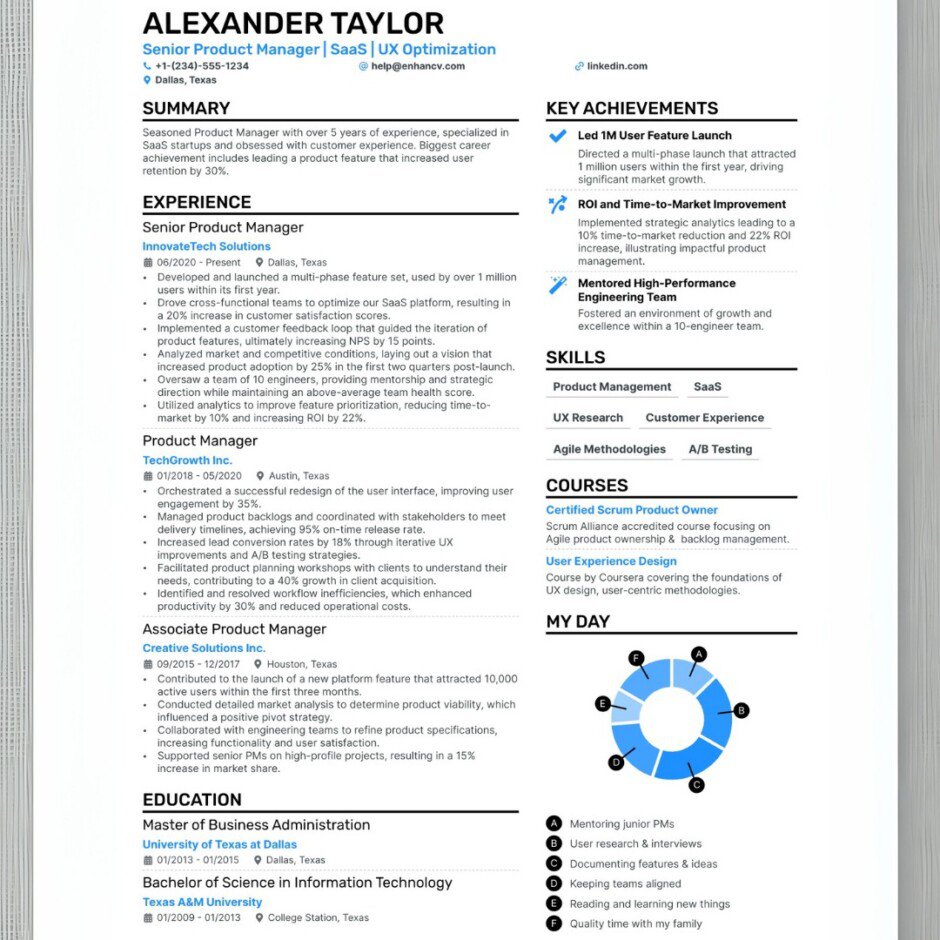
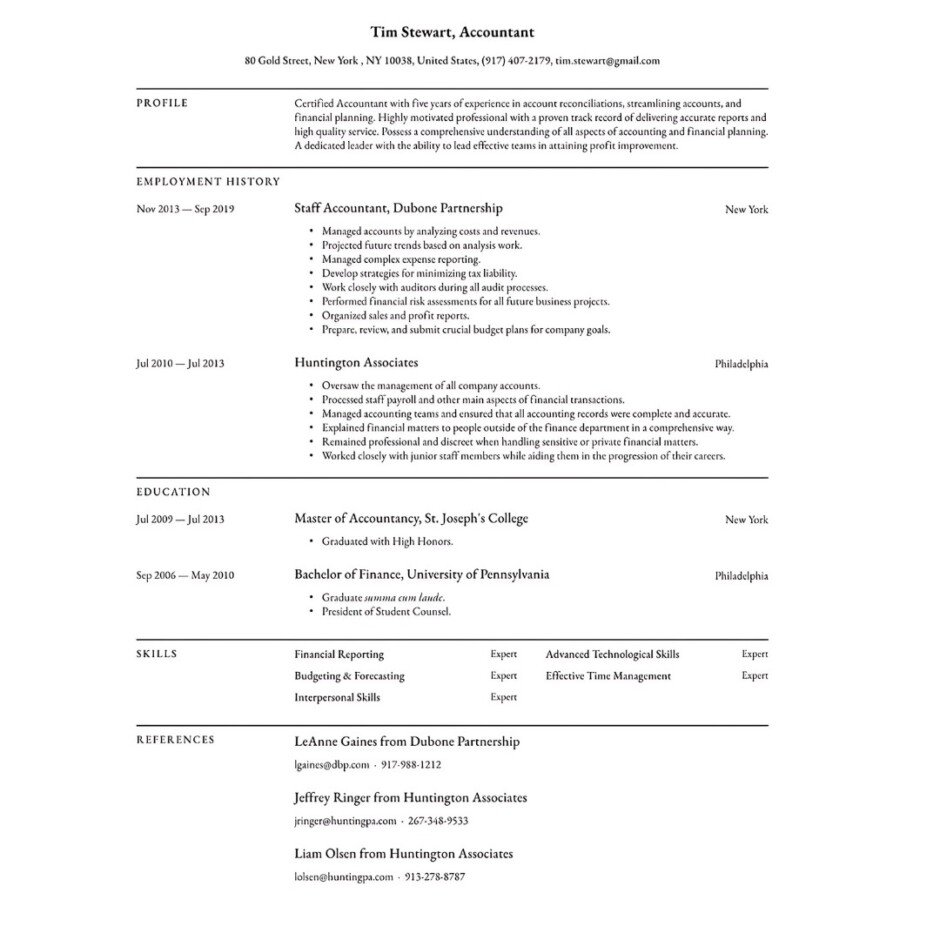
Adding False Experiences or Data
We have seen these CVs: trying to get a job based on little to no experience by putting exaggerated fake data. Dishonesty in your resume can be disastrous than beneficial if caught. Here is how to bypass it:
- Always be honest about your experience
- If you are applying for a job in which you lack experience, add some skill-learning courses or equivalent job data to show your interest.
- Show you are willing to learn new skills and adaptability in your interview process
Not Optimizing for Applicant Tracking Software (ATS)
A lot of people still do not know that AI has long been incorporated in HR and recruitment software to help sift people. ATS is one such common software, and if you are not familiar with how to tailor your resume based on ATS rules, your CV might see the bin much earlier than your peers who do.
Luckily, we can fix it with the help of the right keywords and specific terms that relate to the job you are applying for. These keywords can be related to skills the recruiters are looking for.
You should do the following to make your CV ATS friendly:
- Research industry-specific keywords and include them in your CV naturally.
- ATS software works best if your CV layout is simple and standard for it to parse it accurately.
What Not to Put in My CV
Some elements you should not put in your CV include:
- References (unless not asked to provide)
- Reasons why you left previous positions
- Salary information from previous employers
- Religion, height or weight in your personal information
- Headshots or other photos
These elements are discouraged because they might lead to hiring bias or workplace discrimination, so it is better to leave out.
Conclusion
You cannot simply put away churning a winning CV for a day when the opportunity arrives; you must work to get it done right. It takes time to write, evaluate, tailor, and revise your resume for optimum impact, so do not shy away from coming up multiple versions of it.
To get the best results, follow our instructions and make sure your CV is in the right format and layout. You must also be clear about your employment requirements and show a passion to grow.
Review your existing CV today and see the job opportunities just rolling in. Good luck!