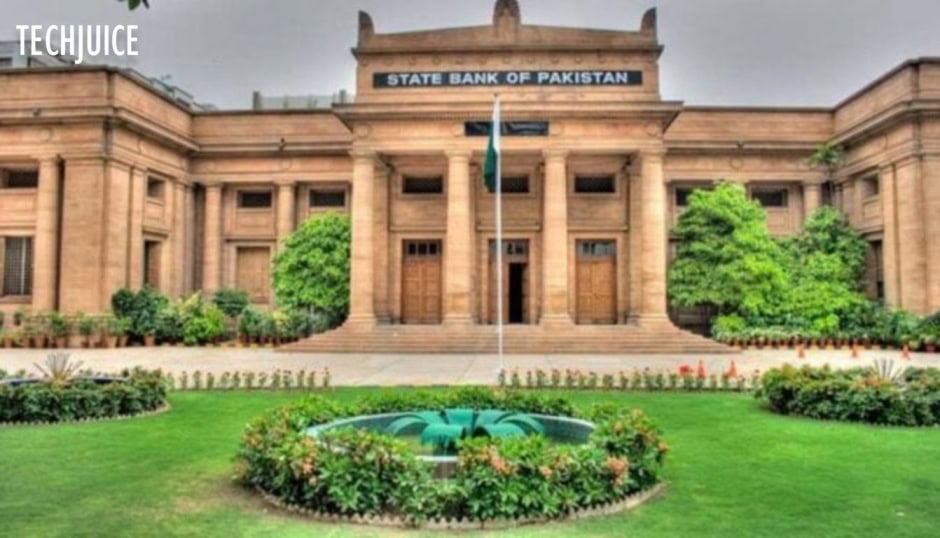
As anticipated, the State Bank of Pakistan’s (SBP) Monetary Policy Committee (MPC) has reduced the policy rate by 100 basis points, bringing it down to 12%, effective from January 28, 2024.
At a news conference earlier today, Governor SBP Jameel Ahmed made the announcement.
This was the sixth straight reduction, totaling a 900 basis point decline since June 2024. This drop in inflation allows policymakers to continue lowering rates to encourage economic growth.

Low inflation, which fell to 4.1% in December 2024 from 38% in May 2023, is largely responsible for the policy rate cut.
Key Reasons for the Rate Cut
The chief of the SBP stated that the better economic forecast was the reason for the policy rate cut. From an international perspective, Pakistan’s current account surplus increased to $1.21 billion in December 2024 from $582 million in December 2023.
In the meantime, the $3.08 billion in worker remittances was a 29.3 percent increase from the previous month. Total remittances reached $17.84 billion in 6MFY25, giving the external sector a much-needed boost.
Additionally, he clarified that the decline in SBP’s foreign exchange reserves was due to the repayment of debt. He said that the goal of hitting $13.5 billion by June 2025 is still on track.
An SBP statement on inflation states, “This trend is driven by moderate domestic demand conditions and supportive supply-side dynamics, amidst favorable base effect.”
Inflation and Economic Outlook
It is anticipated that inflation will continue to decline in January before gradually increasing in the months to come. Additionally, the Committee emphasized that core inflation remains excessive despite ongoing easing.
Meanwhile, high-frequency data showed that the economy was slowly improving. The MPC determined that the effects of the 1,000 basis point policy rate cut since June 2024 will persist and provide additional stimulus to the economy.

The following significant events have occurred since the last meeting of the Committee.
- To begin, fiscal year (Q1) GDP growth was marginally lower than the MPC had anticipated.
- Furthermore, in December 2024, there was still a surplus in the current account, even though the SBP’s foreign exchange reserves decreased due to low financial inflows and heavy loan repayments.
- Third, tax collections were still below target in H1-FY25, even though they increased significantly in December.
- The fourth point is that the last several weeks have seen extremely volatile global oil prices.
- Finally, central banks have been more careful due to the increased uncertainty of the global economic policy environment.
Given the current changes and threats, the Committee believes that a careful approach to monetary policy is necessary to maintain stable prices, which is important for ongoing economic growth.
To keep inflation within the 5% to 7% target range, the MPC determined that the real policy rate must be sufficiently positive looking forward.
Real Sector
The most recent high-frequency indicators showed that the economy is still moving in a positive direction.
Import volumes, electricity generation, and loan disbursement to the private sector have all seen significant increases, and so have sales of automobiles, POL, and fertilizer.
The early statistics for real GDP in the first quarter of FY25 show a small growth of 0.9%, compared to a growth of 2.3% in the first quarter of FY24.
The anticipated significant slowdown in agricultural sector growth to 1.2% in Q1-FY25 from 8.1% in the same period last year was the primary factor for this slowdown.
Additionally, the most recent wheat crop data, including satellite pictures, likewise indicates a moderate yield.
Moreover, compared to the previous year, the slowdown in industrial sector development in Q1-FY25 was less severe. According to the MPC, a small number of light products, including furniture, are responsible for the recent decline in LSM, which is dragging down industrial development.
On the other hand, important industrial areas including textiles, food and beverage, and automotive have made significant strides forward. Additionally, the business confidence indicator has remained positive.
Moving ahead, the MPC anticipates that economic activity will continue to gather momentum and that real GDP growth will stay within the previously predicted range of 2.5% – 3.5%.
Strong Remittances and Exports Drive H1-FY25
A current account surplus of $0.6 billion was recorded in December, bringing the cumulative surplus during H1-FY25 to $1.2 billion. This surplus was driven by robust workers’ remittances and export revenues.
With HVA Textile at the helm, exports kept going strong. Also, import growth accelerated broadly on the basis of larger volumes, which is an indication of better economic activity.
Even while export revenues were higher than import bills, the growing trade deficit was more than compensated for by remittances.
These developments, especially the strong remittances from workers, have greatly improved the current account balance forecast, which currently predicts that it will stay within the range of a surplus to a deficit of 0.5% of GDP in FY25.
Net financial inflows were weak during H1-FY25, but they should pick up speed moving forward because a large chunk of the government’s debt has already been paid off.
Accordingly, the SBP’s foreign exchange reserves are projected to surpass $13 billion by June 2025, thanks to the improved current account outlook and the anticipated realization of planned financial inflows.
FBR Revenue Up 26% in H1-FY25, Tax Gap Remains
During H1-FY25, FBR had a significant surge in revenue of about 26%. Yet, the gap between the aim and the amount of taxes collected has grown.
As a result, reaching the yearly goal would necessitate a significant increase in tax revenue. The fiscal balance improved during H1-FY25, according to financing side estimates, which means that expenditures were substantially restricted.
The Committee believes that the overall budget deficit will be kept around its target due to the lower-than-budget interest payments. The primary balance aim, however, would be difficult to achieve.
Currency and Credit
From 13.3% at the last MPC meeting to 11.3% as of January 17, the broad money (M2) growth slowed even more.
The drop in M2 growth was mainly due to a big slowdown in NDA growth. There was a dramatic increase in bank loans to businesses and consumers, while the government borrowed less money from banks and turned to other sources.
Reasons for this include banks’ strong efforts to satisfy the advances to deposit ratio (ADR) criteria, the loosening of financial conditions, and the continuing economic recovery.
Bank deposits have fallen significantly since the last MPC meeting, which is likely due to these causes; yet, there has been an increase in the amount of money in circulation during this time.
Inflation
The headline inflation rate continued its declining trend in December, falling from 4.9% y/y in November to 4.1%.
A number of factors have contributed to the recent trend of declining inflation, including stable exchange rates, a favorable base effect, a sufficient supply of essential foodstuffs resulting in low food inflation, and a reduction in electricity tariffs.
In addition to domestic demand being restrained, underlying inflationary pressures, as measured by core inflation, also subsided, although they are still high.
Not only that, but inflation expectations were also very unpredictable. The MPC has confirmed its previous prediction that inflation in the near future will be unpredictable and will likely rise close to the target range’s upper limit by the end of FY25, based on these developments.
Headline inflation for FY25 is expected by the MPC to average between 5.5% and 7.5%.
Various factors, such as changes in global commodity prices, protectionist policies in major economies, the timing and size of energy tariff adjustments, the price of perishable food, and any other actions taken to achieve the revenue target, could impact the inflation outlook in the future.