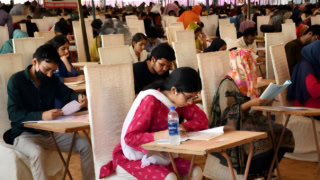
Islamabad: The United States Agency for International Development (USAID) has halted funding, resulting in 530 Pakistani students, primarily from flood-affected areas, facing challenges in sustaining their education under the Merit and Needs-Based Scholarship Programme (MNBSP). The initiative, administered by the Higher Education Commission (HEC), was expected to run until June 2026.
The USAID funding drop is part of a larger trend of US foreign assistance cuts, which has resulted in the closure of many Pakistani programs. This $30.7 million scholarship scheme had a significant impact on low-income students whose communities were devastated by floods in 2022.
In October 2013, the Executive Committee of the National Economic Council (ECNEC) authorised the Pak-USAID Merit and Needs-Based Scholarship Programme (Phase II), allocating Rs2.95 billion in financing.
The scholarship program was funded by a US government grant of Rs2.37 billion and a local contribution of Rs577.1 million from the Higher Education Commission. The 90-month time period planned for the project was extended until June 2025 before becoming questionable due to insufficient funds during the request to extend it until June 2026.
Program Expansion and Student Uncertainty
The total number of applicants increased to 4,868 as a result of favourable exchange rate changes, which enabled HEC to issue 1,868 additional scholarships after an initial plan to distribute 3,000 scholarships between undergraduates (1,970) and graduate students (1,030). The scholarship program was expanded to include a total of 4,868 beneficiaries when 530 students from flood-affected areas received support, which was approved by USAID in collaboration with the Ministry of Economic Affairs.
A total of 4,142 pupils have completed their programs at HEC, with 2,094 undergraduates and 2,048 graduates. The current program provided scholarships to the remaining 530 students, despite the fact that they will continue to enroll until 2026. Following the termination of USAID’s financial assistance, the educational program encountered financial instability, which prompted numerous beneficiaries to evaluate their academic career prospects.
Challenges for Universities and Development Efforts
Beyond student support, the programme also aimed to strengthen institutional capacity and faculty training. Initially, the program comprised thirty universities; however, it was expanded to seventy institutions by incorporating forty public-sector universities that were affiliated with the Benazir Income Support Programme (BISP) Undergraduate Scholarships.
This program provided benefits to female pupils attending women’s universities and students from all provinces of Pakistan. The academic development programs that were preparing future Pakistanis were terminated as a result of USAID’s departure.
The suspension of financing poses a broader range of hazards to the development partnerships between the United States and Pakistan. The organisation has evolved into a critical force for global development since President John F. Kennedy established USAID in 1961. It continues to finance operations in the energy, governance, human rights, economic progress, health, and humanitarian assistance sectors.
In 2023, the United States Agency for International Development allocated $43.79 billion to assist over 130 countries, with Pakistan being one of its primary beneficiaries. The termination of funding poses a threat to ongoing development initiatives, which impacts thousands of beneficiaries.
TechJuice reached out to Higher Education Commission (HEC) officials, Dr. Shaista Sohail and Dr. Ziaul Qayyum, for a statement following the student demonstrations, but no response has been received. Meanwhile, affected students, many from underprivileged backgrounds, remain uncertain about their academic futures, anxiously awaiting solutions to prevent disruptions in their education.
The uncertainty surrounding the programme’s future underscores the urgent need for intervention, as hundreds of students risk losing their education. Whether through government action or international support, a swift resolution is critical to safeguarding their academic aspirations.