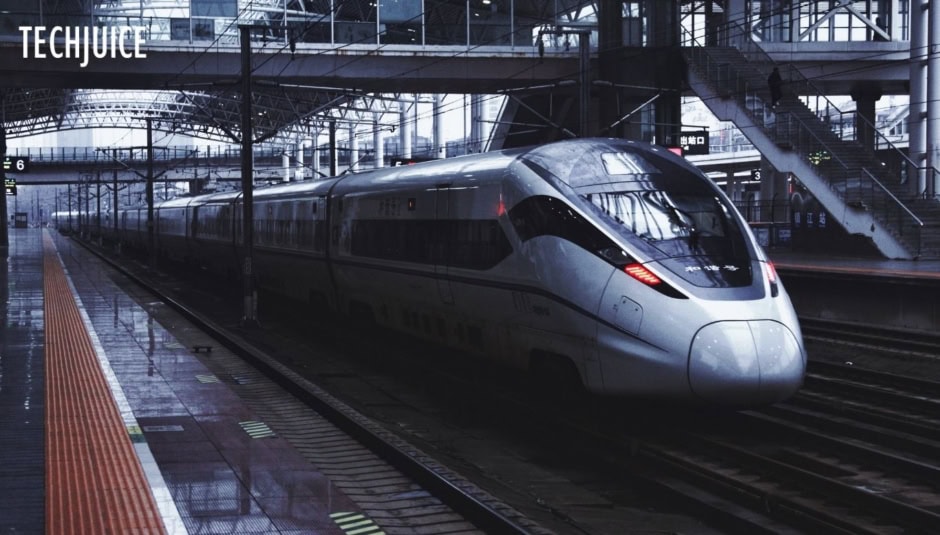
Punjab Chief Minister Maryam Nawaz Sharif recently chaired a high-level meeting to discuss the possibility of launching a high-speed rail link between Lahore and Rawalpindi.
The vision? To drastically reduce the travel time between the two cities and bring Pakistan closer to global rail standards.
Forming a Feasibility Task Force
A working group has been established, including Punjab Transport Minister Bilal Akbar Khan, Adviser to CM Shahid Tarar, and top officials from Pakistan Railways (PR). Their task: assess the feasibility of a bullet train project on this 280-kilometer stretch.
Expert View: Unrealistic Under Current Conditions
However, experts have labeled the initiative as “a dream, for now”, citing three critical challenges:
- Decrepit infrastructure
- Severe financial requirements
- Difficult terrain
A senior PR official emphasized, “It is impossible to operate a bullet train on the outlived rail infrastructure, especially the rail track.”
Existing Limitations
- Current train speeds: max 65 km/h
- Green Line travel time: 4.5 hours
- Other express trains: 5.5 hours
CM Maryam wants this travel time cut to 2 hours. But PR Minister Hanif Abbasi said that’s unattainable with the current track. He proposed an alternative: upgrading the track to reach 100 km/h, for Rs40 billion. It is a suggestion she “principally agreed” to.
Mechanical engineer Riaz Rashid, formerly with Saudi Arabia’s North-South Rail Project, says even reaching 150 km/h on upgraded tracks wouldn’t qualify as true high-speed rail. Globally, high-speed trains start at 200 km/h, and bullet trains typically run above 300 km/h.
Financial Hurdles
Experts estimate that a fully modern high-speed rail system could cost $12–14 billion, and $50 million per kilometer in more advanced regions like Europe.
Even the “compromise plan” to run trains at 160 km/h with new locomotives, coaches, and upgraded infrastructure would cost around Rs400 billion. Minister Abbasi shared that PM Shehbaz Sharif has asked for a proposal for this plan.
Technical and Terrain Challenges
Implementing such a massive project would take years, even with intense labor and funding. Mr. Rashid explained that high-speed trains need:
- Straight tracks
- Special gauge infrastructure
- Advanced signaling and rolling stock
None of which currently exist in Pakistan, not even in India, which has been working on similar projects since 2016.
The Lahore–Rawalpindi route presents additional physical constraints:
- Uneven paths with multiple curves
- Three river bridges (Chenab, Ravi, Jhelum)
- Eight canal culverts
- Hilly sections
All of this complicates the feasibility of laying straight high-speed tracks without significant restructuring.
Even if the train were operational, commuting to and from stations remains a barrier. Former LDA chief engineer Habibul Haq Randhawa highlighted how access to Lahore railway station takes 40–90 minutes from most residential areas. Without easing this, the shift to trains won’t appeal to the public.