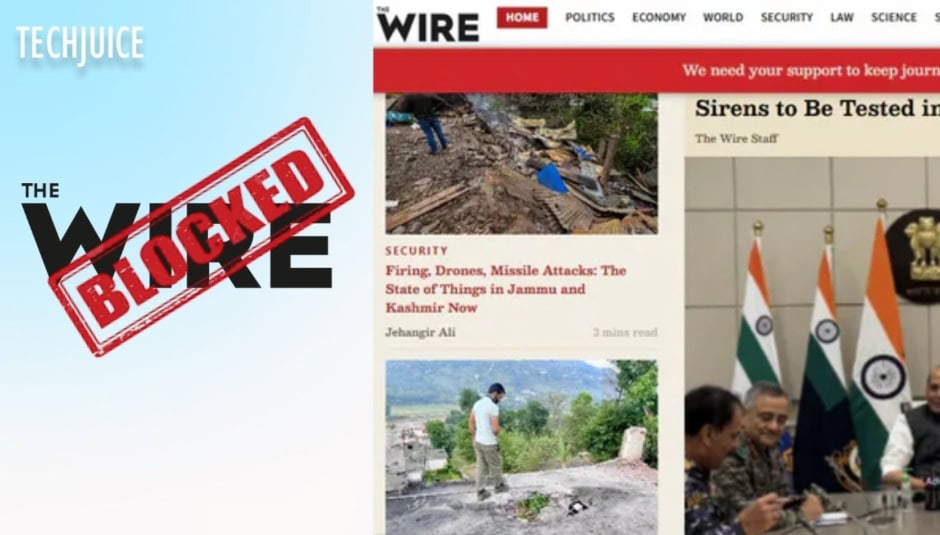
The Government of India has blocked access to The Wire, one of the country’s most well-known independent digital news platforms.
The Ministry of Electronics and Information Technology ordered the ban under the IT Act, 2000. The official reason remains undisclosed, but reports suggest it stems from The Wire’s critical coverage of recent developments involving India and Pakistan.
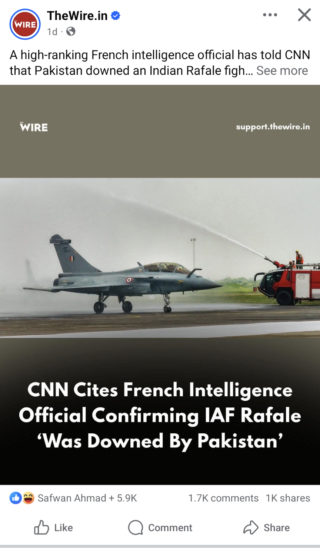
One such report, which gained widespread attention, cited CNN quoting a high-ranking French intelligence official confirming that a Rafale fighter jet of the Indian Air Force was downed by Pakistan. This revelation challenged the Indian government’s official narrative and sparked considerable debate both online and internationally.
A Decade of Independent Journalism Silenced
Founded in 2015 by renowned journalist Siddharth Varadarajan, following his departure from The Hindu, The Wire was established with the aim of creating a space for fearless, fact-based journalism. Varadarajan teamed up with journalists Sidharth Bhatia and M. K. Venu, who initially funded the venture.
Later, The Wire was brought under the Foundation for Independent Journalism, a non-profit dedicated to protecting press freedom in India.
For nearly a decade, The Wire has served as a critical voice in the Indian media ecosystem, challenging government narratives, highlighting issues of social justice, and giving a platform to underrepresented voices.
Accusations of Government Overreach
The platform’s sudden blockage is being widely perceived as part of a broader trend of state censorship. In a message to its readers posted across social media, The Wire decried the government’s action as a “blatant censorship at a critical time for India’s news, truthful commentary, and analysis.”
The message emphasized the site’s role in highlighting some of the “biggest issues that India faces today.”
This incident follows similar crackdowns on other critical platforms. Many analysts see it as part of India’s growing role in global censorship. It’s a concerning trend for the world’s largest democracy.
Media Fraternity Reacts
Journalists, civil rights activists, and global observers have condemned the move as an attack on free speech.
“Silencing independent media undermines the constitutional guarantees of freedom of expression,” said one media watchdog.
Despite the ban, The Wire vows to keep operating and legally challenge the government’s order.
As India continues to tighten control over digital media and dissenting voices, the international community watches closely. Moreover, the Wire’s fate is now a litmus test for the resilience of independent journalism in increasingly authoritarian digital environments.