ISLAMABAD: For the third time in two months, the government is weighing a new petrol price hike proposal, potentially denying consumers much-anticipated relief in the upcoming fortnightly fuel price revision, set to be announced today (Thursday).
According to sources, the Petroleum Division has forwarded a summary to the Economic Coordination Committee (ECC), recommending an additional cost of Rs4.12 per liter on petrol. If approved, this would result in an annual impact of around Rs75 billion, intended to meet the demands of oil marketing companies (OMCs), refineries, and dealers.
Moreover, the division has advised imposing a general sales tax (GST) between Rs3 to Rs5 per liter starting July 1, as part of the Finance Bill 2025-26. Without these proposed charges, current international trends suggest petrol and diesel prices could drop by Rs3.5 and Rs7 per liter, respectively, from May 15.
However, the government has already withheld about Rs18 per liter worth of price reduction over the last two months to discourage rising fuel consumption. This was achieved through an increase in petroleum levies via a special presidential ordinance, redirecting funds to subsidize electricity and invest in infrastructure development in Balochistan and Sindh.
Tax Burdens and Industry Demands Collide in New Pricing Strategy
The summary also proposes a Rs1.87 per liter adjustment via the Inland Freight Equalization Margin (IFEM) to cover refineries’ and OMCs’ unrecoverable input tax losses. Additional increments of Rs1.13 and Rs1.12 per liter are suggested for OMCs and dealers, respectively, to raise their sale margins — a change that could cost over Rs40 billion annually, depending on sales volume.
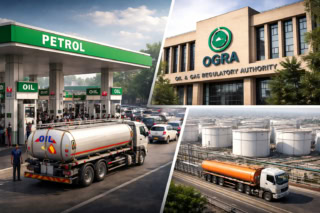
These recommendations come as refineries and OMCs face financial strain from the exemption of petroleum products under the Finance Act 2024-25, making their input tax non-recoverable. The Petroleum Division argues that since product prices are regulated by the Oil and Gas Regulatory Authority (OGRA), companies cannot adjust for these tax costs in their pricing.
Interestingly, the division’s summary states that fuel prices are determined by OGRA under government policy, though the process typically involves OGRA calculating prices, which are then vetted by the Ministry of Finance before being approved by the Prime Minister.
Regarding GST, the government previously considered a 3–5% levy on petrol and high-speed diesel (HSD) in consultation with the oil sector, FBR, and finance ministry. However, the idea was shelved due to lack of agreement with the IMF on reduced tax rates. Applying the standard 18% GST, in contrast, would raise petrol and diesel prices by about Rs45 per liter — an outcome deemed politically and economically unfeasible.
OMCs and dealers, meanwhile, continue to press for improved margins to maintain supply chain sustainability. While OGRA recommended margin increases of Rs1.13 for OMCs and Rs1.40 for dealers, the final summary to the ECC proposes Rs1.13 and Rs1.12 per liter, respectively.
Due to ongoing GST exemptions for FY2024-25, the Petroleum Division further recommends compensating unadjusted input taxes through IFEM — an estimated Rs34 billion burden — and suggests this measure remain in place for FY2025-26 if GST exemptions continue.
The petrol price hike proposal thus comes at a time when international oil prices are declining, potentially straining public sentiment. Whether the government allows fuel prices to drop or prioritizes revenue collection and supply chain support remains to be seen in today’s official announcement.