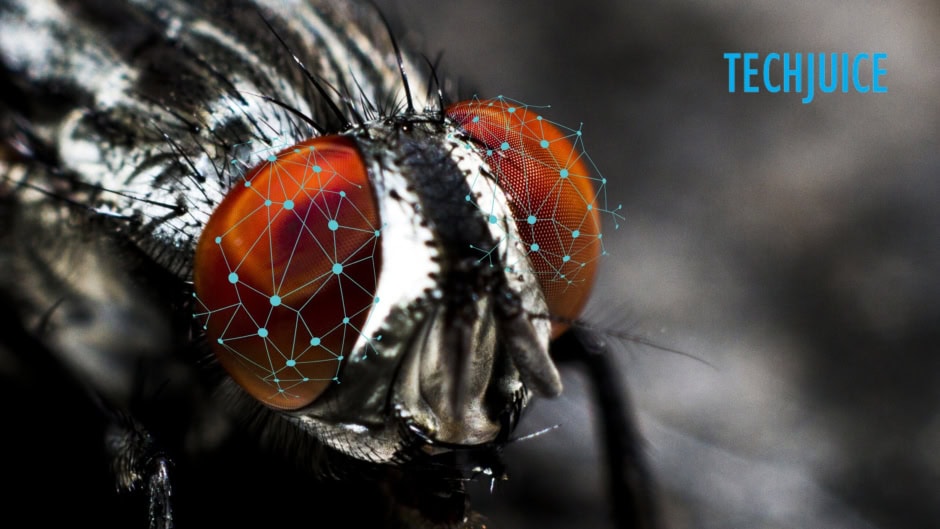
Researchers from the University of Shanghai for Science and Technology and Duke University have unveiled an advanced bionic AI vision system inspired by the compound eyes of insects. This innovation combines hardware miniaturization with deep learning, creating a system that can both “see” and “understand” its environment.
Researchers are theorizing that this technology has the potential to revolutionize fields such as medical diagnostics, environmental monitoring, and intelligent surveillance.
AI Vision: From Blurry Images to Crystal-Clear Insight
Traditional compound-eye imaging systems were frequently criticized for their low resolution and cumbersome design. Though only 0.8 cubic centimeters, this recently developed device provides an amazing 165° × 360° field of view and full-color images at the megapixel level. The device can also compete with and even surpass larger, more expensive imaging systems, if reports fare true.
“We aim not only to let bionic vision systems ‘see’ the world but also ‘see clearly’ and ‘understand’ it,” said Zhang Dawei, a professor at the University of Shanghai for Science and Technology and leader of the research team.
Because it uses deep learning techniques, the vision system can perform tasks such as real-time panorama reconstruction, object recognition, 3D tracking, scene understanding, and multi-target placement. Therefore, it increases the possibilities of bionic imaging even more by letting the device run effectively in congested and dynamic environments.
Real-World Potential and Industrial Future
The team underscored that the innovation was not merely theoretical. Researchers evaluated the system across a variety of application circumstances and conditions. Science Advances, the journal where the findings were published, reports that the model consistently performed well. This proves the prototype is suitable for micro-unmanned aerial vehicles, endoscopic inspection instruments, and autonomous robotics.
Further development is already underway. Researchers aim to enhance the compound-eye structure to support even broader use cases in smart security, biomedical devices, and AI-powered scientific instrumentation. This kind of interdisciplinary work marks a turning point in merging biological principles with machine intelligence.
This breakthrough underscores China’s growing influence in deep-tech R&D, particularly in areas that integrate AI, robotics, and biomimicry.