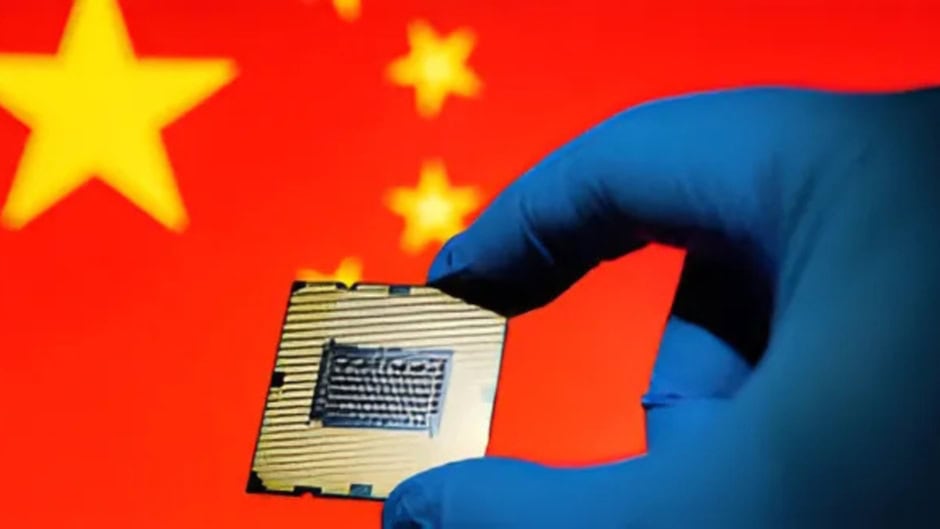
China landed a major milestone in chip technology with its first large-scale deployment of non-binary AI chips. These are carbon-based microchips using ternary logic that promises faster, more efficient AI processing. This update not only signals a new era in semiconductor innovation but also positions China at the cutting edge of AI hardware development.
Non-Binary AI Chips: What Makes Them Special
These innovative chips diverge from traditional binary logic, which uses just 0s and 1s. Instead, they introduce a third state, enabling more complex calculations with fewer steps. Made from carbon nanotubes and equipped with ultra-thin ternary transistors, these chips promise higher processing density and greater energy efficiency. Early tests report they can handle AI workloads using fewer resources, suggesting a big leap over conventional silicon chips.
Scaling Up with non-binary AI chips
Researchers are not experimenting in labs: they’re scaling up. China is reportedly deploying tens of thousands of these chips across industrial AI systems, including image recognition, robotics, and data analytics.
The move represents one of the first real-world uses of these AI chips at volume. Their energy-saving potential makes them ideal for edge AI applications like autonomous vehicles and smart factory sensors, where power efficiency matters most.
Why AI Chips Matter Now
This development matters because it breaks the binary barrier of modern computing. As chipmakers struggle to push smaller transistors and manage heat and energy constraints, non-binary AI chips offer a fresh path forward.
They allow more processing per transistor and reduce the system’s energy draw, which are key advantages in the race to build faster, greener AI infrastructure. Moreover, this also aligns with China’s broader push for tech independence, reducing reliance on foreign semiconductor suppliers.
Tech & Industry Context
-
Support from Government and Academia: Institutions like Tsinghua University backed the research, signaling strong government support.
-
Link to National AI Goals: The chips support China’s 2030 AI strategy, enabling sensitive AI tasks while reinforcing domestic capabilities.
-
Global Implications: As U.S. chip export controls tighten, this move hints at China’s strategic hedge, powering AI on its own turf with these chips.
What’s Next for Non-Binary AI chips
China plans to refine these chips for broader use. Designers aim to polish their software ecosystems to rival Nvidia’s CUDA tools. Integration with photonic systems is on the horizon, further boosting speed and power gains. Analysts still caution that the manufacturing scale and real-world integration will take time.