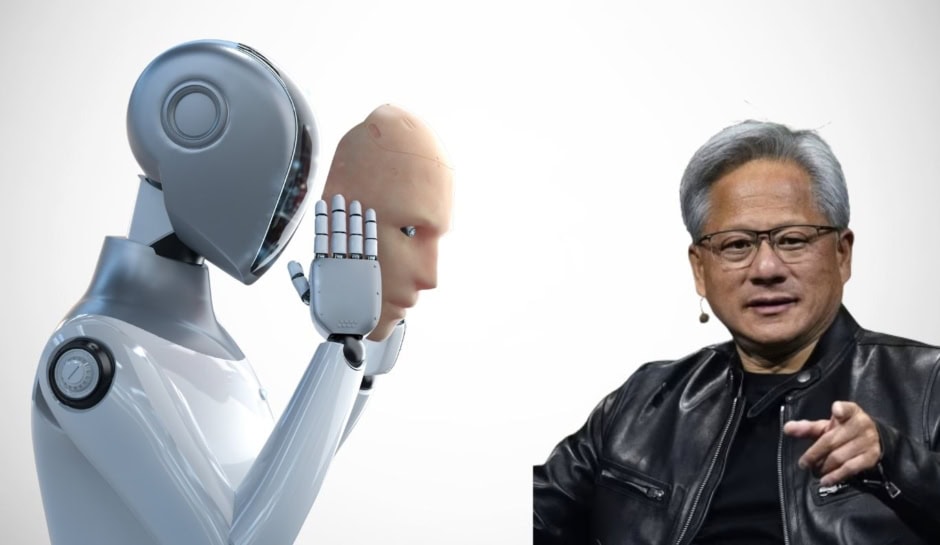
In a candid conversation with CNN’s Fareed Zakaria, Nvidia CEO Jensen Huang emphasized that artificial intelligence is already reshaping how people work, and that this transformation is only just beginning.
“100% of everybody’s jobs will be changed,” Huang stated during the interview. Calling AI “the greatest technology equalizer,” Huang explained that the power of modern AI is enabling people with little or no technical background to do things previously reserved for experts.
Highlighting ChatGPT’s massive global impact, Huang pointed out its accessibility as a turning point in how society interacts with advanced technology.
“Look at how many people are using ChatGPT for the very first time,” he said. “And the first time you use it, you’re getting something out of it… AI empowers people; it lifts people.”
With over 500 million weekly users, ChatGPT serves as an example of AI tools becoming intuitive and useful right out of the box, even for those unfamiliar with tech.
Changing Roles, Not Replacing People
While acknowledging that some jobs will inevitably be lost to automation, Huang pushed back on the fear-driven narratives.
“The work will change,” he explained. “My job has already changed. The work that I do has changed, but I’m still doing my job.”
His message was one of adaptation: AI isn’t removing people from the workforce entirely, but rather transforming what their jobs look like. He expressed confidence that while “some” jobs may disappear, AI would lead to the creation of “many” new roles, ultimately contributing to productivity gains across all sectors.
Huang’s outlook contrasts with more severe predictions from others in the tech industry. For instance, Dario Amodei, CEO of Anthropic, warned that AI might eliminate up to half of all entry-level white-collar jobs within five years. He also predicted that AI could soon be writing “all of the code” used by companies.
Meanwhile, Adam Dorr, research director at the think tank RethinkX, offered an even bolder forecast. In a recent statement to The Guardian, Dorr said AI and robotics might render human labor completely obsolete by 2045.
“We don’t have that long to get ready for this,” he cautioned. “We know it’s going to be tumultuous.”
While some experts sound alarms about job displacement, Huang remains optimistic about a future where AI enhances human capability rather than replacing it outright. He supports the growing belief that embracing change and equipping people to work alongside AI offers the best path forward.
As AI continues to evolve, Huang’s message is clear: transformation is inevitable, but with the right approach, it can be empowering.