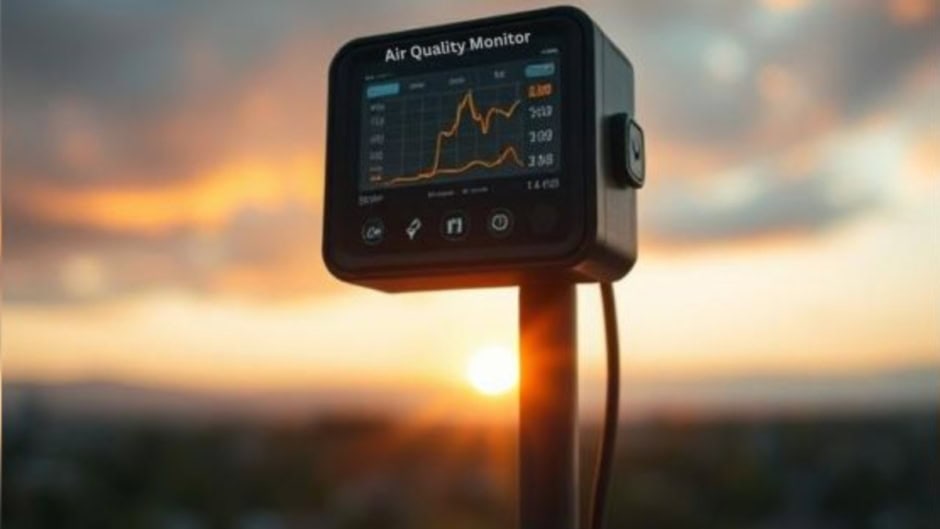
The Punjab government has launched a major environmental initiative to install 100 air quality monitors across the province—up from just three in previous years.
During a press briefing, Punjab Secretary for Environment Protection and Climate Change, Silwat Saeed, said they have already installed 60 monitors. She confirmed the remaining 40 will be added before the end of the financial year.
“Our target is 100 monitors,” she stated. “This year alone, the cost is estimated between Rs3 to Rs4 billion.”
She emphasized the significance of this scale-up. “Going from 3 to 100 is a massive leap. It wouldn’t have happened without solid groundwork and strong international support,” she explained.
Starting next month, the public will gain access to live air quality data. The new Punjab air quality monitors are linked with IQAir, enabling users to track pollution levels online in real time.
Saeed added, “Anyone can now check the air quality status directly on the dashboard. It’s all about making this data transparent and easy to access.”
AI Powers Remote Industrial Inspections
The environment department has also upgraded its inspection process. Using artificial intelligence, the team can now monitor industrial emissions remotely.
“In the past, our inspectors had to visit factories physically,” she said. “Now, with AI, we can instantly detect violations and act without delay.”
To further combat smog, the department has introduced 15 fog cannons in Lahore on a test basis. These will help reduce airborne dust and particles, especially during the winter smog season.
With 100 Punjab air quality monitors, AI-driven inspections, and anti-smog technology, the government is strengthening its environmental response. These efforts mark a significant step forward in protecting public health and ensuring cleaner air for citizens across the province.