In the competitive world of sports technology, a Pakistani startup has made a remarkable journey. Not many sports entrepreneurial ventures have gone from a passionate concept to a globally recognized brand. CricFlex has managed to do so with a clear startup idea and undeniable efforts to make it a reality.
CricFlex: From University Project to Global Tech Startup
The story of CricFlex begins with a problem that has long plagued the sport of cricket. All of it came about with the contentious issue of an illegal bowling action, or “chucking.” In cricket, “chucking” refers to the illegal act of throwing the ball with an unnatural straightening of the bowler’s elbow during the delivery.
Abdullah Ahmad, an electrical engineer and a cricket enthusiast from the National University of Sciences and Technology (NUST), was determined to find an objective, affordable, and accessible solution. The startup CricFlex was founded in 2016 but became mainstream by early 2019. The startup company was focused on establishing a production line and securing pre-orders to launch the product, a process complicated by the cost of manufacturing in Pakistan.
In an interview, he mentioned that he watched chucking becoming the reason for the ban on Saeed Ajmal. He went on to explain how identifying illegal bowling actions requires complex lab-based testing, which checks the bowler’s bowling actions.
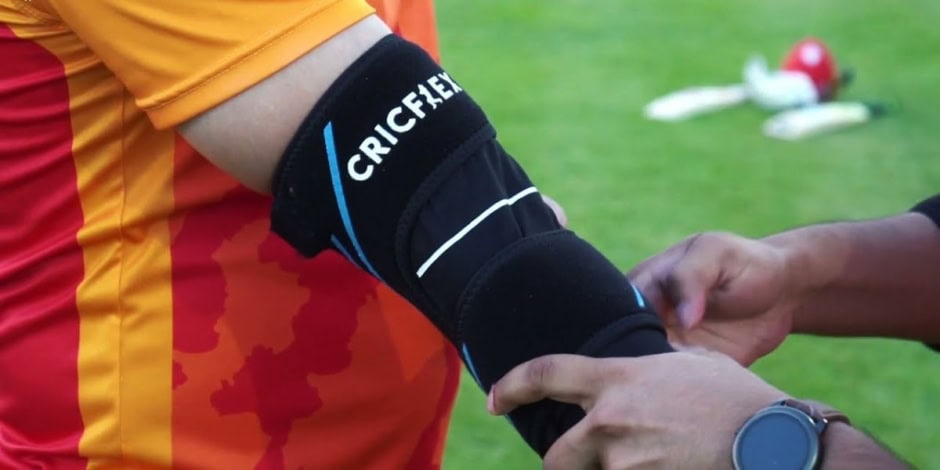
To make these tests easier, he envisioned a wearable arm sleeve with embedded sensors that could provide real-time data on a bowler’s elbow extension, ensuring compliance with the International Cricket Council’s (ICC) regulations. While the technical genius of the idea was apparent, translating a university project into a profitable, globally scalable business presented a different set of challenges.
This is where the U.S. Embassy in Pakistan stepped in. The Embassy, as part of its broader initiative to foster entrepreneurship and innovation in Pakistan, provided programmatic support that went far beyond a simple grant.
Ahmad was selected to attend a program at a top U.S. business school, specifically the Global Business Institute at Indiana University – Kelley School of Business, an opportunity that proved to be a turning point for CricFlex.
Building Skills, Credibility, and Global Reach
The experience in the United States was transformative. Surrounded by a vibrant ecosystem of innovation and seasoned business professionals, Ahmad refined his technical concept into a comprehensive business plan.
He acquired crucial state-of-the-art skills in strategy, marketing, finance, and logistics, knowledge that would be impossible to gain solely within the confines of his engineering background. This mentorship and structured learning environment allowed him to understand not just the “how” of building the product, but the “why” and the “for whom” of building a successful business.
The program at Indiana University provided a stamp of credibility that helped CricFlex attract further investment and partnerships. The skills Ahmad gained directly translated into the company’s growth. It enabled him to successfully patent the technology in the U.S. and navigate the complex process of commercialization.
Ahmed later went on to write a research paper about his wearable tech at MIT, the largest engineering school in the USA.
Programmatic Support and Strategic Partnership
In addition to supporting Ahmad, CricFlex showcased itself as a success story of U.S.-Pakistan technology collaboration.
The company and its founder showcased their journey through social media channels like Facebook and Instagram. These demonstrations focused on how U.S. technology and support foster innovative ventures in Pakistan.
These high-profile promotions gave CricFlex invaluable visibility in Pakistan and abroad, helping build its brand and attract international attention.

Today, CricFlex patented wearable technology, has found a market in over eight countries that actively play cricket. The product has multiple endorsements by international cricketers and professional leagues, notably visible in Pakistan Super League (PSL) match practices.
The company’s journey, heavily shaped by the crucial support from the U.S. Embassy, showcases a model for international development that prioritizes empowerment over simple aid.
You can access CricFlex via their website.