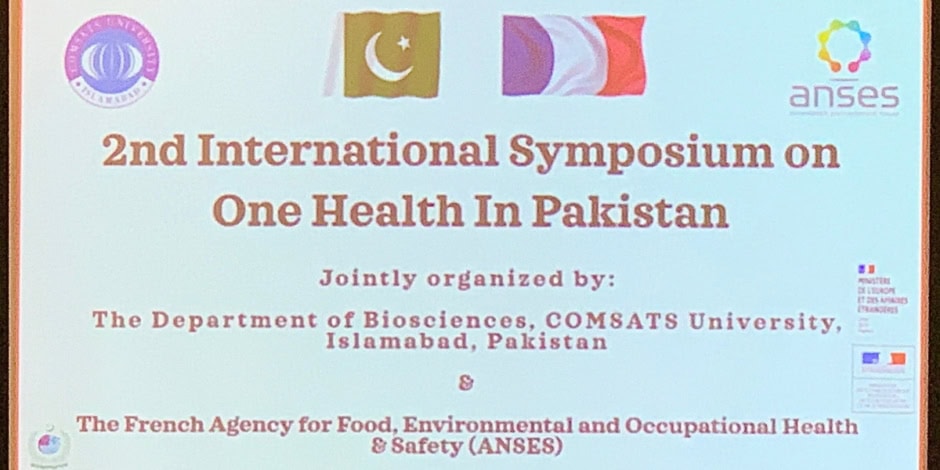
The 2nd International Symposium on One Health in Pakistan took place at COMSATS University Islamabad, bringing together international and national experts to address climate change, zoonoses, and disease surveillance. The event focused on integrating human, animal, and environmental Health under the One Health framework. The symposium aimed to promote interdisciplinary collaboration, highlight global expertise, and strengthen Pakistan’s preparedness against climate-linked health challenges. TechJuice was given exclusive coverage of the event.
Global Experts on One Health Share Critical Insights
International speakers from France’s ANSES led high-level scientific discussions.
Prof. Dr. Frank Boue shared extensive research on Echinococcus spp., including nationwide surveys and genetic diversity studies in French foxes. He praised Dr. Haroon’s opening and chaired the second session. In his closing remarks, he said,
“Pakistan is not my favourite country but it will be in the future… I hope so.”
Dr. Gérald Umhang, joining virtually, discussed the biotic potential of canids, environmental contamination pathways, and foodborne risks across Europe and Pakistan. He shared his extensive research on Echinococcus spp, which was quite informative and interesting.
Dr. Sabine Vermillard, representing the Embassy of France, strengthened the global collaboration angle. She encouraged students to pursue international scholarships for PHD and Master programs, especially in France. She even invited students to visit her lab.
National Voices Address Climate, Policy, and Surveillance
Dr. Haroon Ahmed, the Chief Organizer and faculty member at the Department of Biosciences, COMSATS University Islamabad, opened the event with a strong introduction to echinococcosis, research priorities, and Pakistan’s vulnerabilities in disease control. His remarks set the tone for the day’s discussions and were widely appreciated by everyone, especially the international speakers.
Dr. Muhammad Mazhar Ayaz, VC of CUVAS, spoke on climate change and floods, highlighting their impact on human and animal health. He shared tree plantation initiatives by students and emphasized,
“We are not the culprits, but we are suffering the most.”
Dr. Muhammad Wasif Malik of NIH delivered a strong message on data sharing and governance gaps. He highlighted Pakistan’s fragmented One Health response, pointing to CCHF cases and inadequate infrastructure in Quetta. He stressed the need for legislative steps and institutional commitment.
Prof. Dr. Tariq Mahmood discussed the role of wildlife in One Health, emphasizing the importance of surveillance, deworming, and policy integration.
Prof. Dr. Abid Ali engaged the audience with novel findings on ticks and tick-borne diseases in Pakistan.
Other notable contributions came from Dr. Ijaz Ali, who shared his work on diagnostic techniques for Echinococcus granulosus, and Dr. Shehzad Ali, who gave an overview of bacterial pathogens in Pakistan.
Organisers, Guests & Atmosphere
The event was organized by Dr. Haroon Ahmed and his team from the Department of Biosciences at COMSATS University Islamabad. The atmosphere was academic yet engaging, blending technical research presentations with moments of light-hearted interaction, like student quizzes and unique invitations to future events.
International delegates, faculty, researchers, and a large number of students attended the event. Guests and participants praised the event’s structure, diversity of topics, and learning opportunities. The overall feedback was highly positive.
Funding and Value
Although COMSATS is a federally chartered, public-sector university, the symposium was fully funded through ticket sales. The ticket price was Rs. 1500 for COMSATS students and Rs. 500 for online attendees. Participants widely agreed it was money well spent. One student on site stated,
“The sessions deepened my understanding of interdisciplinary collaboration in addressing global health challenges, particularly zoonotic diseases and sustainable health systems.”
Another participant joining online expressed satisfaction by stating,
“I joined in a bit late, the host was very prompt in adding me to online session, there were no hiccups along the way. The session was paced out quite well. And the slides presented were informative and easily understandable.”
Events of this scale are rare in universities. This symposium stood out as a substantive, research-driven, and well-organized event, far from being a routine academic formality.
Conclusion
It is a well-documented fact that Pakistan is facing severe consequences due to climate change. Although Pakistan’s contribution towards global climate change is minimal, it is still facing the most severe consequences. The symposium highlighted Pakistan’s urgent need to adopt the One Health approach in the face of climate change. It built bridges between global and local experts, shared cutting-edge research, and identified practical policy gaps.
Through focused discussions and collaborative energy, the event set a benchmark for academic symposia in Pakistan, proving that university events can deliver real impact when driven by purpose and expertise. People, especially students, in Pakistan need more events like these to gain critical knowledge about encountering such newly emerging challenges.