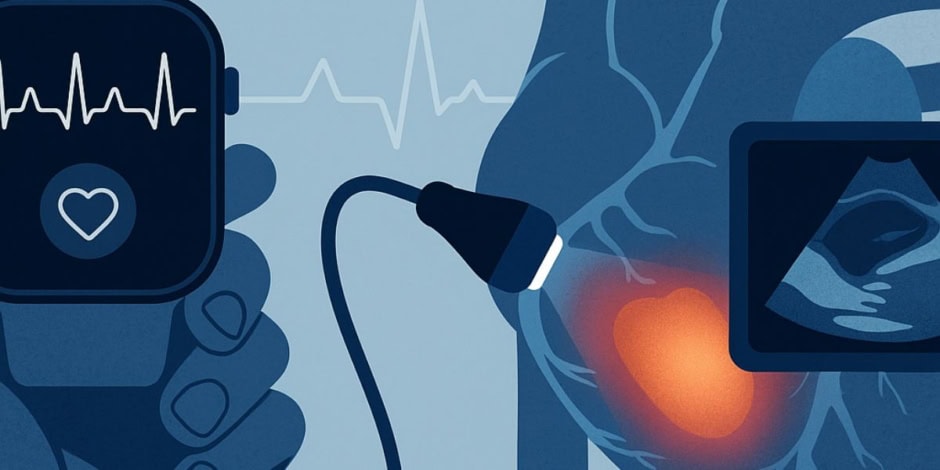
An artificial intelligence (AI) algorithm combined with the single lead electrocardiogram (ECG) sensor found in many smartwatches has successfully detected multiple forms of structural heart disease (SHD).
It also includes weakened cardiac pumping, valve damage, and thickened heart muscle, in a large multi centered study. This development could reshape how cardiac screening is delivered, making early detection vastly more accessible.
Inside the Discovery: Turning Everyday Wearables Into Diagnostic Tools
Researchers at Yale School of Medicine developed and trained the AI model using over 266,000 traditional 12 lead ECG recordings from more than 110,000 adults. They then validated it externally using large datasets from community hospitals and a population based study in Brazil.
In a real world trial involving 600 smartwatch users, each participant performed a 30 second ECG before undergoing a cardiac ultrasound. The AI achieved 86 percent sensitivity and a 99 percent negative predictive value, correctly identifying disease while effectively ruling it out in healthy individuals.
Lead author Dr Arya Aminorroaya explained:
Millions of people wear smartwatches, and they are currently used mainly to detect heart rhythm problems. Our study explored whether those same devices could help detect hidden structural heart diseases earlier, before they lead to serious complications.
Senior author Dr Rohan Khera added:
On its own, a single lead ECG is limited. But with AI, it becomes powerful enough to screen for major heart conditions on a scale we’ve never had before.
Why It’s a Game Changer for Heart Health
Structural heart disease often develops silently, with symptoms appearing only once damage has advanced. Diagnosis usually requires an echocardiogram, a resource intensive test unavailable in many regions.
By harnessing smartwatch ECG data, the Yale model offers a low cost, scalable, and non invasive method for early detection, signaling a potential revolution in preventive cardiology.
The Global Shift Toward AI Driven Cardiac Screening
Previous AI based ECG models, such as Columbia University’s EchoNext algorithm, showed promise but required medical grade ECGs. The Yale study is the first to pair an AI model with a consumer wearable, validated in both hospital and community settings.
The findings also align with growing efforts worldwide to embed AI in cardiac screening, from heart failure prediction studies in Africa to ongoing FDA approved clinical trials in the US.
The Caveats: What Needs Work Before Clinical Rollout
Despite its promise, experts urge caution. The study included relatively few confirmed SHD cases, meaning its positive predictive value remains to be fully tested in diverse populations. Data quality from wearables also varies, and AI models must learn to filter noise in real world recordings.
Ethical concerns linger too, e.g., who owns the data collected by wearables? How should incidental findings be communicated? And how do regulators ensure clinical accountability for algorithmic predictions?
The researchers emphasize that the model is not a replacement for echocardiography, but rather an early warning system to prompt timely medical evaluation.
The Future of Heart Monitoring: From Pockets to Patients
Next steps include expanding trials to larger and more diverse populations, integrating the algorithm into commercial smartwatch platforms, and developing community based screening programs.
If successful, this innovation could help bridge global health gaps, allowing earlier diagnosis of heart disease in millions of people who currently go undiagnosed.
As Dr Khera put it, “Our goal is to turn every simple ECG into a potential screening opportunity for hidden heart disease, and that could save countless lives.”