A comprehensive annual study by global democracy watchdog Freedom House reveals that internet freedom has declined for the fifteenth consecutive year, with even traditionally open societies such as the United States and Germany seeing notable drops. Meanwhile, global trends point to expanding surveillance, increased government manipulation of online discourse, and fewer protections for digital rights.
In the report covering June 2024 through May 2025, the U.S. and Germany both recorded three-point drops in their internet freedom scores, bringing the U.S. to a 73/100 rating and Germany to a 74/100.
Freedom House
Germany’s decline is attributed to new prosecutions over memes portraying politicians, increased self-censorship amid threats from far-right actors, and a sharp uptick in Russian-state–linked cyberattacks.
In the U.S., the deterioration is tied to the shrinking of civic space online, actions against foreign nationals for nonviolent speech, and the growing role of spyware, state surveillance and algorithmic influence campaigns during election cycles.
According to the report, persistent drivers of this decline include stronger state surveillance infrastructure, repeated shutdowns of mobile networks during protests or political events, and the use of artificial intelligence by governments to control or influence online information flows. More than half the countries assessed experienced negative-to-negative score changes, with 27 countries showing outright deterioration and only 17 showing improvement across 72 countries analysed.
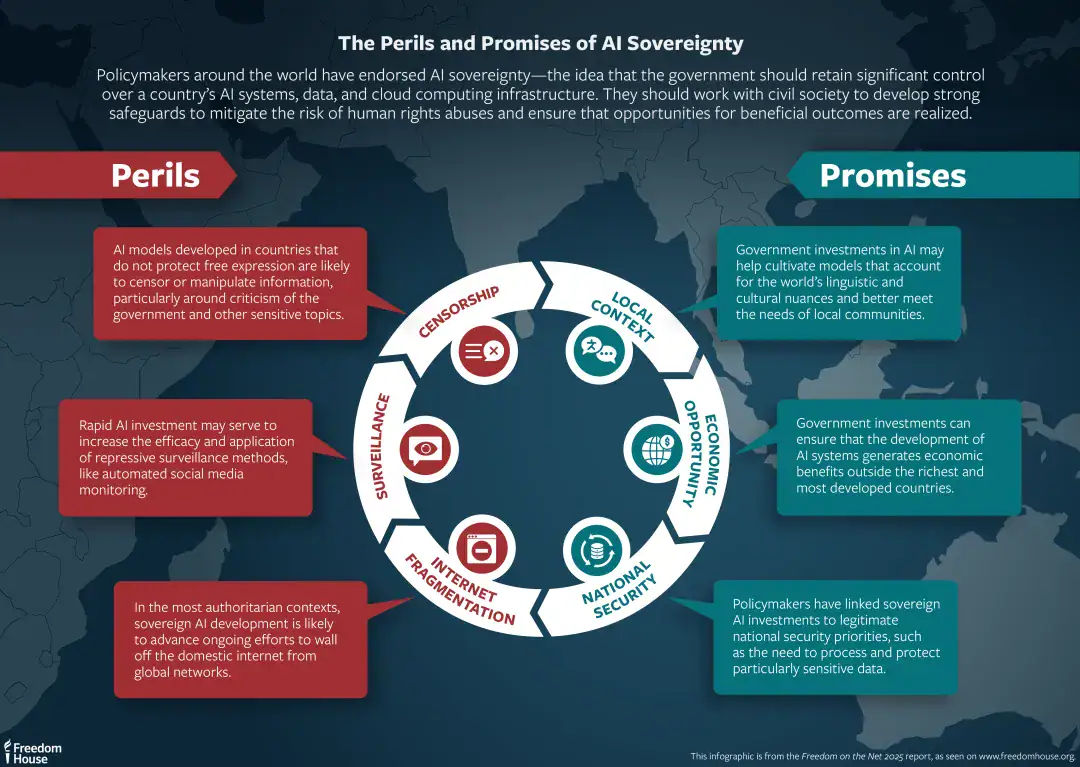
The decline in internet freedom means greater risk for activists, journalists and ordinary users facing repression, online harassment or unchecked surveillance. In Germany, for example, the ability to safely publish memes and political satire has diminished as new laws tighten platform liability and enforcement.
In the U.S., the erosion of online civil liberties is closely linked to algorithmic silos, targeted disinformation campaigns and blurred boundaries between private-sector platform moderation and state oversight.
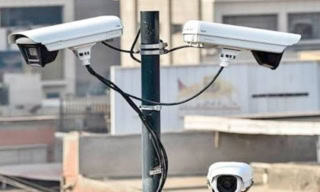
It is also interesting to note that Pakistan received an overall score of 26/100, classifying it as “not free” and marking a one-point decline from the previous year. The report highlights severe restrictions, including frequent internet shutdowns during elections and protests, extensive surveillance by authorities, and the blocking of platforms like X (formerly Twitter) for months.
Bangladesh saw the biggest gain, as a new government formed after a student revolt loosened restrictions in the country.
The report urges governments to uphold legal standards rooted in human rights for digital regulation and for tech companies to adopt privacy-first designs, transparent content moderation and strong encryption. It also calls for multi-stakeholder oversight and independent civil society engagement in monitoring online governance.