Pakistan’s ambition to build a digitally empowered economy received a wake up call this week as policymakers, industry leaders, academics and global experts confronted a difficult truth: despite visible progress, the country is falling behind in the global technology race shaping the modern economy.
Pakistan has crossed important milestones. Mobile broadband subscriptions exceed 130 million, digital payments through Raast and mobile wallets passed Rs 40 trillion in FY2025, and IT exports reached 3.5 billion dollars. But these achievements mask deep structural weaknesses. More than 70% of global trade now depends on modern data governance, yet Pakistan’s laws and regulatory systems are inconsistent and outdated. Enterprise cloud adoption remains under 18%, cybersecurity maturity ranks low at 79 out of 194 countries, and fibre connectivity reaches fewer than 12% of households.
The global tech race is accelerating faster than Pakistan can keep up. Over half a million new industrial robots were installed worldwide in 2023. Global AI investment may exceed 300 billion dollars by 2026. AI and automation are expected to add up to 15 trillion dollars to the global economy by 2030. Countries leading the race invest between 3 and 5 percent of GDP in research and development: Pakistan invests less than 0.3%.
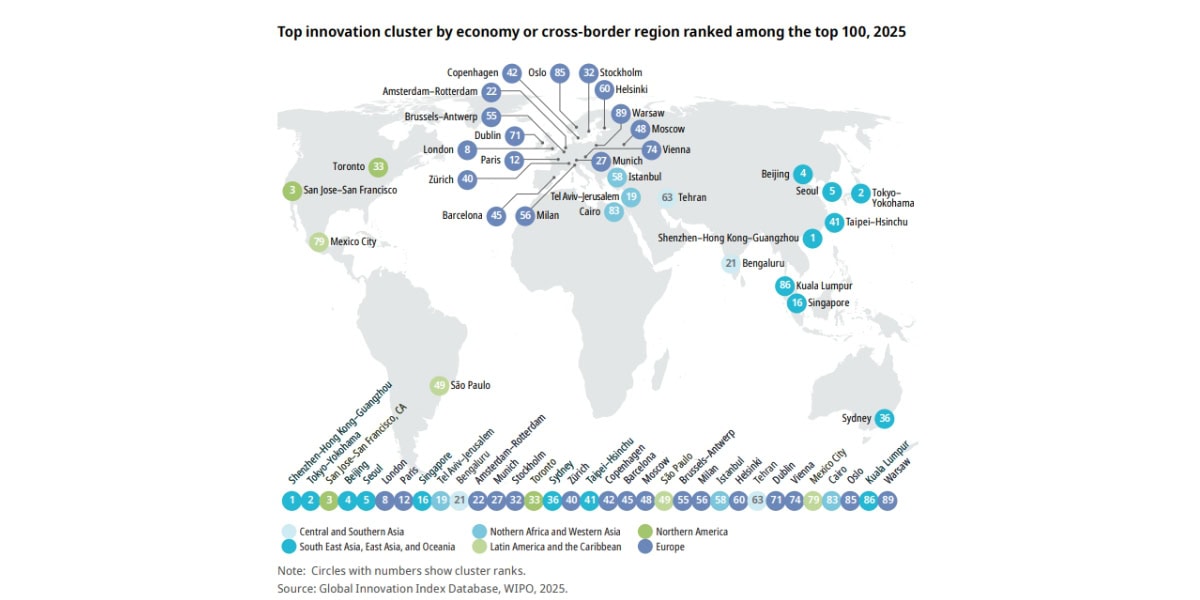
These differences show up in competitiveness. Pakistan ranks 88 out of 132 on the Global Innovation Index. Robotics use is negligible compared with regional peers. Pakistan’s AI market is worth around 100 to 150 million dollars, far below India and Türkiye. Moreover, patent filings and STEM education lag significantly.
Yet the foundations for a turnaround remain strong. Pakistan has more than 130 million broadband users, one of the youngest populations in the world and more than two million freelancers. IT exports have grown rapidly in recent years. Experts say Pakistan now needs a unified national technology strategy focused on large scale digital infrastructure, modern regulation, industrial automation, mass upskilling and stronger research and innovation funding.
In an age defined by artificial intelligence and automation, Pakistan must act decisively or risk falling permanently behind. We need startups and initiatives that bring the digital innovation to the forefront before the tide washes us over.