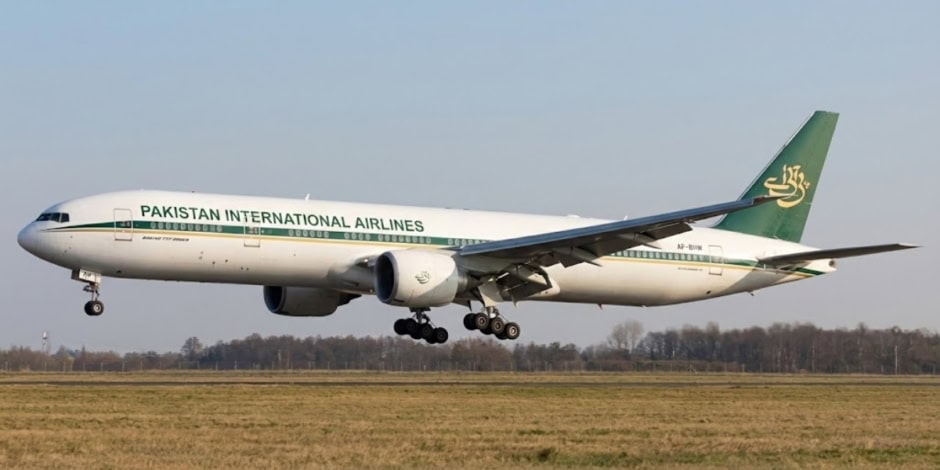
Pakistan is set to reach a decisive moment in its long running effort to privatize Pakistan International Airlines on Tuesday. On December 23, the government will open financial bids for the national carrier in a live auction overseen by the Privatization Commission.
Officials have confirmed that the bid opening will be broadcast publicly, underscoring the political and economic significance of the transaction as Islamabad seeks to complete one of its most complex privatizations under intense domestic and international scrutiny.
PIA Privatization: The Details
The bidding follows months of due diligence and narrowing interest, with the field reduced to three final contenders after the withdrawal of at least one previously shortlisted participant.
According to recent disclosures and reporting, the remaining bidders include a consortium led by Lucky Cement and its partners, another consortium headed by Arif Habib Corporation alongside financial and education sector investors, and private airline operator Airblue. A military affiliated group that had earlier been linked to the process opted out at a late stage. The composition of the final shortlist is significant, as each bidder brings different levels of aviation experience, financial capacity, and tolerance for operational and labor related risk.
Under the current transaction structure, the government is offering a controlling stake in the airline. While official language has varied between a 51 percent and full divestment, the practical configuration centers on the sale of 75 percent of the airline, coupled with an option allowing the successful bidder to acquire the remaining 25 percent within 90 days. The structure reflects bidder demands for full managerial control and signals the government’s willingness to exit entirely if required to close the deal. A reserve price has been approved by the cabinet, though it will only be revealed during the auction process.
One of the most critical breakthroughs enabling the sale came through an agreement with the International Monetary Fund, which cleared a major obstacle that had previously deterred investors. As part of that understanding, the government absorbed or settled approximately Rs45 billion in legacy liabilities tied to the airline. Officials have repeatedly cited this move as central to restoring bidder confidence and making the transaction viable after multiple failed attempts in the past.
What Will the Deal Enclose
Under the revised structure, buyers will acquire the airline’s operating business following extensive restructuring carried out by the government.
While the airline’s balance sheet is significantly cleaner than in earlier years, contingent liabilities and workforce related challenges remain key considerations for any incoming owner.
Operationally, the buyer will inherit an airline that has been scaled down but partially stabilized. Pakistan International Airlines now operates a smaller and more standardized fleet, dominated by Airbus A320 family aircraft alongside a limited number of Boeing wide body planes for long haul routes. The restoration of key regulatory approvals, including the lifting of European restrictions in 2024 and the resumption of UK services, has reopened access to higher yield international markets. These developments are central to the government’s pitch that the airline is once again commercially viable, although rebuilding routes, staffing, and ground operations will require sustained investment.
Valuation remains a closely watched element of the process. Bidders were required to submit substantial bid bonds to qualify, and officials have indicated that financing plans and regulatory fitness will be closely examined. While earlier attempts to privatize PIA referenced valuations in the hundreds of millions of dollars (up to $36 billion according to Reuters), the final figures for this sale will only become clear once bids are opened.
In any case, PIA employees and trade unions are not entirely pleased. They have staged sit ins and threatened flight disruptions in recent days, warning that the sale could undermine job security and pensions. International labor organizations have also urged the government to pause the process until binding guarantees are provided. Union pressure carries operational weight, as past disputes have shown that organized action by pilots and ground staff can quickly disrupt services across major airports. Any successful bidder is therefore expected to face difficult negotiations during the transition period.
Outcome of the Bidder Wars
Several outcomes are possible once the auction concludes. A strong and unconditional bid could lead to swift cabinet approval and the start of a handover period during which operational control gradually shifts to the new owner. Alternatively, a conditional or weak bid could delay the process or force renegotiation. A failure to attract acceptable offers, or last minute legal or labor challenges, could compel the government to abandon or redesign the sale yet again, repeating a pattern seen in previous attempts.
For customers, a successful privatization could ultimately mean improved service quality, fleet renewal, and route expansion if the new owner invests aggressively.
In the short term, however, transitions of this scale often bring disruption as contracts, staffing arrangements, and operating procedures are reworked. Regulators and international aviation partners are expected to closely monitor safety oversight, slot allocations, and compliance throughout any ownership change.