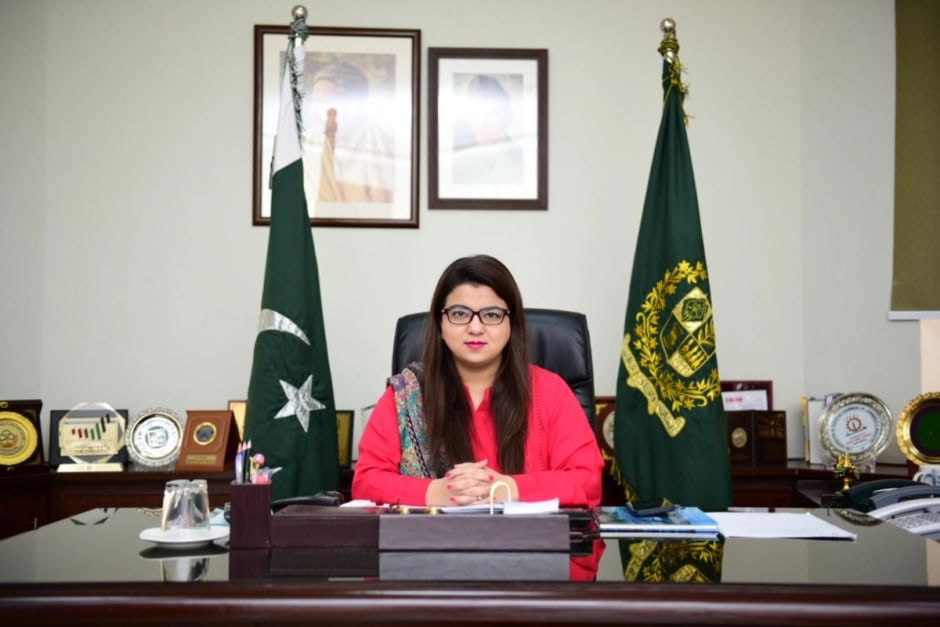
As 2025 comes to an end, Federal Minister for Information Technology and Telecommunication Shaza Fatima Khawaja has published a year-end reflection outlining what she described as a year of steady progress for Pakistan’s digital agenda, while crediting collaboration across government, industry, and international partners.
In a LinkedIn post shared this week, Khawaja thanked local and international development partners, industry stakeholders, development finance institutions, civil society, friendly countries, and the federal government leadership for supporting the Ministry of IT and Telecommunication’s work throughout the year. She noted that the recap was not exhaustive but aimed to highlight key areas where tangible progress was made, including digital governance, connectivity, exports, emerging technologies, and skills development.
The post follows what has been a transformative year for the ministry under Khawaja’s leadership, after she was elevated to the position of full federal minister in March 2025. During the year, the government passed the Digital Nation Pakistan Act 2025 and secured cabinet approval for the National AI Policy in July. Both initiatives are intended to lay the foundation for a national digital ecosystem covering artificial intelligence, cloud services, data centers, ethical governance frameworks, and public sector digitization.
A major focus highlighted in the recap was GovTech. The ministry advanced efforts toward a paperless federal government, expanded e-governance services, and worked on what officials describe as the “Pakistan Stack,” a set of digital public infrastructure components including secure data exchange and universal digital payments. The government has repeatedly stated its goal of putting more than 100 public services online by the end of 2025.
On the economic front, Khawaja pointed to growth in IT and IT-enabled services exports, which reached approximately $3.5 billion in the first ten months of the fiscal year, according to statements she made earlier in May. Connectivity indicators also improved, with women accounting for an estimated eight million new mobile internet users in 2024, narrowing Pakistan’s gender gap in mobile internet access.
The ministry also emphasized its push into emerging technologies and skills development. Flagship initiatives during the year included large-scale AI competitions, cybersecurity hackathons, and training programs supported through Ignite and public-private partnerships. Internationally, Pakistan showcased its digital ambitions at major technology forums in Shanghai, Riyadh, Amman, Geneva, Doha, and Dubai, with officials claiming commitments exceeding $700 million in digital and technology-related investments.
Khawaja’s work also received international recognition, including her inclusion in GovInsider’s Women in GovTech 2025 report for her focus on inclusive, citizen-centered digital policy. She also represented Pakistan at multiple global events, where she highlighted the government’s Digital Pakistan vision across economic, social, and governance dimensions.
While acknowledging ongoing challenges such as regulatory bottlenecks and internet performance issues, the minister framed 2025 as a year of concrete steps rather than rhetoric. She closed her post on an optimistic note, inviting reflection on what she described as a collaborative effort to position Pakistan as a credible technology destination and move closer to a modern, digitally enabled state.