Uplift AI, a Pakistan-born artificial intelligence startup focused on voice technology, has raised $3.5 million in seed funding, marking one of the most significant early-stage AI investments linked to the country’s fast-evolving tech ecosystem.
The round was backed by Y Combinator and Indus Valley Capital, with participation from Pioneer Fund, Conjunction, Moment Ventures, and a group of Silicon Valley angel investors.
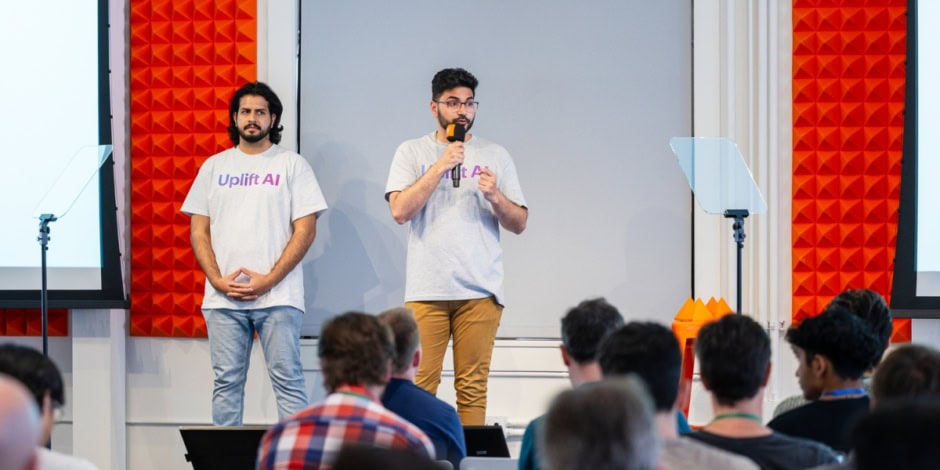
Uplift AI, co-founded by Zaid Qureshi and Hammad Malik, is on a mission to create voice AI models tailored for regional languages like Urdu, Punjabi, and Balochi, so more people can interact with technology simply by speaking in their native tongue. Both the creators have impressive backgrounds as former engineers at Apple and Amazon.
According to a statement provided to TechJuice, the team behind Uplift AI explained how they are working to close the language gap by building speech recognition, text-to-speech, and conversational AI APIs. Their focus is specially tuned towards local languages such as Urdu and other regional dialects. Instead of forcing users to adapt to keyboards and screens, the company wants technology to adapt to how people already communicate.
The platform is positioned as foundational infrastructure rather than a single consumer app. Governments, educators, enterprises, and developers can layer voice interfaces onto existing products without building language models from scratch, significantly lowering the barrier to deploying localized AI experiences.
Despite being early-stage, Uplift AI has already shown strong real-world traction. One of its most visible deployments comes from Khan Academy, which used Uplift AI’s technology to publish 2,500 educational videos in Urdu, expanding access to learning for students who are far more comfortable with spoken explanations than written English. In agriculture, Syngenta is rolling out voice-based AI tools that allow farmers to receive guidance and support through simple spoken interactions, a model that aligns closely with rural realities where smartphones are common but literacy barriers persist.
Beyond large organizations, more than 1,000 developers are already building on Uplift AI’s APIs, signaling growing demand for localized voice solutions among startups and product teams. Investors see the company less as an app play and more as critical infrastructure that can scale across industries and geographies. While much of the global AI race has centered on large language models for English-speaking users, there is increasing recognition that the next billion users will interact with AI through voice, not keyboards.
Although Pakistan remains a key focus, Uplift AI plans to expand into other language markets globally, applying the same voice-first approach to regions facing similar challenges around accessibility and inclusion. The roadmap includes broader language coverage especially in the MENA region, deeper conversational intelligence, and tighter integration with education platforms, public-sector services, and enterprise workflows.
Uplift AI was built entirely in-house, from data gathering, labelling, and training, because off-the-shelf solutions always compromise on regional languages.