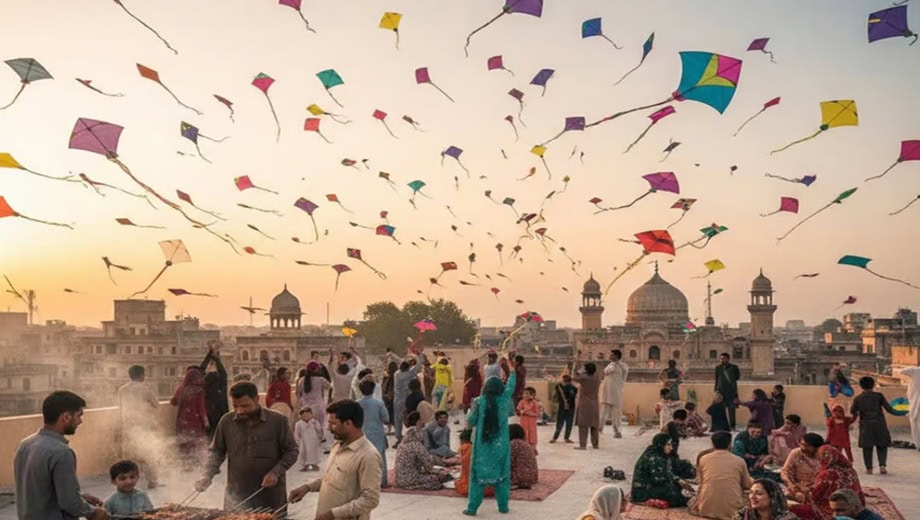
The colors of Basant are slowly returning to Lahore, and so is business. Over the past two days, the buying and selling of kites and strings in the provincial capital has crossed Rs 320 million, reflecting renewed public interest ahead of the festival’s expected return next year.
According to the Kite Flying Association, sales remained strong on the second day, with transactions worth more than Rs 180 million, following Rs 160 million in sales on the first day. Markets across the city reported heavy footfall as families and traders prepared for the season.
Legal Advisor of the Kite Flying Association, Malik Faizan Ahmed, said that over 600,000 kites and more than 15,000 pins were sold on the second day alone. He added that prices vary depending on quality and size, with one and a half tawa being sold for Rs 700, one tawa for Rs 350, and smaller options available for Rs 200.
More specialized kite materials are also in demand. According to traders, a two-piece panna is being sold between Rs 7,000 and Rs 8,000, while a four-piece panna is priced between Rs 12,000 and Rs 15,000, reflecting higher costs and stricter regulations.
The surge in trade comes as Basant is set to return to Lahore in 2026, nearly 18 years after it was banned. Speaking at a student event, former Basant Festival organizer Syed Zulfiqar Hussain said the three-day festival is expected to generate over Rs 20 billion in economic activity.
Hussain said the last Basant in 2007 attracted around five million people, while this time nearly eight million participants are expected, including overseas Pakistanis. He noted that the festival supports thousands of livelihoods, from kite makers and thread workers to hotels, transport services and food businesses.
The Punjab government has introduced new safety rules under the Punjab Regulation of Kite Flying Ordinance 2025, allowing kite flying only on February 6, 7 and 8, 2026. Approved materials will be permitted, sales will begin from February 1, and all remaining stock must be destroyed after the festival.
Authorities say the new framework is designed to prevent the accidents that led to the original ban, which followed several deaths caused by sharp strings and rooftop falls. Law enforcement agencies are finalizing safety and traffic plans to manage crowds during the event.