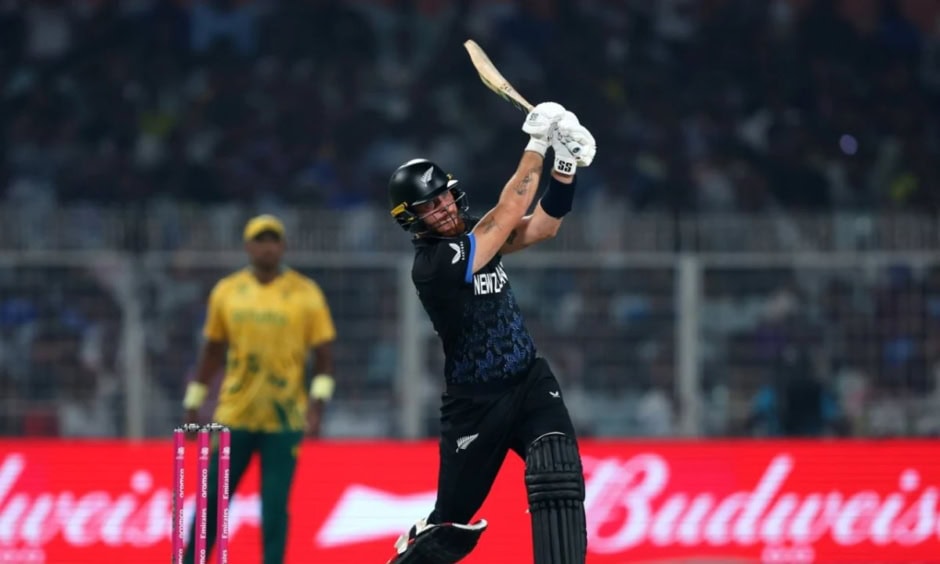
New Zealand chased down South Africa’s 170-run target with remarkable aggression, powered by Finn Allen’s fastest-ever T20 World Cup century and Tim Seifert’s equally explosive start in Kolkata.
Allen reached his century in just 33 balls, setting a new record for the fastest century in men’s T20 World Cup history while Seifert provided crucial support from the other end.
The duo’s partnership overwhelmed South Africa’s bowlers, allowing New Zealand to secure a nine-wicket win with over seven overs remaining, leaving the home side struggling to contain the powerplay onslaught.
Early Powerplay Dominance
New Zealand scored 84 runs in the first six overs, marking the second-highest powerplay score of this T20 World Cup, with Allen targeting pace bowlers for repeated boundaries and sixes.
Corbin Bosch endured a punishing over from Allen, conceding 22 runs in a sequence of fours and sixes, which significantly disrupted South Africa’s early bowling strategy and momentum in the match.
Seifert and Allen’s initial three-over blitz reduced New Zealand’s 170-run chase by 37 runs, putting immediate pressure on South Africa’s top order to recover before the game could slip away.
South Africa’s Middle-Order Fightback
South Africa recovered from 77 for 5 thanks to Marco Jansen’s unbeaten 55 from 30 balls, forming a record sixth-wicket partnership of 73 with Tristan Stubbs against New Zealand in T20Is.
Jansen struck two consecutive sixes against Ferguson and handled spin deliveries expertly, helping South Africa add crucial runs, but the late resurgence was insufficient to match New Zealand’s overwhelming batting performance.
Despite contributions from David Miller and Dewald Brevis, South Africa could not establish a consistent rhythm, with key wickets falling at critical moments, allowing New Zealand to maintain control throughout the chase.
Key Performances and Bowling Impact
New Zealand captain Mitchell Santner’s strategic field placements and bowler selections contained South Africa’s early aggression while Matt Henry returned to the XI after attending the birth of his second child.
Rachin Ravindra, the tournament’s highest wicket-taker for New Zealand, picked crucial early wickets including Aiden Markram, demonstrating both his batting potential and bowling influence.
Jimmy Neesham and Cole McConchie bowled tightly, applying consistent pressure on lower-order batters, allowing New Zealand to restrict boundaries and limit scoring opportunities during the middle overs of South Africa’s innings.
Historical Context and Tournament Implications
South Africa entered the semi-final undefeated with seven consecutive wins, while New Zealand had a more challenging route, relying on group-stage victories and an external result to secure their last-four spot in the tournament.
New Zealand’s victory ends South Africa’s perfect run in this World Cup, setting up a final appearance that highlights Allen and Seifert’s explosive contributions and the depth and flexibility of the Black Caps’ squad.
Both teams have long histories of knockout competitiveness, but New Zealand’s calculated aggression, precise bowling, and record-breaking batting now place them firmly as serious contenders for the T20 World Cup title.