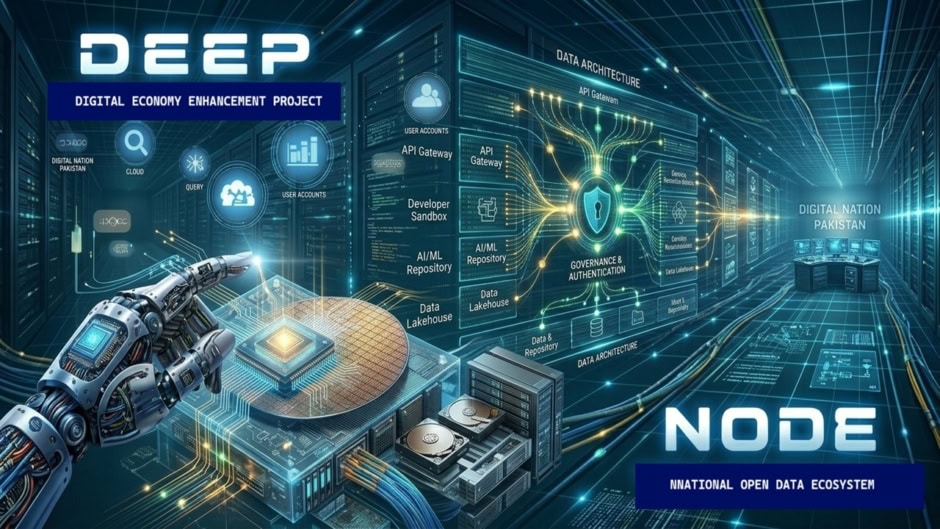
The Ministry of IT & Telecommunication is taking a bold step toward a digital, data-driven Pakistan through the Digital Economy Enhancement Project (DEEP). At the heart of this initiative is the National Open Data Ecosystem (NODE), a platform designed to break down government data silos, make information accessible, and fuel research and innovation.
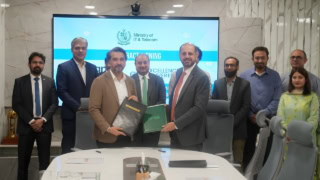
The Digital Economy Enhancement Project (DEEP) is the Ministry’s ambitious plan to digitize government services and data management. The Early Market Engagement Workshop, held on March 11, 2026, gathered feedback from private sector experts to shape NODE, a central component of DEEP.
NODE: More Than Just a Website
NODE is positioned as a core component of Pakistan’s DPI framework. It falls under the Civic Innovation arm of DEEP, aimed at creating a research-driven economy where open data empowers startups, researchers, and policy planners. One of DEEP’s main goals is interoperability, ensuring that different government systems can finally “talk” to each other through shared standards and protocols.
Through NODE, data scattered across various departments can now be accessed in a unified way while remaining stored with the original agencies. This approach prevents duplication, ensures accuracy, and provides a reliable foundation for AI-driven applications and research.
How NODE Works Under DEEP
The NODE platform has several layers designed to simplify access and encourage innovation:
- Open Data Portal: A public-facing interface for discovering datasets.
- Data Ingestion & Standardization (ETL): Tools to clean and prepare data for use.
- National Data Exchange Layer (NDEL): Secure channel for data flow without central storage.
- Developer Sandbox & API Gateway: Space for startups and researchers to experiment with AI/ML applications.
- AI/ML Model Repository: Pre-validated models for practical use, such as crop forecasting or analyzing public documents.
Departments can share data through push uploads, scheduled pulls, real-time queries, or automatic updates, keeping information current while minimizing manual work.
DEEP emphasizes transparency. NODE implements a five-level governance framework, which includes mandatory metadata, automated monitoring, public scorecards, and a legal mandate under the Digital Nation Pakistan Act 2025. These measures are intended to keep data fresh, accurate, and publicly accountable.
The Request for Proposal (RFP) for NODE will evaluate proposals 60% on technical merit and 40% on cost. The system will be hosted on cloud infrastructure within Pakistan, following the Cloud First Policy. Foreign companies must partner with local firms to handle contracts and finances. While public datasets will remain free, the Developer Sandbox may allow limited monetization for startups and innovators.