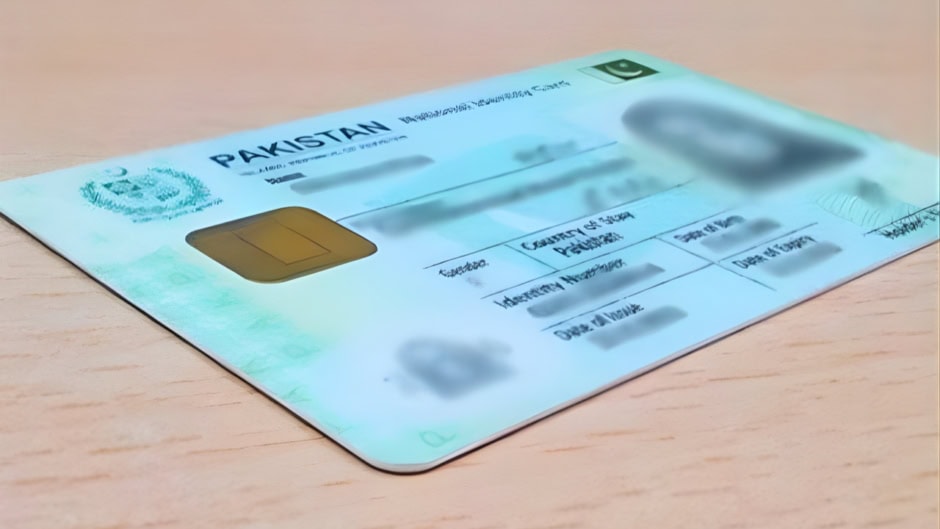
The Lahore High Court (LHC) issued a definitive ruling today, April 10, 2026. It declared that the Computerised National Identity Card (CNIC) is not “movable property”. Consequently, civil courts cannot block, impound, or attach it. This decision restricts the use of identity documents as coercive measures in civil proceedings.
The Case at Multan Bench
Justice Tanveer Ahmad Sheikh delivered the ruling at the Multan Bench. He allowed a writ petition filed by Muhammad Ali Ansari. Previously, a civil court ordered the National Database and Registration Authority (NADRA) to block Ansari’s CNIC. This occurred during the execution proceedings of a civil suit. The petitioner’s counsel argued that this measure violated Section 18(2) of the NADRA Ordinance, 2000. He maintained that civil courts lack the competence to issue such directions.
Legal Status of the CNIC
The court clarified the legal definition of an identity document. While a CNIC is a physical object, it does not qualify as movable property. It is an identity document issued by the federal government. Therefore, it does not confer proprietary rights upon the holder. Under the NADRA Ordinance, the card remains the property of the federal government. It is neither transferable nor inheritable. Thus, it falls entirely outside the scope of “movable property” as defined by relevant laws.
Limits on Judicial Authority
Justice Sheikh maintained that civil courts have no authority to impound CNICs as coercive tools. Such actions remain the exclusive domain of NADRA. However, even NADRA must act strictly according to Section 18 of its Ordinance. The authority can only block cards under specific circumstances, such as fraud, duplication, or ineligibility. Using a CNIC to procure court attendance is illegal.
Furthermore, the judge declared NADRA’s previous action against the petitioner as unlawful. He ruled that the card was blocked without lawful authority. Consequently, the court directed NADRA to unblock the petitioner’s CNIC immediately. NADRA must now submit a compliance report within 15 days.