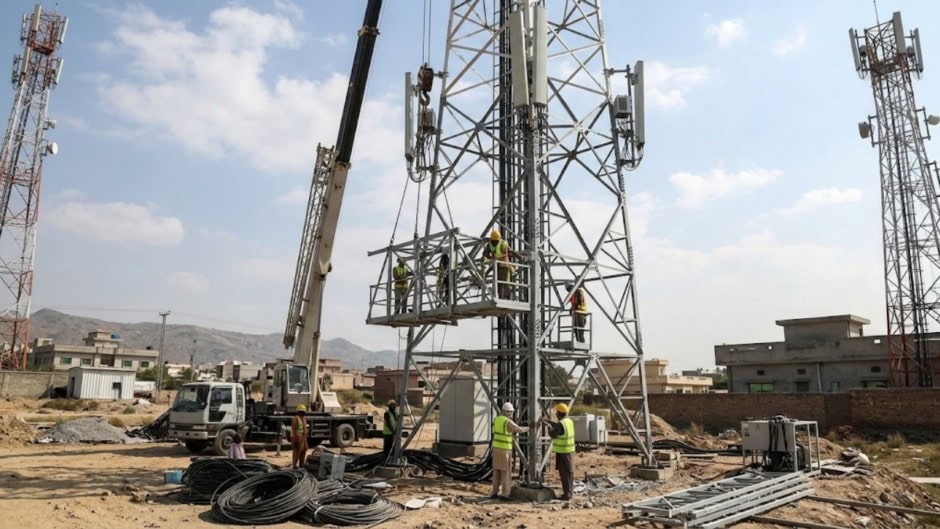
The federal government has proposed giving telecom companies the power to install towers and fibre cables on private property, triggering strong objections from the Senate Standing Committee.
The Pakistan Telecommunication Reorganisation (Amendment) Bill 2026, introduced by Federal Minister Shaza Fatima Khawaja, was referred to the Senate Standing Committee on IT and Telecom for review.
The bill had already been passed by the National Assembly before being presented in the Senate, where it was assigned to the standing committee for a detailed clause-by-clause examination.
A newly introduced clause, Section 27B, proposes fines of up to Rs. 50 million on any property owner, tenant, landlord, or institution that refuses telecom companies right-of-way access.
The clause would allow penalties against anyone who denies, delays, or obstructs the installation of internet fibre cables, mobile towers, or related telecommunications equipment on their property.
Committee members raised strong concerns during a meeting chaired by Senator Palwasha Khan, with Senators Afnan Ullah and Sadia Abbasi questioning the language and its implications for property rights.
Members expressed concern that the bill could allow telecom companies to access private properties on short notice, exposing citizens to massive fines if they refused such requests.
Senators argued that no Pakistani citizen should be compelled to permit telecom infrastructure on private property without clear legal protections and a transparent mutual-consent mechanism.
Senior officials from the Ministry of IT and Telecommunication clarified that the bill did not intend to forcibly acquire private land or property for telecommunications infrastructure.
Officials assured committee members that tower and fibre installations would proceed under existing laws and mutual agreements, with the bill primarily aimed at accelerating 5G infrastructure deployment.
The ministry stated that the bill also seeks to increase internet speeds, fast-track the fibreisation of mobile towers, and resolve right-of-way disputes between federal and provincial government departments.
The Senate Standing Committee deferred approval of the bill until its next session, directing a clause-by-clause review to replace ambiguous language and strengthen private property protections.