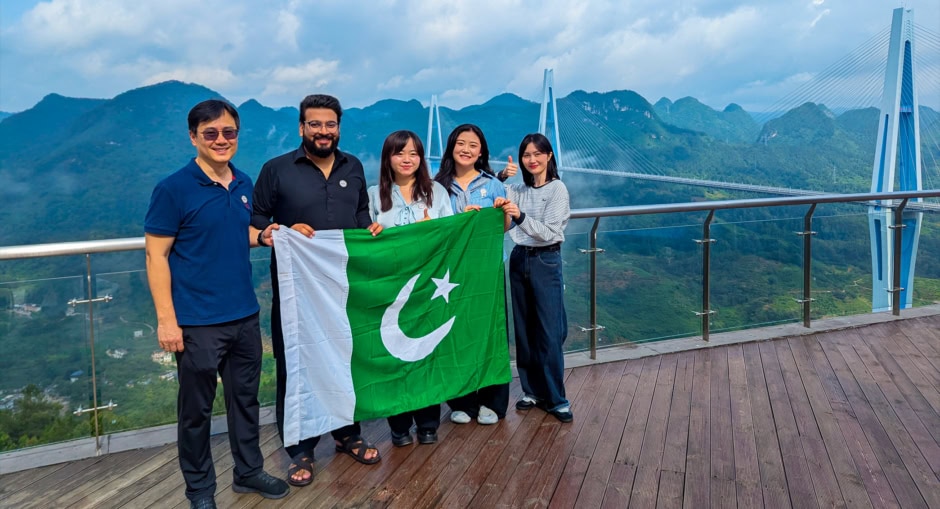
TechJuice correspondent Shujaat Khan recently spent five days in China’s Guizhou Province, a region that has transformed itself from one of China’s most isolated territories into a showcase for autonomous mobility, mega-infrastructure, and deep space observation technology.
Here is what TechJuice found tech-inspiring and why it matters for Pakistan:
Day 1: The Potato Bus and Why Driverless Transit Already Works in China
The visit opened with a ride aboard Guiyang’s autonomous “Potato Bus,” a fully driverless electric minibus built by PIX Moving that operates on the city’s Wonder Loop sightseeing route.
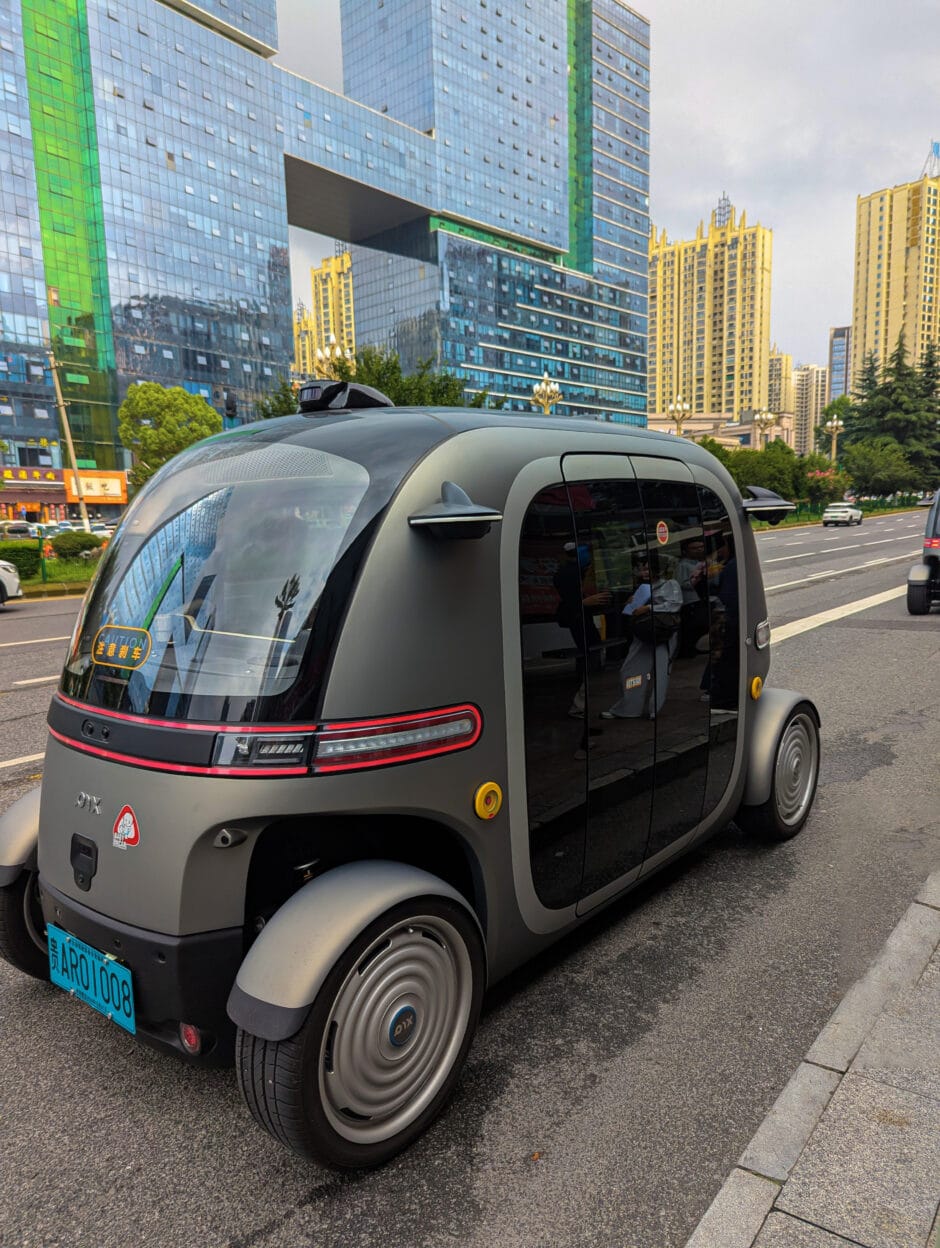
The vehicle has no steering wheel, no pedals, and no rearview mirrors, relying entirely on AI navigation, LIDAR sensors, and high-resolution cameras to handle complex urban traffic. PIX Moving has already exported these vehicles to more than 30 countries, and Guiyang’s fleet now doubles as mobile libraries where passengers scan QR codes for AI-powered audiobook recommendations during their commute. This is not a prototype on a closed track. It is operational urban infrastructure running daily routes through busy city streets.
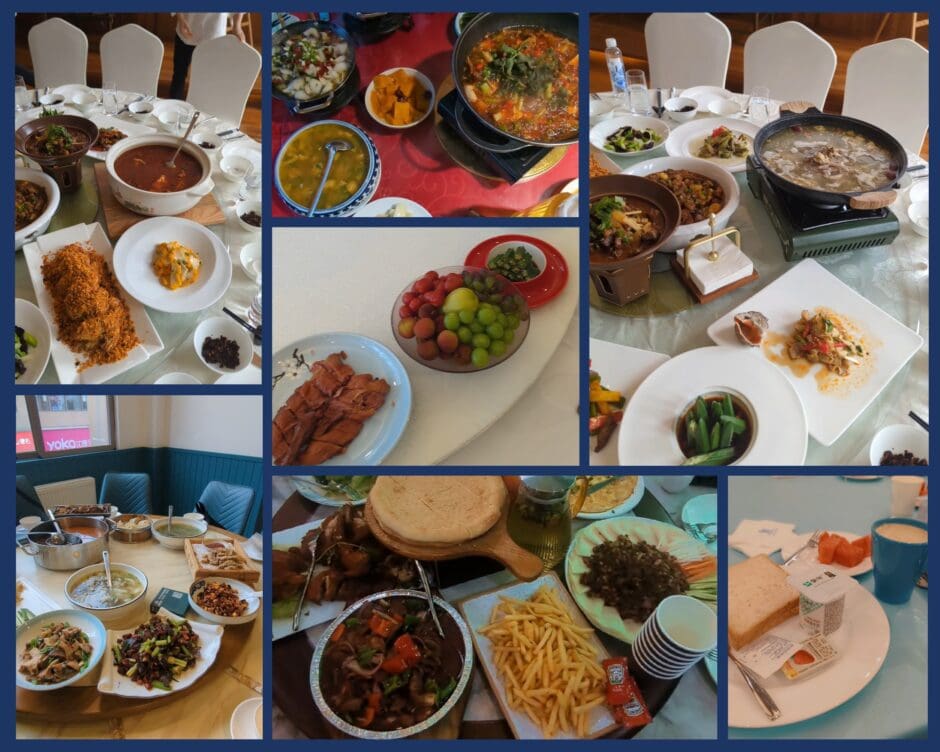
That first evening brought Qingyun Market, one of Guiyang’s most vibrant night markets and a crash course in Guizhou’s famously bold cuisine. The province builds its food identity around sour and spicy flavors, with signature dishes including suan tang yu (sour soup fish simmered with tomatoes and pickled chilies), si wa wa (fresh spring rolls wrapped in delicate rice crepes), and luo si fen (river snail rice noodles with a pungent, addictive broth). Street vendors across the market also serve kao doufu (grilled tofu with chili flakes) and various preparations featuring locally foraged mushrooms from the surrounding mountains.
Day 2: The Many Uses of Cili Fruit
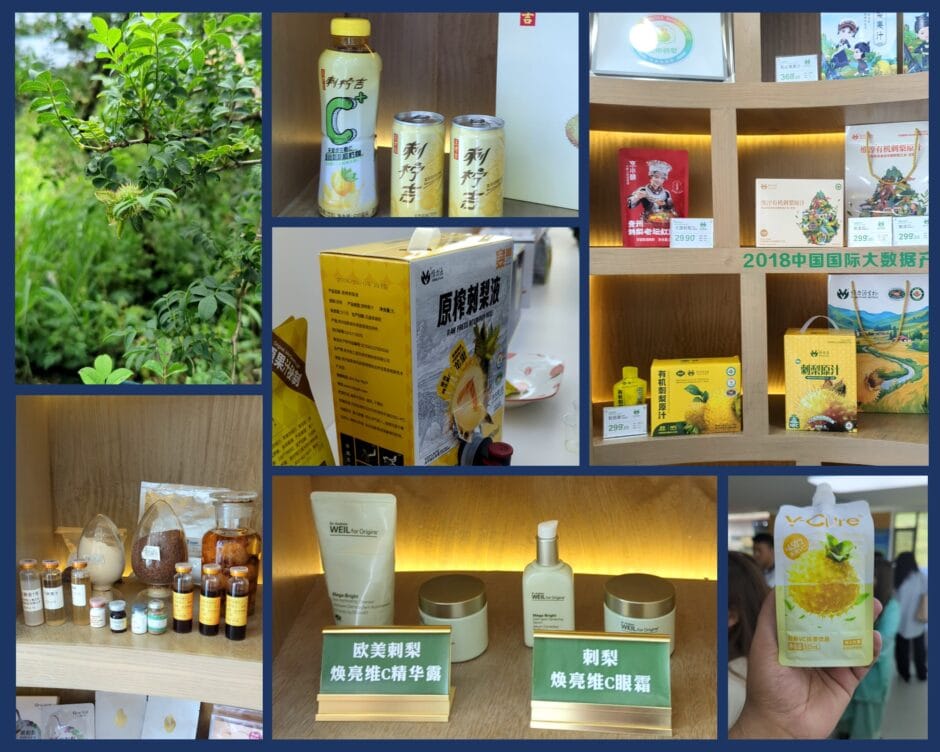
The following day took the team through the Cili fruit-growing mountainous region, an agricultural landscape unlike anything you would encounter in Pakistan’s farming belt. Cili (刺梨 / Rosa roxburghii) is a distinctive thorny fruit native to Guizhou’s highlands and one of the region’s most economically significant agricultural specialties.
The fruit is extraordinarily rich in vitamin C, containing concentrations far exceeding most common fruits, along with flavonoids and other bioactive compounds that have attracted growing interest from the health food and pharmaceutical industries. Local communities widely process Cili into juice, dried fruit, preserves, and health supplements, and the crop has become a meaningful economic driver for rural households across the mountainous interior. Guizhou’s provincial government has actively promoted Cili cultivation as part of its poverty alleviation strategy, linking traditional agriculture to modern processing and distribution chains.
Day 3: Standing Inside the World’s Largest Radio Telescope
The third day brought two of the trip’s most striking encounters with Chinese engineering and scientific ambition. First was the Five-hundred-meter Aperture Spherical Telescope (FAST), nicknamed “China’s Sky Eye,” the world’s largest and most sensitive single-dish radio telescope. Its receiving area covers the equivalent of 30 football fields, composed of 4,500 individually adjustable metal panels forming a moving parabola in real time.
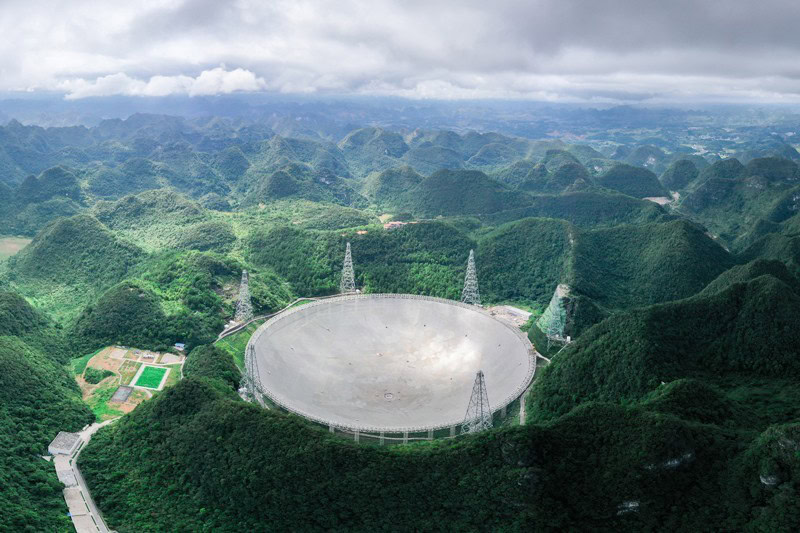
FAST hunts for pulsars, surveys neutral hydrogen, detects interstellar molecules, and conducts SETI research for extraterrestrial intelligence. A Phase 2 expansion is now adding 24 new 40-meter moveable dishes around the main telescope to further boost its detection capabilities.
Day 3 (Evening): The World’s Highest Bridge at 625 Meters
Later that same day, Shujaat Khan stood on the Huajiang Grand Canyon Bridge, the world’s highest bridge at 625 meters above the Beipan River.
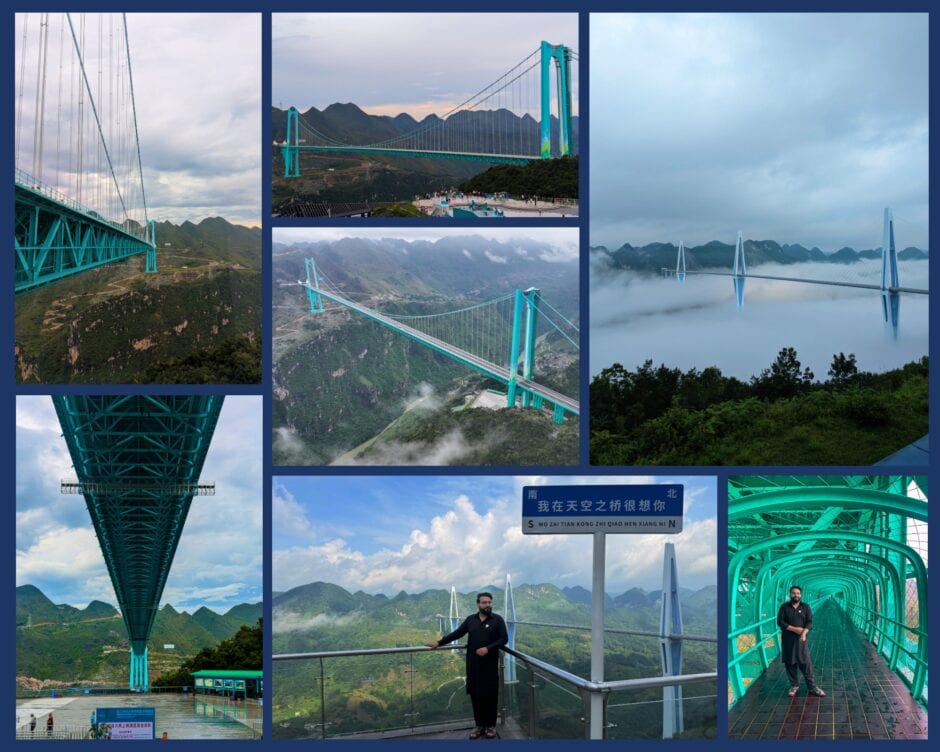
The 2,890-meter crossing opened in September 2025, and TIME Magazine named it one of the 100 greatest places of 2026. A fully transparent glass elevator carries visitors to the observation platform, while a glass skywalk runs through the bridge’s interior offering views straight down into the canyon. After dark, a synchronized light show transforms the entire structure into a spectacle visible across the canyon. Beyond the tourism appeal, the bridge has cut local travel times from hours to minutes and brought high-speed internet to remote communities previously isolated by Guizhou’s mountains.
Day 4: Waste-to-Energy and Huangguoshu Waterfall
Day four included a technical visit to Dynagreen, a state-owned waste-to-energy operator that converts municipal solid waste into on-grid electricity across facilities spanning all of China. Dynagreen processes 78,000 tons of waste daily while meeting EU emission standards, holding over 70 patents in treatment technology. For Pakistan, where municipal waste management remains a persistent urban crisis, the operational model offers a proven blueprint.
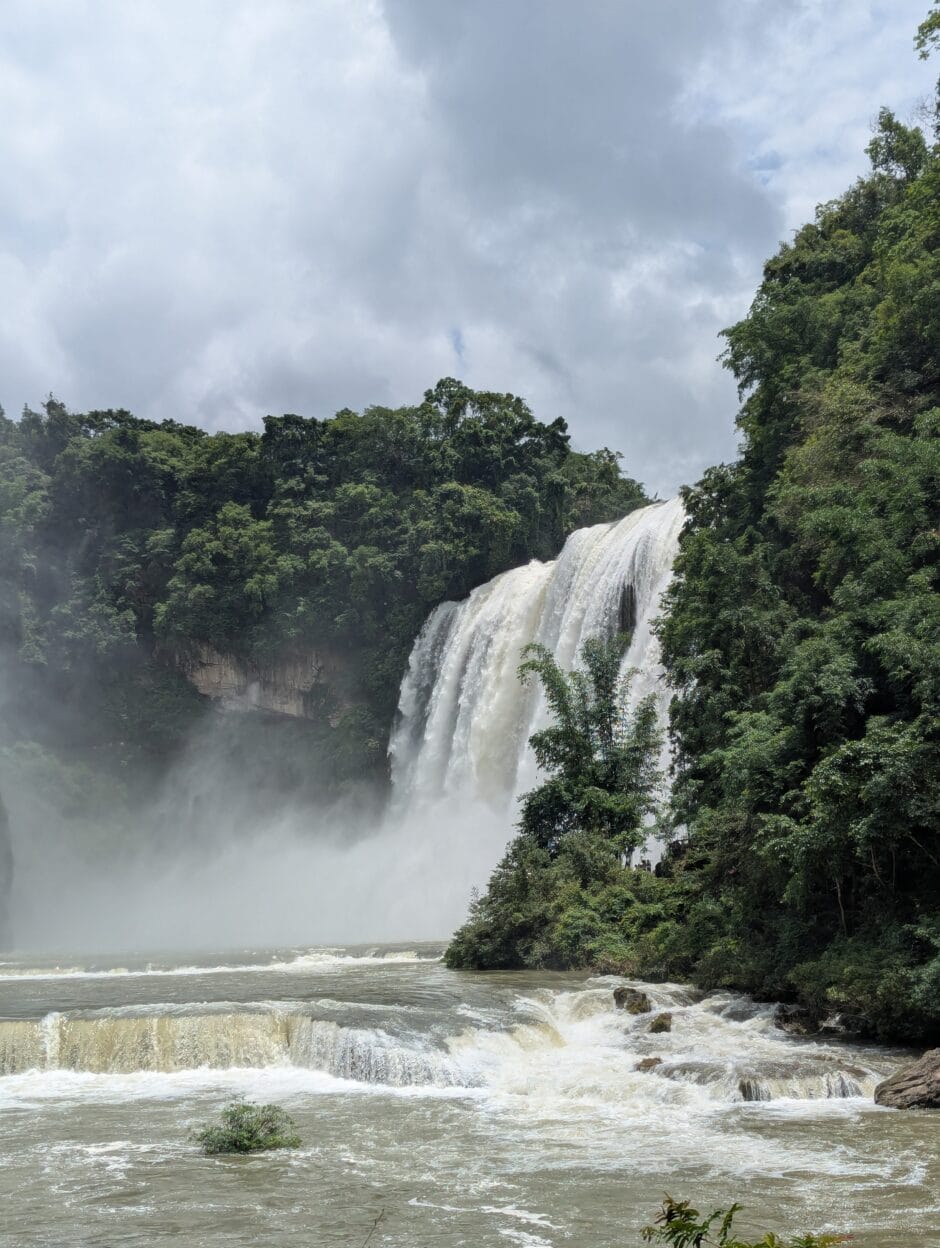
The afternoon delivered Huangguoshu Waterfall in Anshun, one of East Asia’s largest waterfalls and a monument to Guizhou’s natural scale that matches its engineered ambitions. Huangguoshu is renowned for its immense natural beauty and powerful cascading waters that crash down with a force you can feel in your chest from hundreds of meters away. Access to the lower viewing platform was provided via an elevator descending approximately 904 meters (2,966 feet), allowing a unique perspective from close to the base of the waterfall where mist and sound envelop everything within reach. Experiencing the immense force of the water from below was undoubtedly one of the highlights of the entire journey, a reminder that some of the most powerful technology on Earth still cannot replicate what nature builds on its own.
The trip concluded with a four-hour high-speed rail journey from Guiyang to Guangzhou at speeds exceeding 300 kilometers per hour, covering roughly 900 kilometers on a network that now stretches beyond 45,000 kilometers nationwide.
Guizhou’s Transformation: What Can Pakistan Learn?
Guizhou’s transformation carries a specific lesson for Pakistan’s technology and infrastructure ambitions. Two decades ago, this province was isolated by mountains, underdeveloped infrastructure, and widespread poverty. Today it hosts the world’s highest bridge, the world’s largest radio telescope, operational autonomous public transit, advanced waste-to-energy facilities, and a high-speed rail network connecting it to the rest of China.
The province achieved this transformation through sustained infrastructure investment, deliberate technology adoption, and a willingness to treat ambitious engineering projects as economic development tools rather than prestige symbols. Pakistan faces similar geographic challenges, similar urbanization pressures, and similar infrastructure deficits. What Guizhou demonstrates is that these challenges are solvable at scale when technology deployment and infrastructure investment move together rather than waiting for one to justify the other.