The Punjab government has started issuing licences to kite manufacturers ahead of Basant 2027, with 12,250 licences already approved so far.
According to the report, a large number of applications have been submitted for licences covering both kite and string manufacturing. Of the 4,300 applications received, scrutiny of 2,537 has been completed, while field verification is underway for another 1,500 applicants.
Officials noted that 1,605 licences for kite manufacturing were issued last month, along with 1,337 licences for string manufacturing. The district administration said all licence holders would be authorised to manufacture both kites and strings.
Authorities said the licensing process was launched six months ahead of the festival to bridge the gap between demand and supply in the run-up to Basant 2027.
Registration for Basant 2027 manufacturers had opened on Sept 5 through a dedicated online portal, following an announcement by the Lahore district administration in August. Officials said registration would initially be limited to manufacturers, with kite sellers, traders and associations to be registered separately in January or February.
The festival is scheduled to take place in Lahore from March 12 to 14, 2027. Under the current process, manufacturers are required to obtain a no-objection certificate before starting production, and their facilities will be subject to inspection and monitoring by district administration teams.
Only kites of approved sizes and cotton string will be permitted, while chemical-coated string and metallic wire remain banned. The permitted string, commonly known as pinna, must comply with prescribed specifications.
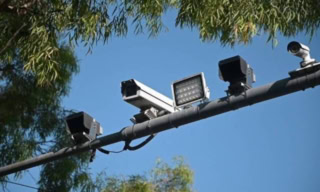
The regulatory framework builds on rules introduced under the Punjab Regulation of Kite Flying Act, 2025, following the revival of Basant in Lahore last February after an 18-year ban. That event was held under a tightly controlled framework that included risk-zone mapping, police deployment, Safe City camera and drone surveillance, and coordination with Rescue 1122 and the power utility.
Separately, the Punjab government has set Dec 30 as the deadline for implementing new safety rules for kite flying. These require rooftops used for kite flying to be structurally secure, with boundary walls at least three and a half feet high, and prohibit overcrowding.
Continuous adult supervision of children on rooftops has been made mandatory, while running, jumping and hanging from edges during kite flying are banned. The use of loud music and DJ systems has also been prohibited, and the availability of first aid kits at all locations has been made compulsory.
Building owners and event organisers will be held responsible in the event of any accident or rule violation, and deputy commissioners and district police officers have been directed to ensure full implementation of the regulations.