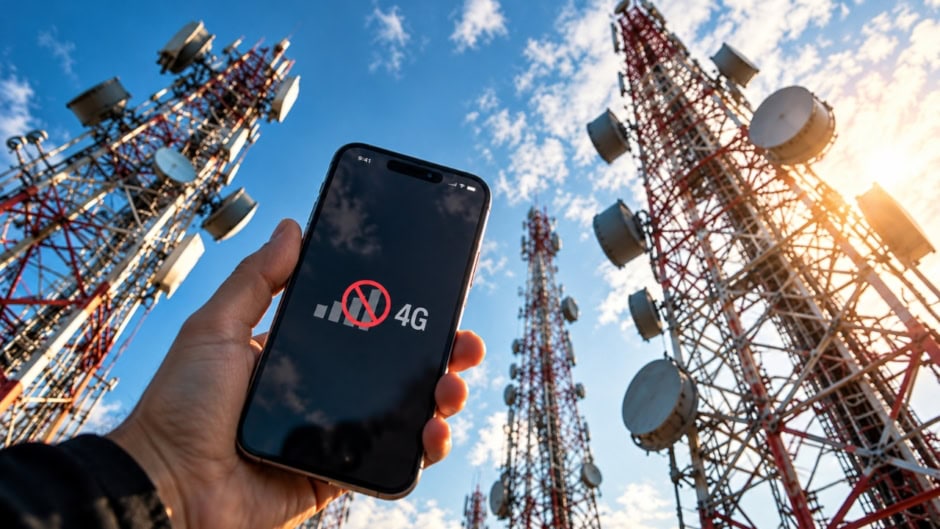
Pakistan’s mobile users continued to experience a wide gap between next-generation 5G speeds and the country’s dominant 4G networks during the second quarter of 2026, with 5G delivering an average download speed of 127.74 Mbps but remaining available for only 3.95% of users’ connected time, according to the Pakistan Telecommunication Authority’s (PTA) latest Mobile Network Experience Benchmarking Report.
The report, based on independent Opensignal measurements collected over a 90-day period in the second quarter of 2026, evaluates the real-world experience of mobile users across download and upload speeds, video and gaming experience and time spent connected to mobile networks.
According to the benchmarking results, 4G remained the backbone of mobile connectivity, accounting for an average 93.67% Time on Network, compared with just 3.95% for 5G.
The average 4G download speed stood at 18.9 Mbps, while users with high-end devices recorded a substantially higher 31.3 Mbps. Average 4G upload speed was 5.32 Mbps, while Video Experience and Games Experience scores stood at 37.53 and 43.85, respectively.
In contrast, 5G users experienced an average download speed of 127.74 Mbps and upload speed of 12.7 Mbps, with Video Experience scoring 67.33 and Games Experience 62.05.
However, PTA cautioned that 5G deployment in Pakistan remained at an early stage, with limited coverage and a small user base, making the 5G results indicative rather than a conclusive assessment of nationwide network performance.
The city-level results also highlighted significant differences in network experience across the country.
Among the major urban centers, Islamabad recorded download speeds ranging from 6.03 Mbps to 20.86 Mbps across operators, while Time on Network ranged from 91.56% to 97.17%.
In Lahore, operator download speeds ranged from 7.58 Mbps to 21.26 Mbps, while the highest Time on Network reading reached 98.18%. Karachi recorded download speeds between 12.19 Mbps and 18.27 Mbps, with the highest Time on Network reaching 97.64%.
The report showed even sharper disparities in smaller and geographically challenging locations. In Gwadar, download speeds ranged from only 3.87 Mbps to 12.75 Mbps, while Time on Network varied from 59.18% to 94.59%.
Similarly, Skardu recorded download speeds between 4.55 Mbps and 14.76 Mbps, with Time on Network ranging from 48.67% to 82.77%. Muzaffarabad recorded speeds between 8.53 Mbps and 14.7 Mbps, while Time on Network ranged from 68.68% to 95.42%.
PTA stressed that the Opensignal assessment measures end-to-end quality of experience (QoE) based on real smartphone users, including indoor and outdoor locations and busy and off-peak periods, rather than merely measuring network-level technical performance through controlled testing.
The findings therefore provide a snapshot of what consumers actually experience while using everyday services such as video streaming, voice calls, gaming and web browsing, rather than a conventional drive-test assessment of network infrastructure.