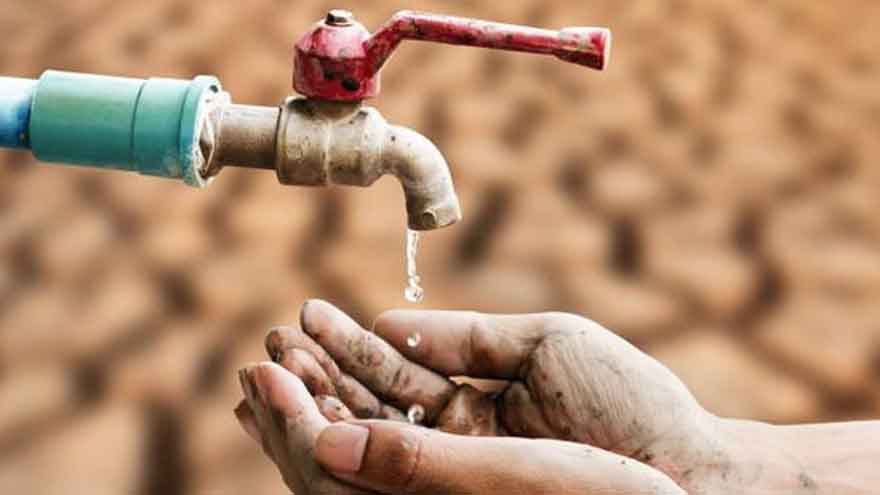
Pakistan’s water crisis has reached an alarming stage, with the Asian Development Bank’s latest Asian Water Development Outlook revealing that more than 80 percent of Pakistanis still do not have access to clean drinking water. The report warns that despite minor improvements over the past decade, the country remains trapped in deep water insecurity driven by climate stress, mismanagement, and rapid population growth.
The ADB report highlights that Pakistan’s water quality and quantity have deteriorated sharply. Population pressure, erratic monsoons, glacial melt, floods, and poor governance have overburdened the country’s already fragile water system. According to the assessment, groundwater depletion especially due to agricultural overuse has triggered contamination, including arsenic poisoning in several districts.
Per capita water availability has dropped dramatically from 3,500 cubic metres in 1972 to just 1,100 cubic metres in 2020, pushing the country dangerously close to absolute water scarcity.
Rural communities remain the most vulnerable, with ineffective supply models, contamination, and weak surveillance putting millions at risk of waterborne diseases. The report records some improvement due to targeted WASH programs and Covid era hygiene campaigns, but service delivery remains inconsistent.
Urban centres have seen modest progress, yet rising demand, untreated wastewater, failing infrastructure, and poor cost recovery continue to challenge city administrations. Untreated industrial discharge and rapid population growth are degrading freshwater ecosystems, from the Indus River to wetlands and coastal zones.
Pakistan’s water governance score has improved from 50 percent in 2017 to 63 percent in 2023 under SDG 6.5.1 indicators. But the ADB notes that implementation remains weak due to fragmented institutions, limited capacity, and low investment. The National Water Policy announced in 2018 set a strong foundation, yet the gap between planning and execution has slowed meaningful change.
Climate disasters like the 2022 floods, which displaced millions, continue to expose weaknesses in infrastructure, early warning systems, and local resilience. Despite some progress, Pakistan remains vulnerable to both droughts and flooding.
An official quoted in the report stressed,
“Without stronger coordination, funding, and enforcement, Pakistan’s water security gains will continue to remain fragile and uneven.”
ADB’s Recommendations
The ADB calls for stronger institutional coordination under the National Water Council, investment in adaptive infrastructure, volumetric pricing to promote efficient usage, creation of an independent water quality authority, and embedding gender inclusive approaches in water governance.