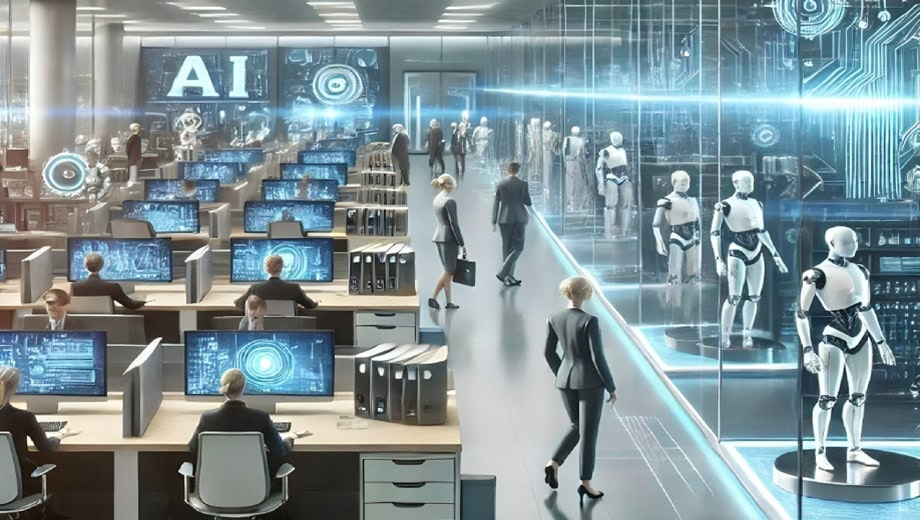
A new AI impact on banking jobs report by Morgan Stanley warns that artificial intelligence could put up to 200,000 jobs at risk in Europe’s banking sector by 2030. This represents roughly 10% of the workforce across 35 major banks, with back- and middle-office roles like risk management and compliance expected to face the largest reductions. AI is projected to improve efficiency in these areas by up to 30%.
Banks in Europe have already reduced staff due to branch closures, with over 6,000 UK branches shutting since 2015. Some major banks, including ABN Amro, Société Générale and Goldman Sachs, have already hinted at potential layoffs or hiring freezes in response to technological shifts.
However, JPMorgan Chase CEO Jamie Dimon cautioned that cutting entry-level roles could harm long-term workforce development and career progression. He noted that while AI might deliver short-term efficiency gains, it could also enable shorter working weeks and improved work-life balance.
Industry analysts say the adoption of AI in banking has been slower than in other sectors due to strict regulations. But as compliant AI tools become more common, workforce transformation may accelerate. Banks will need to strike a balance between automation and employee development to ensure a skilled workforce for the future.
Experts also warn that the shift could reshape job profiles, with more emphasis on analytical, strategic, and technology-focused skills. Training programs and upskilling initiatives are expected to play a key role in helping employees adapt to new AI-powered workflows.
Despite potential job cuts, some analysts suggest AI could create opportunities in advisory, digital banking and data management, allowing banks to reallocate human talent to higher-value tasks. Regulators are likely to monitor the pace of automation closely to protect workforce stability while encouraging innovation.
While AI poses a clear job risk, it also offers an opportunity for the banking sector to evolve. Companies that invest in retraining and reskilling their workforce could not only reduce job losses but also foster innovation and efficiency. Striking the right balance between automation and human expertise will be key to sustaining both profitability and employee satisfaction in the decade ahead.