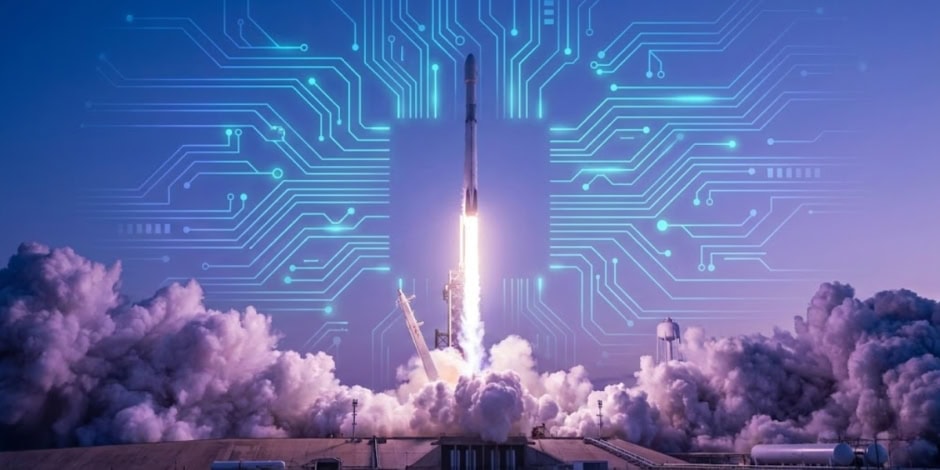
Elon Musk has executed one of the largest private tech consolidations in recent history, with SpaceX acquiring his artificial intelligence venture xAI in a deal valuing the combined entity at roughly $1.25 trillion, according to industry sources and company disclosures.
The acquisition, announced on February 2, 2026, brings together Musk’s space and satellite operations with his fast-growing AI platform, which includes the Grok chatbot and the social media network X. In a memo published on SpaceX’s website, Elon Musk described the move as a step toward building a vertically integrated innovation engine that spans rockets, AI systems, space-based internet, direct-to-mobile connectivity, and real-time information platforms.
The timing is significant. The merger comes ahead of a potential SpaceX initial public offering that could take place as early as June 2026 and rank among the largest IPOs ever. Under the deal’s structure, xAI shareholders will receive SpaceX equity, with early investors and executives converting at an estimated ratio of seven SpaceX shares for every xAI share.
Musk describes the merger as a “most ambitious, vertically integrated innovation engine,” bringing together AI development, rocket technology, satellite internet, and real-time global communications all under one roof.
At first, it might seem a bit odd to combine a rocket company with an AI startup, but Musk sees it differently. He believes that our current Earth-based infrastructure just can’t keep up with the skyrocketing energy needs of AI.
Data centers are already huge power hogs, and as AI models grow larger and more intricate, that demand is only going to increase. Musk is convinced that the answer is out there in space. By relocating AI infrastructure beyond our planet, SpaceX can sidestep the limitations of energy on Earth and tap into nearly limitless solar power. This belief is at the heart of the merger and sheds light on why AI has become central to SpaceX’s long-term vision.
The merger also reshapes competition in both sectors. With AI assets now paired directly with launch capabilities and the global reach of Starlink, SpaceX enters more direct competition with rivals such as Google, Meta, and OpenAI, while blurring the line between connectivity, compute, and intelligence delivery.
Whether this merger becomes a defining inflection point for AI and space computing or an overextended bet, it marks a bold escalation in Musk’s ambition to fuse intelligence and infrastructure at planetary and orbital scale.
TechJuice had reported last week of a possible merger of Musk enterprises to make one conglomerate.