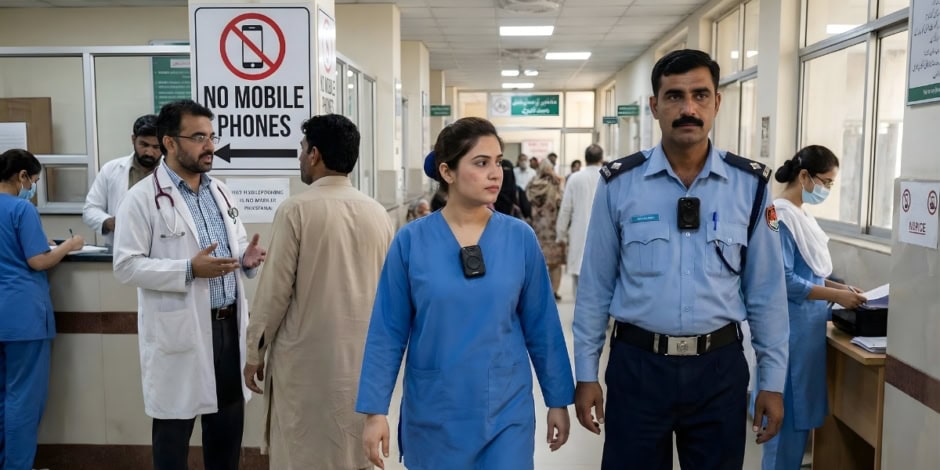
The Punjab government is integrating surveillance technology directly into patient care. In a high-level meeting chaired by Chief Minister Maryam Nawaz today, the administration announced a controversial decision to introduce body cameras for hospital staff. This move is part of a wider reform package aimed at improving security and service delivery in public hospitals.
The Tech Overhaul: Body Cameras & Strict New Rules
The government is taking a hard line on hospital security. The new directive requires security guards, ward boys, nurses, and pharmacy staff to wear body cameras. This decision follows serious public complaints regarding private security guards deployed in these facilities. CM Maryam Nawaz has directed strict action and accountability for any lapses.
However, the technology push extends beyond surveillance. The meeting reviewed proposals to upgrade healthcare facilities using Chinese-manufactured medical equipment. Additionally, the CM directed the establishment of a dedicated data analysis centre. This centre will evaluate the effectiveness and impact of public welfare initiatives within the health sector.
To prioritise patient care, the administration reached a consensus on a significant restriction, i.e., a ban on mobile phone use. Doctors and nurses cannot use their phones during duty hours.
Hygiene standards are also facing a strict deadline. The CM ordered all government hospitals to complete full steam cleaning by 9:00 AM daily. The message is clear that inefficiency and negligence will no longer be tolerated.
Budget, Supply Chain & Stats
Despite a massive Rs. 80 billion allocation for medicines, shortages persist. CM Maryam Nawaz termed any lapse in delivery “unacceptable”. She directed authorities to prepare a revised, modern medicines list and formed a committee to finalise it to ensure a foolproof supply mechanism.
Management structures are also changing. A Medical Superintendent (MS) pool is being created, where salary increments are linked directly to performance.
The briefing highlighted recent statistics:
- Recruitment: Over 2,500 doctors recruited in the last two years.
- Cardiac Care: 585,000 patients registered for home delivery of cardiac medicines.
- Critical Care: Doorstep delivery completed for 6,000 patients suffering from Hepatitis and Tuberculosis.
Public Sentiment: Privacy Concerns
The announcement has triggered immediate reactions online. While the government cites security, citizens are questioning the implementation.
Public comments suggest the tech is misdirected. People are arguing that body cameras should be for police and law enforcement, not doctors. Others suggested extending this initiative to registry centres and excise officials instead.
Crucially, the privacy implications are raising alarms. People are concerned that this might hurt confidentiality, highlighting the potential breach of patient privacy in a medically sensitive environment.