 5 min read

Federal prosecutors have unveiled a large-scale health care fraud that allegedly siphoned over $10 million from Medicare and other U.S. health care programs. The case involves Burhan Mirza, a Pakistani business owner, and Kashif Iqbal from Texas, who allegedly ran a complex network of fake medical labs and shell companies to submit claims for tests that never happened. The indictment, filed on January 29, 2026, paints a picture of an elaborate operation spanning two continents.
Key Figures Behind the Scheme
The alleged fraud involved a small network of individuals who coordinated across continents to carry out the scheme.
- Burhan Mirza, a resident of Pakistan and owner of Nexus BPO Solution, is said to have controlled sensitive patient information used to submit claims without authorization. Prosecutors allege he managed much of the operation from Pakistan, overseeing the flow of money and data.
- Kashif Iqbal, based in Lavon, Texas, acted as Mirza’s U.S. agent. He is accused of facilitating the transfer of fraud proceeds to Pakistan and managing the logistics of the scheme on American soil.
- Mir Akbar Khan was another key player who helped the scheme run smoothly by arranging “nominee owners” to appear as heads of the labs and bank accounts. This was allegedly done to distance the primary defendants from direct involvement and scrutiny.
Who is Burhan Mirza
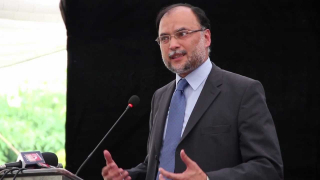
Burhan Mirza is widely recognized in Pakistan as a prominent IT entrepreneur, investor, and motivational speaker who has played a significant role in the country’s digital landscape. His background combines high-level corporate leadership with extensive public-facing mentorship.
Professional Background
Mirza’s career took off at TradeKey, a global B2B marketplace, where he spent nine years and rose to become the Business Unit Head of the International Business Division. served as the CEO of Digitonics Labs (also known as Digitonics LLC), a major IT and design firm in Pakistan that reportedly grew significantly under his leadership.
He is often featured as a motivational speaker at major events, such as the Connected Pakistan Conference and DisruptHR Karachi. He uses these platforms to discuss “winning mentalities,” leadership, and overcoming career stagnation.
Danny de Hek
Danny de Hek is a New Zealand-based investigative journalist and OSINT (Open Source Intelligence) researcher who has earned international recognition as the “Crypto Ponzi Scheme Avenger”. He is widely known for his “no-filter” approach to dismantling billion-dollar financial scams, including the HyperVerse cryptocurrency fraud, a role that earned him a feature in The New York Times.
Danny de Hek is linked to this case as an investigative journalist and OSINT researcher who tracked Burhan Mirza’s activities prior to the federal indictment.
He has been a regular contributor to TechJuice, providing deep-dive investigative pieces that bridge the gap between global OSINT and the Pakistani tech sector.
He follows and documents fraudsters because he believes the most effective way to fight organized scams is by “naming and shaming” the bad actors. His approach is built on persistence-despite receiving numerous cease-and-desist letters and legal threats, he continues to track digital evidence of Ponzi schemes, MLM frauds, and transnational financial crimes.
How the Scheme Worked
Authorities say the defendants used multiple methods to hide their tracks:
- Identity Theft: They obtained Medicare numbers and personal information to submit fake claims.
- Non-existent Services: Diagnostic tests were billed but never performed.
- Nominee Ownership: Associates were paid to appear as business owners to conceal the real operators.
- Fake Invoices: They created false bills for services like IT work, routed through companies like Ikonic IT Solutions LLC.
To further disguise the flow of funds, money was transferred internationally, often routed through U.S. accounts before reaching Mirza’s businesses in Pakistan, including Nexus BPO Solution and Axis BPO Solutions. One bold move involved sending over $227,000 to an Israeli bank under the name Cellify LLC.
Shell Companies Used in the Fraud
The group reportedly relied on several purported medical businesses to submit false claims for diagnostic tests that were never performed. These included:
- Hannan Lab, Inc.
- Advanced Diagnostic Solutions, Inc.
- Clinical Laboratory, Inc.
- American Health Sciences LLC
Prosecutors say these entities existed mostly on paper, serving as fronts to disguise the flow of millions of dollars from U.S. healthcare programs to accounts controlled by the defendants.
Money Laundering and Financial Transactions
| Payee Account | Timeframe | Estimated Amount |
|---|---|---|
| Hannan Lab (Account 9053) | Oct 2023 -Jan 2024 | Over $4,000,000 |
| Clinical Laboratory (Account 7586) | May -July 2024 | More than $2,800,000 |
| Clinical Laboratory (Account 5853) | March 2024 | Over $500,000 |
| American Health Sciences (Account 5895) | July 2024 | More than $560,000 |
Financial Gaps and Incomplete Records
Partial Bank Records: The indictment mentions that banks have provided “partial records” of the alleged entities, with some documentation still “awaiting”.
Specific Patient Identities: Although the indictment alleges the use of thousands of stolen beneficiary identification numbers (BINs) and personal data, the names of the victims are not listed for privacy and security reasons.
Unclear Flow to Other Jurisdictions: While significant funds were tracked to Pakistan, there is a mention of over $227,000 transferred to “Cellify LLC” at a bank in Israel; however, the ultimate destination or purpose of that specific money remains unclarified in the summary.
Investigative Status
Missing Finance Members: During the investigation and subsequent remands in Pakistan, “no finance members were traced,” leaving a gap in understanding the full internal accounting and organizational structure of Mirza’s operations.
The indictment notes that the roles of certain assistants (like those in IT and fleet management) are still being determined as the investigation continues.
As a formal charging document, the indictment only presents the government’s allegations; it does not contain the defendants’ official response, evidence for their defense, or any plea agreements that might exist later in the case.
Charges and Consequences
Both men face multiple federal charges, including health care fraud, money laundering, and making false statements. Prosecutors are seeking a $10 million personal judgment and the forfeiture of any property tied to the scheme.
While the sums are eye-catching, the human cost of such fraud runs deeper. Cases like this erode trust in systems meant to protect the elderly and vulnerable, forcing tighter regulations and higher costs for all taxpayers.