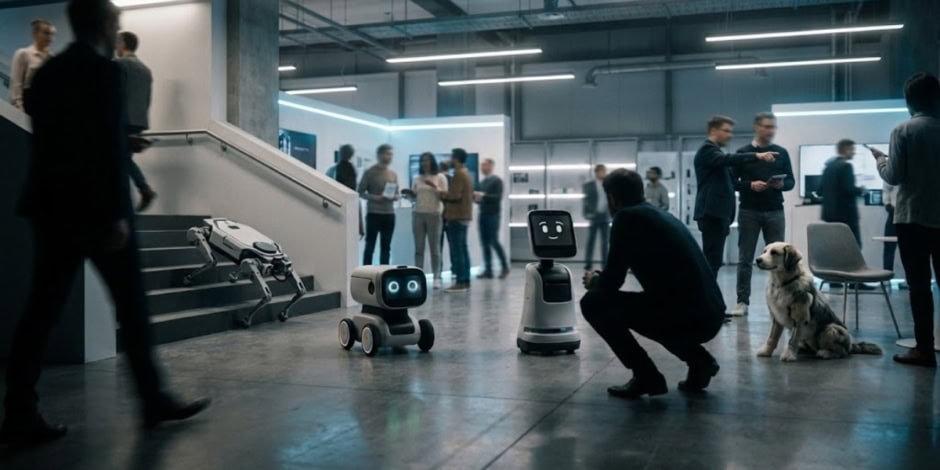
Exhibitors at CES 2026 rolled out a dense slate of unconventional consumer devices, with manufacturers using the show floor to surface tangible, working products rather than concept sketches. Across booths, companies presented AI-driven hardware designed to move, react, display emotion, and adapt in real time, marking a clear departure from incremental updates to phones, televisions, and laptops. Industry officials said the focus on physical, interactive products reflects a push to probe new consumer categories as legacy electronics segments mature.

This product-first strategy allows manufacturers to collect feedback on form factor, behavior, and perceived value without committing to mass-market launches. Several exhibitors confirmed that hardware platforms are finalized while software layers remain adaptable, enabling post-launch tuning based on early user response.
Most of the showcased devices combine cameras, microphones, proximity sensors, and motors with embedded AI models that process input continuously. Zeroth Robotics’ W1 instantly became a hit when unvielded at CES 2026 because of its unmistaken WALL-E aesthetics. Starting at $4,999, this is one of the AI gadgets that blends home security, mobile surveillance, smart-home alerts, and outdoor utility as a roaming family robot.
Robotic vacuums displayed real-time facial animations while navigating rooms. Roborock stunned CES by unveiling a robotic vacuum that deploys chicken-like mechanical legs to climb stairs and clean each step as it goes, turning a long-standing robovac limitation into a moving spectacle.
Desktop companions reacted to speech and movement, maintaining eye contact through integrated displays. Such as Razer’s Project Motoko, an AI-powered headset that turns over-ear headphones into smart glasses by translating menus in real time and pulling live information on demand.
Robotic pets demonstrated adaptive behavior patterns that evolved during repeated demonstrations. One of the most prominent of those include An’An, Mind with Heart Robotics’ AI-powered panda companion. It blends lifelike touch sensors and emotional memory to deliver personalized, around-the-clock support for elderly care, from easing loneliness to assisting caregivers.

Manufacturers emphasized modular hardware architectures, allowing the same chassis to support multiple software personalities or use cases. This design approach enables rapid iteration without retooling physical components, reducing the cost of experimentation and allowing companies to pivot quickly if a product fails to resonate.
Rather than pointing toward a single breakout product, CES 2026 revealed a broad field of AI-driven consumer hardware competing for relevance. Some devices aim to replace familiar appliances, while others introduce entirely new categories built around presence, motion, and personality.
What happens next will depend more on which products survive pilot programs, software updates, and early customer feedback cycles.