China’s accelerating progress in artificial intelligence is creating new cooperation pathways with Pakistan, expanding bilateral technology ties beyond conventional telecom infrastructure into advanced computing, research, and locally developed AI applications. The shift comes as both countries deepen engagement under the second phase of the China-Pakistan Economic Corridor.
Deputy Prime Minister Mohammad Ishaq Dar and Chinese Foreign Minister Wang Yi met on July 16 during the World Artificial Intelligence Conference in Shanghai. Both officials reaffirmed their commitment to accelerating CPEC 2.0 development while expanding cooperation in artificial intelligence, the digital economy, and science and technology. The meeting underscored how AI has moved from peripheral interest to central pillar in bilateral relations.
During the same conference, Pakistan formally joined the World Artificial Intelligence Cooperation Organisation (WAICO) as a founding member. The signing ceremony demonstrated Pakistan’s commitment to promoting international AI cooperation and securing equitable access to emerging technologies. Membership positions Pakistan alongside other developing nations seeking structured engagement with global AI development rather than passive technology consumption.
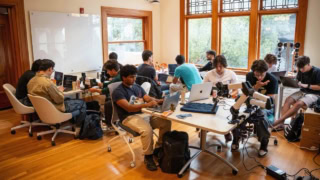
Pakistan’s domestic preparations complement the bilateral expansion. The government announced plans to establish AI hubs in seven cities: Islamabad, Lahore, Karachi, Peshawar, Quetta, Muzaffarabad, and Gilgit. Each hub will feature modern office facilities, high-speed internet, and advanced laboratories supporting research and entrepreneurship. The initiative aims to incubate 560 AI startups over two years, with 150 receiving seed grants to commercialize their concepts. Focus sectors include healthcare, agriculture, education, fintech, and smart cities.
The National AI Policy also targets one million AI-skilled non-IT professionals by 2030 and plans to extend AI compute access to at least 100 academic institutions. The National AI Advancement Initiative includes 20,000 training opportunities across the country.
However, turning policy into operational infrastructure remains Pakistan’s persistent challenge. Previous technology initiatives under CPEC faced delays in execution and funding disbursement. Whether AI cooperation follows a different trajectory depends on institutional coordination between the Ministry of IT, universities, and Chinese technology partners willing to invest in Pakistan’s nascent AI ecosystem.