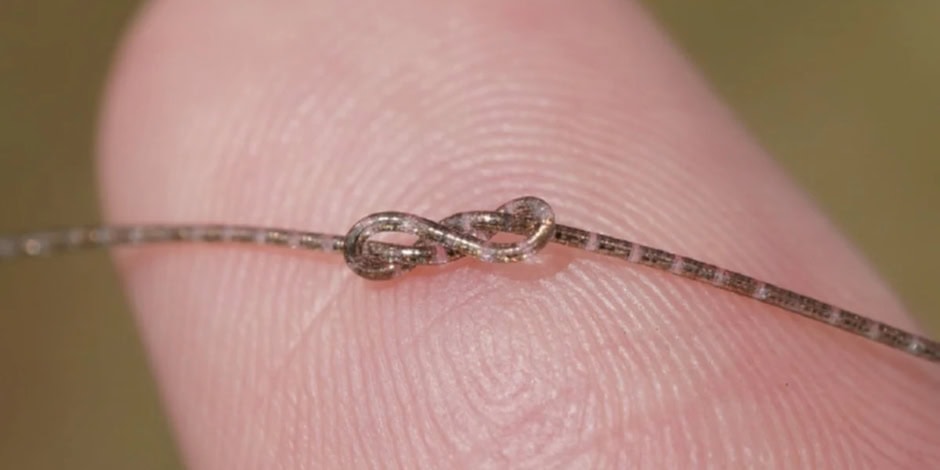
Chinese researchers have announced a major advance in electronics with the creation of fiber chips. These are integrated circuits embedded within ultrathin, flexible fibers that can compute, communicate, and be woven into fabrics or high-tech devices.
The breakthrough, published in the journal Nature, represents a bold departure from traditional rigid silicon chips and could accelerate the convergence of computing with wearable, medical, and human-machine interface technologies.
The research team, led by Peng Huisheng, spent nearly a decade integrating processing, memory, and signal-handling circuitry directly into fibers thinner than a human hair. The scientists who took part in the research are from Fudan University in Shanghai and Chinese Academy of Sciences.
The research revealed that they have finally achieved densities of roughly 100,000 transistors per centimeter, which is a performance comparable with conventional chips found in everyday electronics. Unlike conventional planar chips, these fiber chips remain fully flexible, stretchable, and robust under deformation.
According to the researchers:
Fibre electronic devices have achieved almost all of the desired functions, such as powering, sensing and display functions. However, viable information-processing fibres, which lie at the heart of building intelligent interactive fibre systems similar to any electronic product, remain the missing piece of the puzzle.
The core innovation lies in a multilayered internal architecture that places circuitry throughout the fiber’s interior rather than only on its surface. Traditional microchips typically depend on stiff, flat substrates. However, the team at Fudan has taken a different route by using flexible substrates that can accommodate entire electronic circuits. This structural shift allows the team to use nanometer-smooth polymer substrates and roll them into a spiral configuration, enabling complex circuit behavior in a thread-like form. The approach overcomes longstanding fabrication challenges associated with fitting high-precision microelectronics onto curved and flexible materials.
In laboratory tests, prototypes of the fiber chips demonstrated not only digital and analog signal processing but also neural computing functions with high accuracy. The fibers were shown to survive repeated bending, twisting, and abrasion, a critical capability for future integration into textiles, wearable systems, or even soft robotic components. The team also found that lengthening the fiber can really boost computing power. A 1-meter fiber can pack in millions of transistors, getting close to the capabilities of traditional computer CPUs.
The team also managed stretch the fiber up to 30% and twist at an impressive 180 degrees per centimeter. Moreover, even after more than 100 wash cycles, the fibers stayed functional. These newly-made fibers can handle temperatures soaring up to 100 degrees Celsius (212 degrees Fahrenheit) and can withstand the weight of a 15.6-tonne container truck.
The team was able to combine power supply, sensing, computing, and display functions into a single, self-sufficient fiber. This innovation eliminates the need for any external computer chip or wiring in smart clothing.
Researchers emphasize that the fabrication method is compatible with existing industrial lithography tools, which is a key advantage for scaling up production. Mass manufacturing of fiber chips could be feasible, potentially enabling widespread adoption across consumer electronics, medical devices, and Internet of Things ecosystems.
Over the last ten years, the team has created over 30 different types of functional fiber devices. These range from fibers designed for energy storage and power generation to those used for light emission, displays, and biosensing.
Recently, the researchers have successfully shown the potential for scalable manufacturing of fiber chips in the lab. This indicates that the current infrastructure could be ready to support mass production in the future. As the team coin it:
We demonstrate that this fully flexible fibre system paves the way for the interaction pattern desired in many cutting-edge applications, for example, brain–computer interfaces, smart textiles and virtual-reality wearables. This work presents new insights that can promote the development of fibre devices towards intelligent systems.