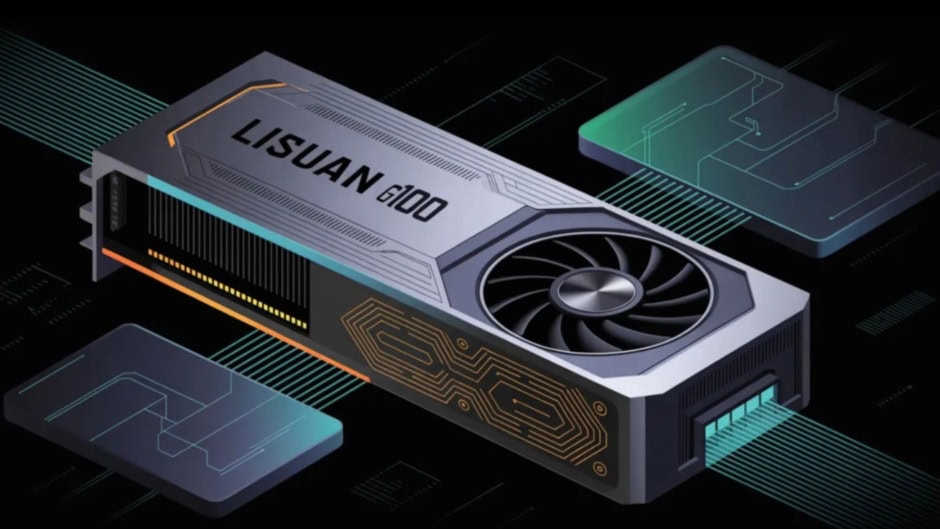
China’s semiconductor ambitions hit a roadblock as Lisuan’s first domestically developed 6nm GPU, the G100 GPU, falls short of expectations.

Initially billed as a direct rival to Nvidia’s RTX 4060, early Geekbench OpenCL benchmarks reveal the G100 GPU’s performance mirrors the aging GeForce GTX 660 Ti, a graphics card launched approximately thirteen years ago.
While the milestone of developing a 6nm GPU on home turf is significant, Lisuan now faces a steep uphill challenge in delivering viable high-performance alternatives.
Development Milestone Meets Technical Limitations
Last month, Lisuan Technology announced that its TrueGPU architecture, built on SMIC’s 6nm grade process node, had achieved power-on status.
The hardware, discovered on Geekbench, includes 32 compute units, a questionable 300 MHz clock speed, and a modest 256 MB VRAM. These specifications are more appropriate for entry-level graphics than a midrange 6nm GPU designed to compete with the RTX 4060.
Despite the disappointing results, analysts believe it is too early to judge the final product. Early driver versions, firmware limitations, or unoptimised silicon could all be reducing performance.
The G100 GPU’s OpenCL score of 15,524 is comparable to graphics benchmarks from over a decade ago, indicating that Lisuan still has significant room for optimisation before shipping its consumer-ready model.
G100 GPU: A Work in Progress with Strategic Significance
Lisuan’s founders, former Silicon Valley veterans, launched the startup in 2021 during a national push for semiconductor self-reliance. Though initial taping of the G100 GPU is complete, the firm now focuses on driver refinement, hardware validation, and mass testing before production begins, expected in late 2025 or early 2026.
This push places the G100 GPU alongside efforts from domestic rivals like Moore Threads and Birentech. However, its weak gaming benchmark raises questions about Lisuan’s ability to unseat industry giants like Nvidia and AMD.
The Road Ahead: Optimism with Caution
A benchmark that scores no better than the GTX 660 Ti may seem disheartening, but insiders caution it is still early days. If Lisuan can reliably optimize drivers and boost clock speeds, the G100 GPU might gain traction in niche segments before eventual mainstream upgrades.
The company’s progress marks a vital corner of China’s self-sufficiency strategy, even if its first-generation product lacks immediate competitiveness.