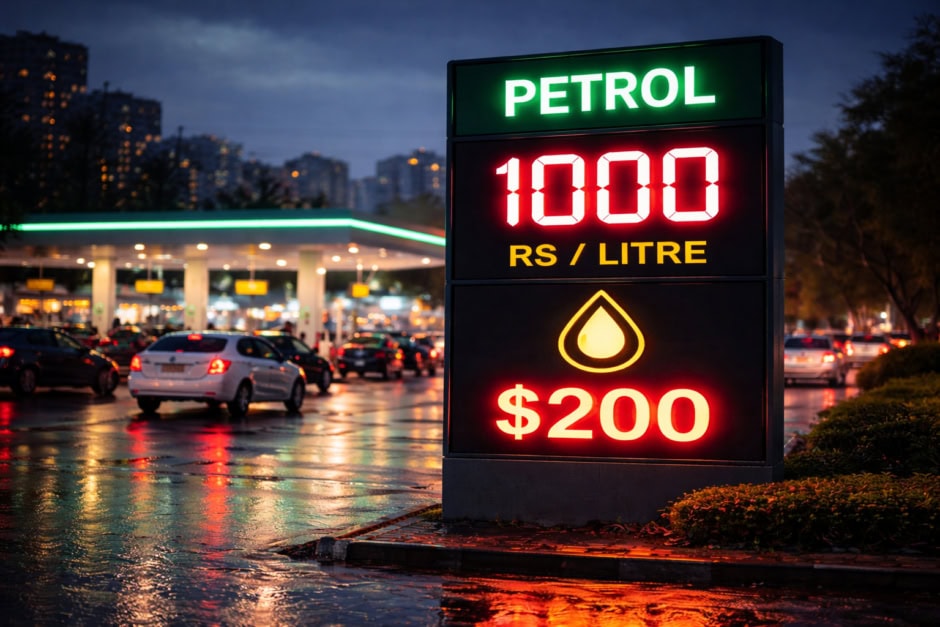
Pakistan’s petrol and diesel prices have surged to historic levels amid volatile global crude markets, with international oil prices hovering around $109–$112 per barrel. Analysts warn that if geopolitical tensions continue and oil prices soar to $200 per barrel, petrol in Pakistan could potentially exceed Rs. 1000 per litre.
Currently, petrol in Pakistan is priced at Rs. 458.41 per litre, while diesel costs Rs. 520.35 per litre. The import cost of petrol, based on the international price, is Rs. 245.95 per litre. On this, the government has imposed a customs duty of Rs. 24 per litre, and an exchange rate adjustment of Rs. 0.25 per litre is added, bringing the total import cost to Rs. 271.27 per litre. To maintain uniform prices across the country, an inland freight equalization margin of Rs. 7.52 per litre is included. Oil marketing companies add a margin of Rs. 7.87 per litre, and petrol pumps charge Rs. 8.64 per litre as profit. The government also collects a climate support levy of Rs. 2.50 per litre, while the petroleum levy was recently increased from Rs. 105 to Rs. 160 per litre.
For diesel, the import cost based on the international price is Rs. 459.97 per litre. Customs duty adds Rs. 35.73 per litre, bringing the total import price to Rs. 496.97 per litre. Inland freight equalization of Rs. 4.37 per litre, oil marketing company margin of Rs. 7.87 per litre, petrol pump profit of Rs. 8.64 per litre, and a climate support levy of Rs. 2.50 per litre are also included. However, the petroleum levy on diesel has been set to zero, resulting in a retail price of Rs. 520.35 per litre.
Experts caution that if Brent crude rises to $200 per barrel due to continued disruptions at the Strait of Hormuz or other geopolitical tensions, Pakistan’s petrol price could more than double, potentially crossing Rs. 1000 per litre. Such an increase would significantly impact transportation costs, the price of goods, and household budgets, intensifying inflationary pressures in the country. The high prices are driven not only by international crude rates but also by customs duties, levies, exchange rate adjustments, and distribution margins. Recent increases in the petroleum levy and climate support charges have further contributed to the surge in retail prices.
Analysts warn that continued volatility in the global oil market, combined with domestic fiscal measures, could lead to even higher fuel prices in the coming months, affecting the economy and daily life in Pakistan.