
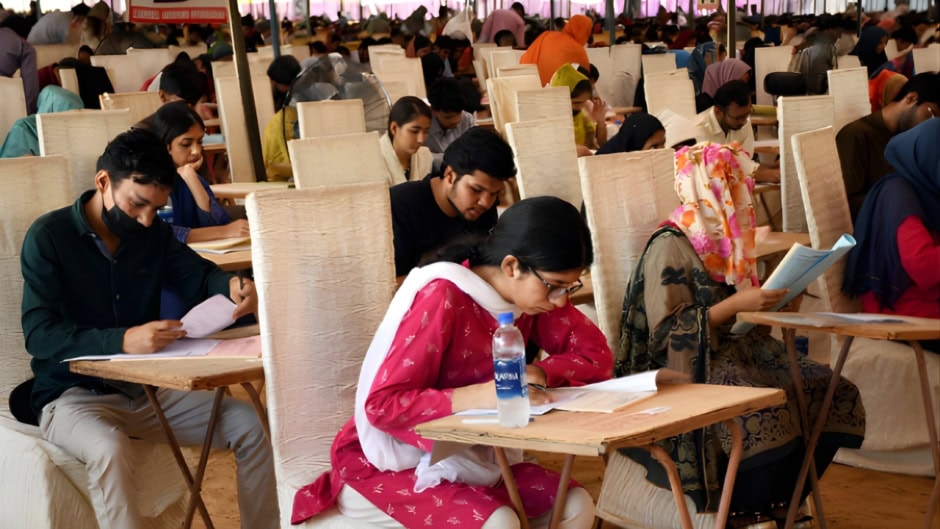
The newly introduced “one-week” Medical and Dental College Admission Test (MDCAT) policy faces heavy criticism today. Education experts warn that serious flaws in the system could easily push underprivileged students out of the merit race in Pakistan. Mustafa Kamal recently announced this policy. However, the decision completely ignores the severe disparities in examination schedules across different educational boards. Consequently, the move threatens transparency, fairness, and equal opportunity in medical college admissions.

Currently, a massive 84-day gap exists between board examinations across the country. For instance, the Balochistan Board will finish its exams on May 29. Meanwhile, the Sahiwal Board will stretch its exams until August 21. Therefore, preparation time remains highly unequal.
Furthermore, students in Sindh and Punjab will stay tied up with practical exams throughout July and August. This overlap heavily limits their test preparation window. In stark contrast, candidates from the Federal Board of Intermediate and Secondary Education (FBISE) receive up to 90 extra days to prepare.
Forcing students to take the MDCAT immediately after board exams carries severe risks. Experts estimate this rapid transition will cause a 5.8% drop in overall results. Primarily, mental exhaustion and burnout will drive this sharp decline. Already, nearly 80% of medical aspirants endure intense academic pressure.
Additionally, the new MDCAT policy fails to stop the so-called “academy mafia”. Instead of shutting down, coaching centres will simply shift their operations into the regular academic session.
To guarantee equal preparation time, education experts propose clear changes. First, authorities should schedule the MDCAT four to six weeks after the completion of all board practical exams. Second, the government must link the MDCAT date to a uniform, nationwide announcement of board results. Ultimately, these steps will give every candidate a fair and equal chance to succeed.