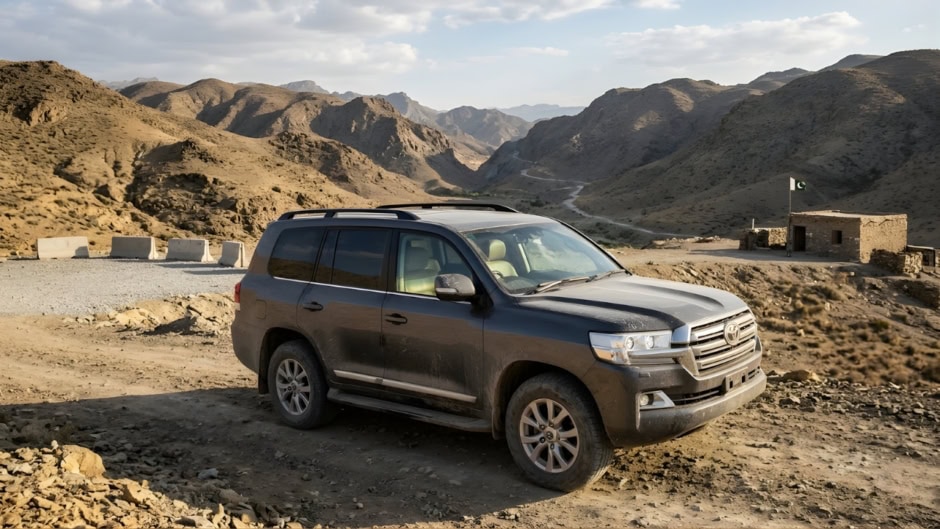
The Federal Board of Revenue (FBR) recently updated its operational fleet policy. Effective April 1, 2026, the board allows its Anti-Smuggling and Enforcement units to use confiscated, tampered vehicles. Specifically, this authorization applies to luxury cars with engine capacities above 1800 cc. Customs General Order 4 of 2026 officially outlines this new directive.

Authorized Zones by FBR & Operational Scope
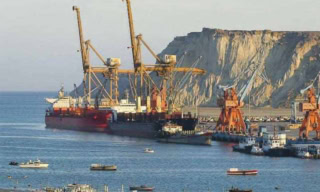
The FBR approves these vehicles primarily for hard-area Appraisement formations. Chief Collectors of Customs will oversee this rollout across key regions. In Balochistan, the authorized areas include Gwadar, Gabd (Border Point 250), Mand, Panjgur, Taftan, Katagar, Dalbandin, and Chaman. Meanwhile, the Khyber Pakhtunkhwa mandate covers Angoor Ada, Ghulam Khan, Kharlachi, Torkham, Gilgit, and Sost. Furthermore, the board extends this authorization to Transit Trade formations and other designated border stations.
Allocation Rules & Digital Tracking
Customs Wing formations receive absolute priority for vehicle allocation under Section 182 and Section 187A of the Customs Act, 1969. Consequently, formations must submit detailed proposals. They must justify their needs based on current staffing and operational requirements. A dedicated committee, headed by the Member (Customs Operations), finalizes all approvals. Additionally, formations must conduct quarterly reviews of their vehicle fleets. If operational needs change or vehicles lose roadworthiness, formations must submit revised requests.
To ensure transparency, the FBR prescribed a uniform procedure for sales and disposal. The government strictly prohibits selling tampered vehicles to private individuals in a personal capacity. Instead, only eligible government and semi-government departments can purchase them. Government-owned educational, medical, and scientific institutions also qualify as buyers.
Moreover, the Customs Wing will launch a digitized database to track these assets. This system will record full vehicle details, including forensic reports, chassis plate data, photographs, vehicle condition, and litigation status. The Cabinet Division will also receive direct access to this digital database.
Free Transfers & End-of-Life Disposal
Certain vehicles, such as buses, coasters, and vans, might not sell to government departments. Therefore, the FBR allows free transfers of these specific vehicles to government-owned educational, medical, and scientific institutions. However, this transfer strictly requires written approval from the relevant ministries.
Eventually, these tampered vehicles will reach the end of their service life. At this point, the receiving department recommends dismantling the vehicle. The custodian department must then return the vehicle directly to Pakistan Customs. Finally, the government will dismantle any tampered vehicle that remains undisposed of within five years of its initial availability.