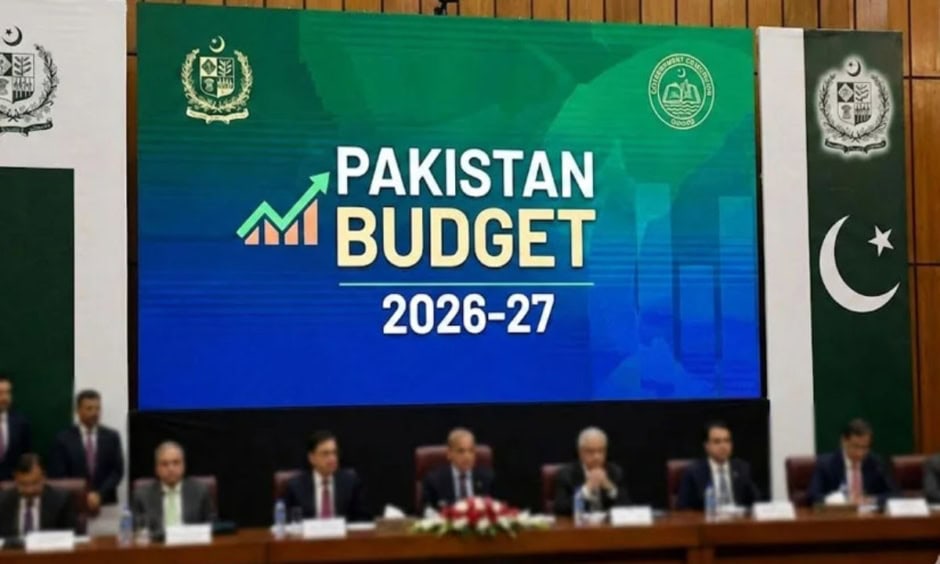
The federal government has unveiled its largest-ever federal budget, totalling approximately Rs 17,500,000 million, for the upcoming fiscal year 2026-27.
Federal Minister for Finance and Revenue Muhammad Aurangzeb will present the federal budget of approximately Rs 17,500,000 million to the National Assembly (NA) today at 3 PM.
The federal cabinet, chaired by the Prime Minister at Parliament House, will formally approve the new budget before its parliamentary presentation at 2:30 PM.
Following the National Assembly session, the budget will also be presented to the Senate at 5 PM today.
Debt and Defence Spending
The government has allocated approximately Rs 7,824,000 million for debt servicing and interest payments, representing the single largest expenditure in the budget.
Defence spending has been set at approximately Rs 3,000,000 million, making it the second largest allocation in the federal budget for fiscal year 2026-27.
A petroleum levy collection target of Rs 1,727,000 million has been set, which is expected to remain a major non-tax revenue source for the government.
Tax Revenue and Trade Targets
The overall tax revenue target for fiscal year 2026-27 has been fixed at Rs 15,267,000 million, reflecting the broader fiscal consolidation strategy of the government.
Export targets for the upcoming fiscal year 2026-27 have been set at $32,800 million, while imports are projected to reach an estimated $70,000 million.
No new development projects will be initiated during the upcoming fiscal year, except those falling under the defence and interior ministry portfolios.
Civil Servants and Pensions
The government has proposed a seven percent increase in salaries for civil servants from Grade one to Grade 22, in line with the current inflation rate.
Retired government employees will also receive a seven percent increase in their monthly pension under the new budget proposals for fiscal year 2026-27.
A proposal to raise the national minimum wage beyond its current level of Rs 37,000 per month is also under active consideration by the government.
Income Tax Slabs Revised
The federal government is considering providing approximately Rs 50,000 million in income tax relief to the salaried class in the new budget.
The number of income tax slabs is proposed to increase from six to eight, allowing for more progressive and equitable taxation of salary earners.
A 29 percent tax rate is proposed for monthly incomes up to Rs 467,000, while a 32 percent rate is proposed for incomes reaching up to Rs 583,000.
Monthly incomes exceeding Rs 583,000 will continue to face a maximum tax rate of 35 percent, while the same rate applies to annual incomes above Rs 7,000,000.
The government is also considering removing the existing surcharge on individuals earning more than Rs 10,000,000 annually, providing additional relief.
Crypto and Tribal Tax Changes
Gains from cryptocurrency trading will be brought into the formal tax net through a new capital gains tax proposed in the budget for 2026-27.
Tax exemptions currently enjoyed by former tribal areas are also proposed to be eliminated under the new fiscal year budget measures.
Consumer Goods and Vehicle Taxes
The sales tax rate on imported electric vehicles is likely to rise to 25 percent, while tax rates on hybrid vehicles are expected to remain unchanged.
Taxes on solar panels, stationery items, and the stock market will remain unchanged, according to government sources familiar with the budget proposals.
Dozens of consumer food items, including infant formula, ghee, and cooking oil, are expected to become more expensive under new budget measures.