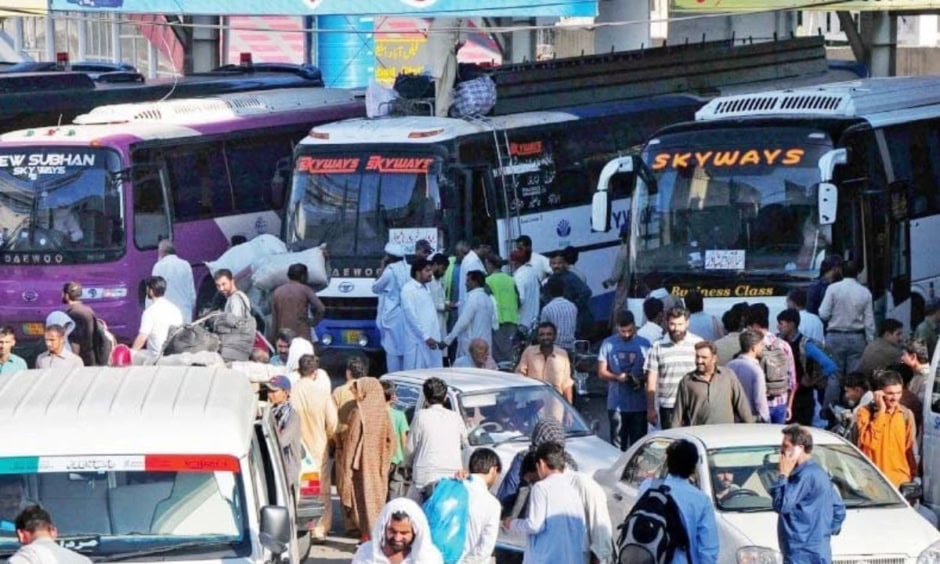
Public transport operators across Pakistan have raised fares by up to 25 percent following recent fuel price increases, marking the largest rise in passenger transport costs across major cities and intercity routes.
Buses, wagons, and minivans on key routes now cost Rs300 to Rs600 more per ticket, with long-distance fares showing the steepest increases, affecting travel for business, family, and personal purposes.
The fare from Lahore to Islamabad has increased from Rs2,670 to Rs3,338, while travel from Lahore to Peshawar rose from Rs2,530 to Rs3,200, reflecting the nationwide impact of higher petroleum prices.
Similarly, passengers traveling from Lahore to Faisalabad now pay Rs1,300 instead of Rs980, and Lahore to Karachi tickets have increased from Rs5,800 to Rs7,250, representing a significant financial burden on commuters.
Other major route increases include Lahore to Multan (Rs1,650 to Rs2,063), Lahore to Sukkur (Rs3,400 to Rs4,250), Lahore to Murree (Rs2,290 to Rs2,863), and Lahore to Sadiqabad (Rs2,430 to Rs3,038).
Passengers said the fare hike has made travel extremely difficult amid rising inflation, forcing many low-income families to choose between covering daily meals and paying for necessary travel expenses.
Transporters defended the increases, citing higher fuel and spare parts costs as the main drivers, warning that without fare adjustments, many operators could be forced to suspend services across city and intercity networks.
Following the fuel price rise, intra-city and intercity fares in Karachi and other parts of Sindh have also increased, with tickets to Larkana, Shikarpur, Jhang, Fort Abbas, and Bahawalnagar experiencing substantial increases.