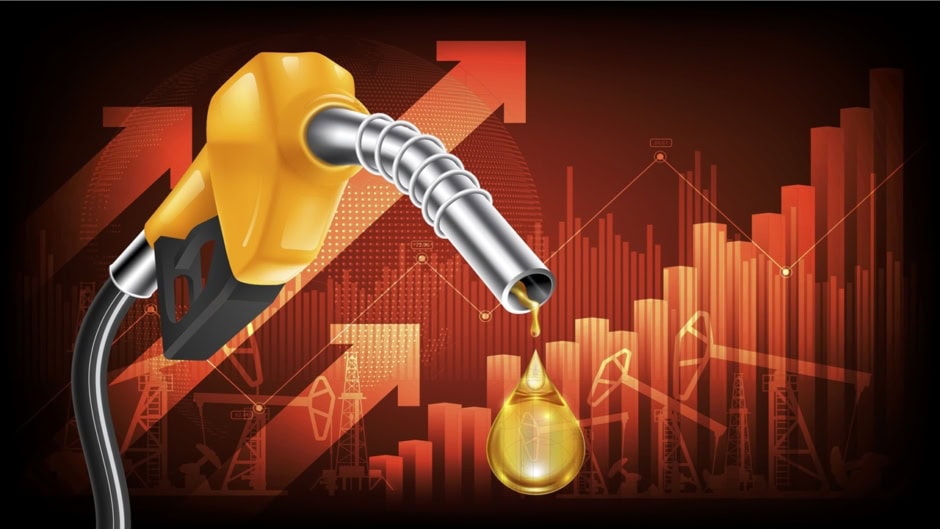
Petrol and diesel prices are expected to increase within the next few days as the government prepares to adjust rates in line with rising international oil costs. While officials are still working out the final numbers, some relief is being planned for low-income groups such as motorcyclists and farmers.
The expected hike comes after a high-level meeting chaired by Finance Minister Muhammad Aurangzeb, where all four provinces were taken on board to develop a shared strategy for fuel subsidies. The idea is to reduce the burden on the federal government while continuing limited support for vulnerable segments.
According to officials, the current gap between local fuel prices and actual import costs has widened significantly. Petrol is estimated to be underpriced by around Rs. 100 per litre, while diesel carries an even larger gap of over Rs. 200 per litre. Authorities are now considering passing the full increase in petrol prices to consumers, while only partially adjusting diesel prices to avoid a sharp rise in transport and food costs.
Over the past three weeks alone, the government has already spent nearly Rs. 129 billion on fuel subsidies. With a cap of around Rs. 158 billion in mind, policymakers are now under pressure to limit further spending. This has led to consultations with provincial governments, which have agreed in principle to share the subsidy burden.
Punjab and Sindh are likely to contribute based on their population size, while Khyber Pakhtunkhwa and Balochistan may share the cost according to fuel consumption levels.
At the same time, provinces are working on targeted subsidy programs. Sindh plans to support farmers through its Hari Card system, while Punjab and KP are expected to introduce similar mechanisms.
One of the key concerns remains diesel prices, as any increase directly impacts transport fares and food prices. To control this, provinces have agreed not to raise fares for Bus Rapid Transit systems, although this may create uneven pricing in areas outside major cities.
Officials estimate that maintaining targeted subsidies could cost between Rs. 15 billion and Rs. 18 billion per week, with the figure possibly rising further if global oil prices continue to fluctuate. For now, the government hopes to manage the situation until the end of the fiscal year in June, but uncertainty in international markets remains a major challenge.