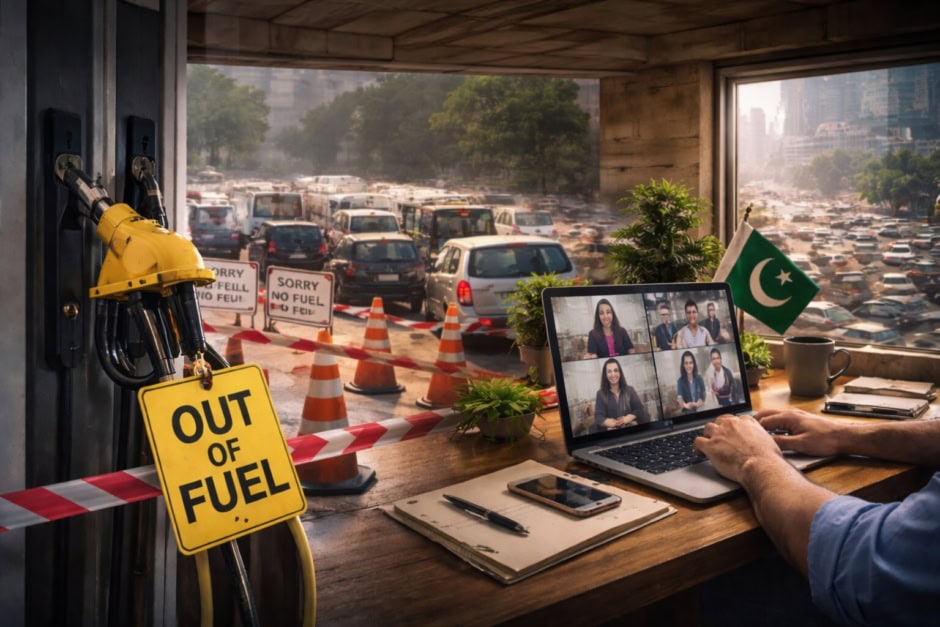
Pakistan’s economic stability often depends on factors far beyond its borders. The latest geopolitical tensions have again exposed a long-standing weakness in the country’s energy system: heavy reliance on imported fuel. When global supply routes face uncertainty, Pakistan quickly feels the pressure at home. This reality has pushed policymakers to consider temporary conservation steps, including expanding work-from-home arrangements to reduce daily commuting and ease pressure on fuel consumption.
Recent geopolitical tensions have once again highlighted a familiar vulnerability in Pakistan’s economy: its heavy reliance on imported fuel. As uncertainty in global energy markets grows, governments across the world are scrambling to assess how supply disruptions could affect domestic stability. In Pakistan, policymakers have reportedly begun exploring short-term conservation measures, including expanding work-from-home arrangements to reduce daily commuting and ease pressure on fuel consumption.
The Strait of Hormuz, although a minor 33 km stretch, is the passage for nearly 20% of all global oil and LNG shipments each day. Global oil prices are up 18%, putting the monthly average at almost 38%, which experts state is the highest rally since 2022. The world is feeling the pressure of the current conflict.
For Pakistan, this statistic is way different. Analysts estimate that 70-80% of the country’s crude oil and 100% of its LNG pass through this chokepoint. And with this Strait shut, the consequences may rapidly ripple out of control with fuel prices expected to cross Rs. 300 per litre and stockpiles dwindling extremely low. Since global oil prices have already increased, even a 5% rise pushes the country’s current account deficit up by a staggering $5 to $7 billion.
Transportation and the Fuel Pressure
The idea of implementing precautions reflects a practical concern: transportation remains one of the largest consumers of petroleum products in the country. In fact, according to the Pakistan Economic Survey 2024-25, the transport sector accounted for nearly 80% of the demand and consumption of petroleum products in the country.
It is quite straightforward, then to draw the conclusion that if fewer people drive to offices, fuel demand can fall, at least temporarily. However, the conversation also exposes a deeper challenge. Is this a sustainable solution?
For millions of Pakistanis, not commuting to work and working from home simply isn’t possible. Factory workers, healthcare staff, drivers, delivery riders, retail employees, and countless others form the backbone of the economy. Their jobs depend on physical mobility.
When fuel supply disruptions occur, it is these segments of society that feel the consequences first. Rising petrol prices increase commuting costs, logistics become more expensive, and businesses face disruptions that ripple through the broader economy. Short-term conservation policies may provide temporary relief, but they rarely address the structural vulnerability underlying the problem: Pakistan’s heavy dependence on imported fossil fuels to power everyday transportation.
Key Points
- The transport sector consumes nearly 80% of petroleum products in Pakistan.
- Work-from-home policies could temporarily reduce daily fuel demand.
- Millions of workers cannot perform their jobs remotely.
- Fuel price increases quickly affect logistics, commuting, and business operations.
This dependence carries significant economic consequences. Pakistan spends billions of dollars annually importing petroleum products, placing pressure on foreign exchange reserves and exposing the economy to global price volatility. In fact during the first half of 2025, the country’s fuel imports stood at a whopping $7.98 billion.
When geopolitical tensions or supply disruptions shake international energy markets, the effects quickly cascade into domestic life, from higher transport costs to inflation across supply chains.
A Question of Energy Independence
Moments like these also raise a deeper question: why has Pakistan not already begun moving its mobility system more decisively toward more sustainable options? Despite recurring fuel shocks over the years, the country’s transport sector remains overwhelmingly dependent on petrol and diesel. Be it threats of strikes from petroleum dealers and suppliers or regional tensions, a massive strain always falls on conventional fuel stocks.
In a country like Pakistan, NEV adoption goes beyond addressing environmental or economic concerns. It is the only viable solution to mobility challenges in the times of crisis where volatility of petroleum products can bring national ecosystems to a halt. Unlike countries that are self-reliant to fulfill their petroleum needs, Pakistan doesn’t have the luxury to rely on oil to support long-term sustainability.
The challenge is clearly not the absence of technology, ability of the grid or capable manufacturers. In fact, global automotive brands such as BYD have already introduced a diverse range of new energy vehicles in Pakistan, with nearly 80% of their local portfolio consisting of electric models designed to meet the needs of different consumer segments, from urban commuters to families seeking long-range mobility. The bigger question, therefore, is what continues to slow adoption?
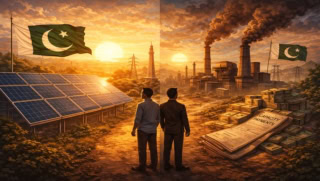
Unlike traditional internal combustion engine vehicles, NEVs can be powered by electricity generated domestically. This distinction becomes particularly important in a country where the energy mix is gradually shifting toward local and renewable sources. According to the Pakistan Economic Survey, the country doubled its renewable energy capacity in the first nine months of 2025. By 2030, 59% of the country’s total energy will come from sources including hydropower, wind, and solar.
Renewable Energy and the Mobility Shift
This transition carries significant economic and environmental implications. Expanding renewable generation not only reduces Pakistan’s reliance on imported petroleum and other fossil fuels to produce electricity, but also helps the country move closer to its carbon-emission reduction commitments under global climate agreements. Just as importantly, it can help shield the economy from the price volatility associated with global oil markets.
When fuel prices surge internationally, the impact often feeds directly into domestic inflation through higher electricity tariffs, transport costs, and supply chain expenses. Increasing the share of locally generated renewable energy can therefore play an important role in stabilising long-term energy costs while strengthening Pakistan’s economic resilience.
And the shift towards renewable energy is not just happening at the grid level. Across cities and towns, households and businesses are rapidly adopting rooftop solar systems to cope with rising electricity prices and improve energy independence. The solar boom has transformed Pakistan into one of the fastest-growing solar markets in the world, illustrating how quickly energy behaviour can change when economic incentives align.
While the government has taken steps to transition public transport towards green mobility, implementation remains minimal, with only about 450 electric buses currently operating in the country. But buses alone cannot drive Pakistan’s clean mobility transition. The shift will happen when both individuals and institutions move towards cleaner transport options, particularly in the two- and four-wheeler segments that make up the bulk of the country’s transportation.
For transportation, this evolving energy landscape presents an opportunity. When vehicles run on electricity instead of oil, the country’s mobility system becomes less exposed to global fuel supply shocks. Energy used for transport can increasingly come from domestic resources—whether hydropower generated by Pakistan’s rivers, wind energy from coastal corridors, or solar energy captured on rooftops across the country.
For consumers, the appeal goes beyond energy security. Electric mobility can significantly reduce the long-term cost of driving. Electricity is generally cheaper than petrol on a per-kilometre basis with EVs offering up to 75% savings compared to conventional fuel costs. Additionally electric vehicles have far fewer moving parts than conventional engines, which typically translates into lower maintenance costs over time. As a result, many consumers begin to evaluate vehicles not only based on purchase price but on the total cost of ownership.
Of course, electrification of transport alone cannot solve every challenge in Pakistan’s energy landscape. But it does offer a pathway toward reducing the country’s reliance on imported fuels while taking advantage of the renewable energy resources already expanding across the grid.
Work-from-home policies may help conserve fuel in moments of crisis. Yet for a country of more than 240 million people, long-term resilience requires something more fundamental: a transportation system that is less vulnerable to distant geopolitical disruptions and more closely connected to energy produced at home.
As Pakistan continues to expand its renewable energy capacity and modernise its infrastructure, electric mobility represents an opportunity not only to reduce emissions and improve urban air quality, but also to strengthen energy security in an increasingly unpredictable world.