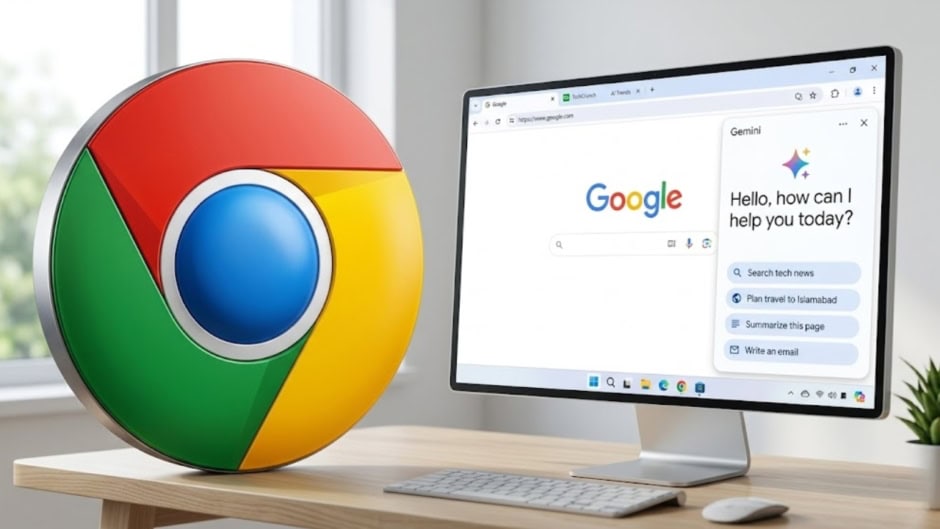
Google Chrome on desktop is getting two long-awaited features: vertical tabs and a redesigned immersive reading mode. Both have been available on competing browsers for years, making Chrome late to adopt them, but the additions bring meaningful improvements to how users manage tabs and read content.

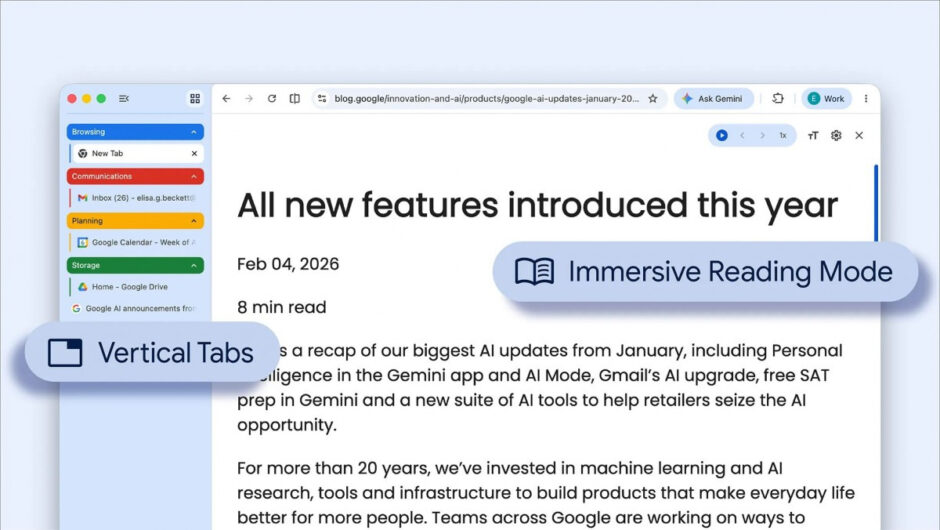
Vertical tabs move the tab bar from the top of the browser to a vertical stack on the side. This allows users to see significantly more open tabs at once compared to the traditional horizontal row, where tabs shrink to tiny slivers once enough are open. The vertical column is also collapsible, meaning it takes up minimal space when not in use. The change is particularly useful on widescreen monitors, where horizontal space is abundant but vertical space is limited. Microsoft Edge has offered vertical tabs since 2021, and browsers like Vivaldi and Arc have built their entire tab management around similar layouts.
The second feature is a complete overhaul of Chrome’s existing reading mode. The previous version opened in a split view alongside the original page, which many users found awkward and counterintuitive compared to how reading modes work on other browsers. The redesigned version works the way most users would expect: it takes over the full screen, stripping away all distracting elements from the original page and presenting the content in a clean, text-focused layout. Safari, Firefox and Edge all offer full-screen reading modes that have worked this way for years.
Neither feature was available in Chrome build 147.0.7727.56 at the time of the announcement but both are expected to roll out over the next few days.