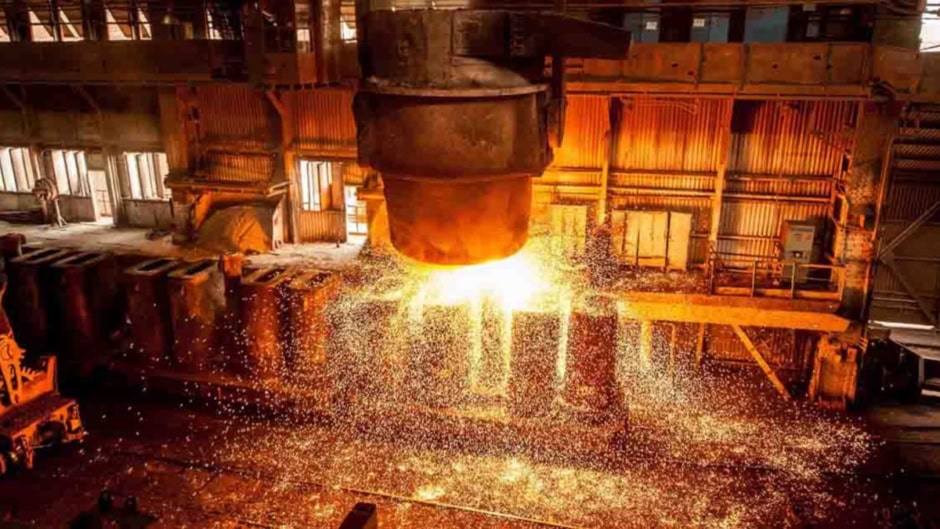
The Ministry of Maritime Affairs has announced a $13 billion Sea-to-Steel Green Maritime Industrial Corridor project at Port Qasim to revive the dormant Pakistan Steel Mills (PSM) and promote sustainable industrial growth.
Federal Minister for Maritime Affairs Muhammad Junaid Anwar Chaudhry unveiled the ambitious plan during a high-level meeting with Special Assistant to the Prime Minister on Industries and Production Haroon Akhtar Khan. The initiative aims to establish Pakistan’s first integrated maritime-industrial ecosystem by combining ship recycling, steel manufacturing, and green industrial practices.
According to the minister, Pakistan imports around $6 billion worth of steel annually, with demand projected to rise nearly 6% each year until 2035, as per a World Bank report. The Pakistan Steel Mills revival plan could potentially reduce steel imports by 20%, saving over $13 billion within the next decade.
Plan to Revive Iron Ore and Coal Berth at Port Qasim
The proposal also focuses on reviving the long-idle Iron Ore and Coal Berth (IOCB) at Port Qasim, inactive since 2015. The plan includes transforming the facility into a state-of-the-art ship recycling and repair complex with a floating dock capable of servicing Aframax-class vessels.
Junaid Anwar explained that steel recovered from dismantled ships would either be supplied to Pakistan Steel Mills or processed into high-grade industrial steel at a new facility near Port Qasim. This would lessen reliance on imported raw materials, conserve foreign exchange, and strengthen Pakistan’s steel and shipbuilding industries.
He further added that the new facility could also cater to the Pakistan National Shipping Corporation (PNSC), which currently depends on foreign shipyards for repairs. “Developing local ship repair capabilities will help cut operational costs and reinforce Pakistan’s maritime infrastructure,” the minister stated.