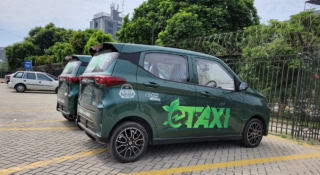
A Chinese-origin compact EV assembled in Sindh has become the unlikely vehicle through which one of Pakistan’s oldest auto manufacturers is attempting to rewrite its future.
Dewan Farooque Motors Limited had, by any honest reading, run out of chances. Incorporated in 1998 to assemble Hyundai and Kia vehicles in Pakistan, the company produced nearly 100,000 vehicles between 2000 and 2011, including the Kia Sportage and the beloved Shehzore light commercial truck. But a cascade of working capital crises, production shutdowns, and unresolvable debt brought it to its knees.
By June 2023, shareholders’ equity had collapsed to a negative Rs. 3.2 billion. Lenders had grown so impatient with the company’s restructuring promises that they stopped accepting proposals entirely and filed suit instead, pursuing Rs. 6.88 billion in outstanding liabilities through attachment and sale of the company’s mortgaged assets. Auditors raised red flag after red flag. The plant at Sujawal, Sindh, sat idle for years at a stretch. What changed was, unexpectedly, an electric car.
The Honri Arrangement
In May 2024, Dewan Farooque Motors entered into a toll manufacturing agreement with Eco-Green Motors Limited, a subsidiary of the Yousuf Dewan conglomerate, to produce a Chinese hatchback EV called the Honri VE at its Sujawal facility. The Chinese brand Honri, relatively little known internationally, was positioned as a budget-oriented electric vehicle tailored for emerging markets.
The arrangement gave Dewan a path back to production without the capital burden of launching an entirely new electric platform. By December 2024, the company had assembled more than 100 units in its first three months of EV production. By mid-2025, that figure had crossed 300 units delivered to Eco-Green Motors for nationwide distribution.
The Honri VE comes in two variants. The Ve 2.0 offers a CLTC-rated range of 200 kilometers on a single charge, with a 30kW motor, 18.5 kWh battery pack, and features including a 10.25-inch display, regenerative braking, tire pressure monitoring, and a Battery Management System warranted for eight years or 120,000 km. The Ve 3.0 extends the range to 300 kilometres and adds a broader equipment list. At launch in mid-2024, the Ve 2.0 was priced at Rs. 3,999,000 and the Ve 3.0 at Rs. 4,999,000.
Price Reality Check
Those numbers position the Honri in awkward territory against petrol alternatives. The Suzuki Alto, Pakistan’s best-selling small car, starts at approximately Rs. 2.99 million for the base VXR variant and tops out around Rs. 3.33 million for the VXL AGS. The Changan Alsvin sedan, which competes in a slightly larger segment, runs from Rs. 3.79 million to Rs. 4.6 million. On pure sticker price, the Honri VE 2.0 is a million rupees more expensive than the cheapest Alto and roughly comparable to the Alsvin’s upper trims. Against those rivals, it lacks brand trust, a proven resale market, and the peace of mind that comes with decades-old service networks.
The EV’s case rests instead on running costs. Proponents point out that recharging the Ve 2.0’s 18.5 kWh battery at commercial EV tariffs costs a fraction of filling a petrol tank for equivalent distance, particularly with Punjab’s subsidized EV electricity rates. The company’s own savings calculator attempts to quantify this advantage for prospective buyers, though independent real-world data from Pakistani users remains limited.
The Government Lifeline
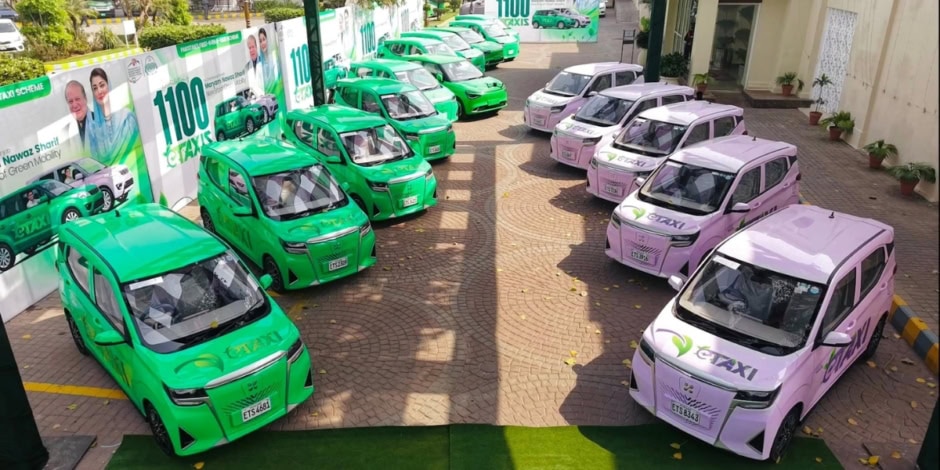
The arrangement that arguably most transformed Honri’s prospects in Pakistan was not a consumer deal at all, but a government procurement scheme. Chief Minister Maryam Nawaz launched the CM Punjab E-Taxi Programme, initially seeded with 1,100 interest-free electric vehicles in its first phase, using Honri VC20 and VC30 models as the fleet backbone. The scheme was formally inaugurated on February 26, 2026, with Dewan Motors as the government’s designated manufacturing partner.
Male applicants receive a 50% subsidy on the down payment; female applicants receive 60%. The vehicles are pre-integrated with ride-hailing apps including inDrive and Yango, fitted with GPS trackers, smart meters, and panic buttons linked to the Safe City Authority. Charging infrastructure is being built across Lahore at intervals of every three to five kilometers, with provincial expansion planned. A 30% quota is reserved for women drivers, who receive pink-branded vehicles under a parallel safety-focused sub-scheme.
People took this news with a bit of classic sarcasm as shown by this tweet:
Punjab government literally saved HONRI from bankruptcy https://t.co/2iBMxD29De
— Nabeel Ali (@Nabeel1124) February 26, 2026
One of the most top ranked comment joked that people should start investing in Honri now that it has the beneficiary hand of the government.

Scheme Way Forward
The scheme has generated genuine public excitement. More than 60,000 applications were reportedly received following the program’s announcement. However, the challenges facing Honri and Dewan are far from resolved. The company’s decade-long history of production restarts followed by shutdowns has made investors cautious, even as the stock has shown surprising resilience. Charging infrastructure outside Lahore is nascent. EV electricity tariffs at household connections do not attract the same subsidy as commercial EV chargers, effectively doubling per-kilometer costs for drivers charging at home. Spare parts availability and after-sales service depth remain unproven at scale.
What the Punjab e-taxi scheme has done, structurally, is give the Honri VE something that no amount of marketing could provide. It has now a guaranteed off-take volume, i.e., a government-backed financing model that removes the upfront price barrier, and a public-use context that generates real-world visibility across the province’s major cities.
After years of negative equity, mounting litigation, and dormant assembly lines, a state-backed taxi fleet represents something Deewan Motors has not had in a very long time.