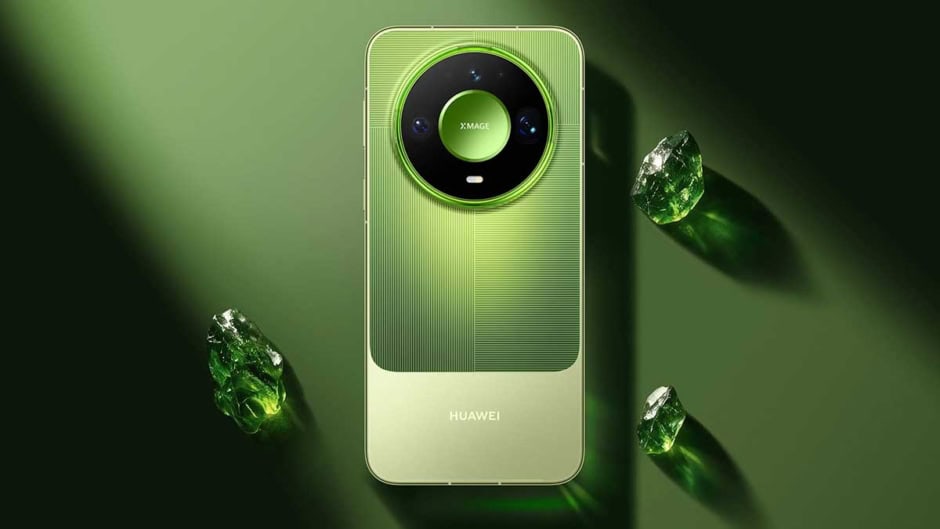
Huawei has expanded its latest flagship lineup with the new Mate 90 and Mate 90 Pro in China. Both phones feature 6.75-inch displays and new Huawei-developed technology. The two models sit below the Mate 90 RS and Mate 90 Pro Max. Those models feature larger 6.9-inch displays. However, the Mate 90 series still offers flagship-level hardware and features.
Huawei Mate 90 Pro
The Huawei Mate 90 Pro comes with a 6.75-inch LTPO OLED display. It has a 1280p+ resolution and supports a 1-120Hz refresh rate. The biggest display upgrade is Huawei’s dual-layer OLED technology. The panel can reach a peak brightness of 12,000 nits. The phone uses third-generation Kunlun glass for added protection.
A metal frame sits between the glass front and nylon fiber back. The phone has an IP68 rating and can survive submersion to 6 meters. It also carries an IP69K rating for hot water jet protection. The display can also be used when wet. This makes the phone more practical during rain or other wet conditions.
Powering the Mate 90 Pro is Huawei’s new Kirin 9035 chipset. Huawei says the chip is 20% faster than the previous Pro model. The GPU also supports hardware ray tracing. It can render 31 million rays per second. However, this figure appears unchanged from the Kirin 9030.
The Mate 90 Pro comes with either 12GB or 16GB of RAM. Storage options include 256GB, 512GB and 1TB. There is no memory card slot. The phone supports dual SIM cards and eSIM. It also includes Beidou Satellite Messaging. Users can send messages and photos through the satellite connection.
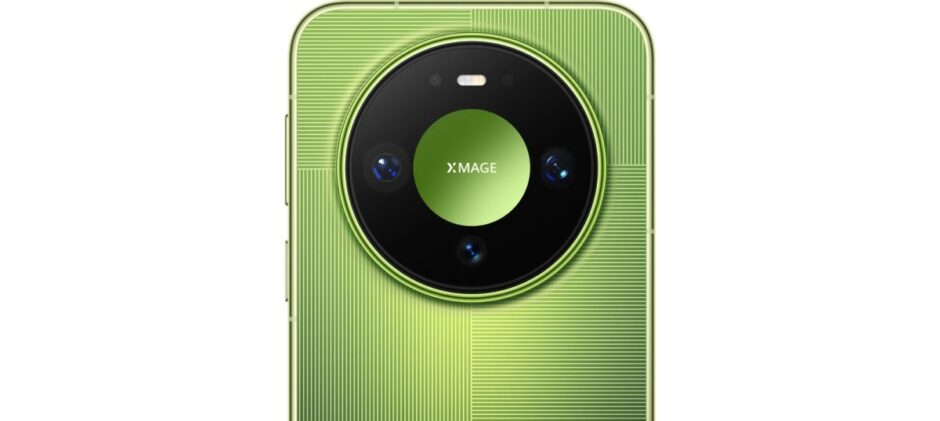
Huawei has increased the battery capacity to 6,600mAh. The Mate 80 Pro had a smaller 5,750mAh battery. Huawei claims up to 41 hours of video playback. Charging is supported at 100W through a wired connection. Wireless charging reaches 50W. Reverse charging is also available at 18W wired and wireless.
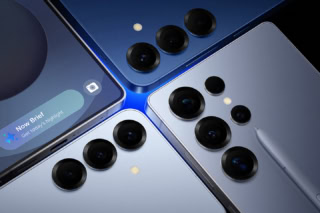
The camera setup remains close to the previous Mate 80 Pro. Its main camera uses a 50MP RYYB sensor with OIS. The lens also offers a variable f/1.4-f/4.0 aperture. A 40MP RYYB sensor handles ultra-wide shots. It uses an f/2.2 aperture and is joined by a color sensor on the rear.
The telephoto camera uses a 50MP RYYB sensor. It offers 4x optical magnification, OIS and an f/2.1 aperture. The camera can also switch to macro mode for shots from 5cm away. For selfies, Huawei has kept its unusual triple punch-hole design. It includes a 13MP camera with an f/2.0 autofocus lens. A 3D depth-sensing module is also included.
The Mate 90 Pro runs HarmonyOS 7 out of the box. It supports remote sharing for photos, videos and large files. Nearby devices can also share files through tap-to-share. Huawei has added another small software feature for calls. The phone detects which hand the user is holding it with. It then places the answer and reject buttons on the appropriate side.
The Huawei Mate 90 Pro is now available in China through vmall. The 12GB/256GB model costs CNY 7,000, or about $1,040. That starting price is CNY 1,000 higher than the Mate 80 Pro’s launch price. Huawei also offers several other memory and storage configurations.
Huawei Mate 90
The standard Huawei Mate 90 starts at CNY 6,000, or around $890. This price matches the launch price of last year’s Mate 80 Pro. The Mate 90 uses the older Kirin 9030 chipset. The chip was previously used in the Mate 80 Pro. Huawei says it delivers a 27% performance improvement over the old Mate 90.
However, the Kirin 9035 in the Mate 90 Pro remains 20% faster than the Kirin 9030. The standard model also comes with 12GB of RAM only. Storage options include 256GB, 512GB and 1TB. Unlike the Pro model, there is no 16GB RAM configuration.
The camera hardware is also similar to the Pro. The Mate 90 gets a 50MP RYYB main sensor with OIS. Its lens supports an f/1.4-f/4.0 variable aperture. The phone also has a 40MP RYYB ultra-wide camera. It uses an f/2.2 aperture. The main difference comes from the telephoto camera.
The telephoto camera still uses a 50MP RYYB sensor. However, its 4x lens has an f/2.2 aperture and an 88mm focal length. The Pro model uses a 90mm telephoto lens. The standard Mate 90 does not support the telephoto camera’s macro mode. Still, it is a major upgrade over the Mate 80’s 12MP 5.5x telephoto camera.
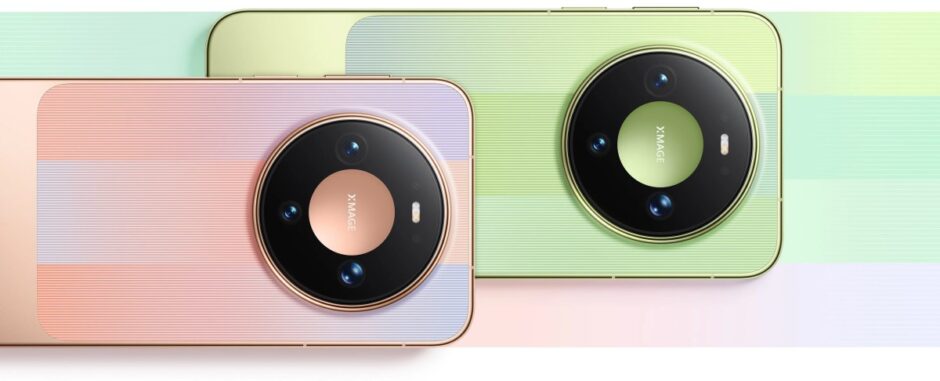
The Mate 90 also gets a 6,600mAh battery. Huawei claims up to 41 hours of video playback. Wired charging reaches 66W, while wireless charging supports 50W. The Mate 80 had a smaller 5,750mAh battery. It also supported 66W wired and 50W wireless charging.
The standard model uses third-generation Kunlun glass. However, it misses the Pro’s dual-layer OLED technology. It still features a 6.75-inch LTPO OLED panel. The display offers 1280p+ resolution and a 1-120Hz refresh rate.
The phone also has a fiber glass back and carries IP68 protection. It can withstand water submersion to 6 meters. The device also has an IP69K rating. The Huawei Mate 90 is now available in China through vmall. Huawei has not confirmed global availability for either model.
However, the Mate 80 Pro eventually reached international markets. It launched globally in March after its China release in late November.
Huawei Mate 90 and Mate 90 Pro prices
The Huawei Mate 90 starts at CNY 6,000 for the 12GB/256GB model. The 12GB/512GB version costs CNY 7,000. The 12GB/1TB configuration costs CNY 8,500. Huawei does not offer 16GB RAM on the standard Mate 90.
The Mate 90 Pro starts at CNY 7,000 for 12GB/256GB. Its 12GB/512GB model costs CNY 8,000. The 16GB/512GB version costs CNY 8,500. The top-end 16GB/1TB model is priced at CNY 10,000.
For reference, the Mate 90’s prices convert to about $890, $1,040 and $1,270. The Mate 90 Pro costs about $1,040, $1,190, $1,270 and $1,490, depending on configuration.